Guide · the part nobody reads
Cleaning and maintaining an electric fireplace
There is no ash to shovel, which is why most owners assume there is nothing to do. The two manuals we can actually read both say otherwise, and they agree on the one job that matters.
By Scooter M.Published November 3, 2026Last reviewed November 3, 2026

Disclosure: the buy links below are affiliate links. We earn a commission on Amazon purchases at no extra cost to you. It has never changed a ranking on this site, and every roundup here names a unit we think you should skip. How this site is funded.
Unplug it and let it cool, then vacuum the vents — that is the job that actually matters. Both manufacturers whose manuals we can read say the same thing in different words: Dimplex warns the firebox "should not be operated with an accumulation of dust or dirt on or in the firebox, as this can cause a build up of heat and eventual damage", and Touchstone's reset procedure for its overheat cutoff tells you to check whether the vents are "blocked or clogged with dust or lint". For surfaces: glass cleaner on a cloth, never sprayed directly and never abrasive; a damp cloth and mild detergent on painted or plastic parts. Never immerse it, never open a panel.
Why a fireplace with no ash still needs cleaning
The selling point creates the blind spot. No combustion means no ash, no soot and no flue, so an electric fireplace genuinely does avoid almost everything that makes a real fire a chore — we make that argument ourselves on electric vs wood-burning. What it does not avoid is a fan pulling household air across a heating element, every evening, all winter.
That air carries dust, and the dust goes somewhere. Both manuals we can read are explicit about the consequence, and they were written independently by two companies with nothing in common but the physics.
| Manufacturer | What the manual says |
|---|---|
| Dimplex (Revillusion) | The firebox "should not be operated with an accumulation of dust or dirt on or in the firebox, as this can cause a build up of heat and eventual damage." |
| Dimplex (Revillusion) | Inspect "regularly, depending upon conditions, and at a minimum yearly intervals." |
| Touchstone (Sideline) | Overheat reset, step 3: "Inspect the fireplace to make sure no vents are blocked or clogged with dust or lint. If they are, use a vacuum to clean the vent areas." |
| Touchstone (Sideline) | "Use a vacuum or duster to remove dust and dirt from the heater and vent areas." |
Surface by surface, from the manuals
Touchstone's Sideline manual is the only document in this category we have found that breaks cleaning down by material, and it is worth following on any unit because the materials are the same everywhere: painted metal, a glass front, vents and some plastic trim.
| Part | What to use | What the manual forbids |
|---|---|---|
| Metal | A soft cloth slightly dampened with a citrus oil-based product | Brass polish and household cleaners — "these products will damage the metal trim" |
| Glass | Glass cleaner sprayed onto a cloth or towel, dried with a paper towel or lint-free cloth | Abrasive cleansers, liquid sprays, anything that could scratch |
| Vents | A vacuum or duster | — |
| Plastic | A slightly damp cloth with mild dish soap and warm water | Abrasive cleansers, liquid sprays, anything that could scratch |
| Painted surfaces (Dimplex) | A damp cloth and a mild detergent | "Never use abrasive cleaners" |
The vents are the part that matters
Everything else on this page is housekeeping. This part is not. A heater with restricted airflow runs hotter than it was designed to, and the protection against that is a thermal cutoff — Touchstone calls its version a Temperature Limiting Control, and the manual says that "Should the heater reach an unsafe temperature, the heater will automatically TURN OFF."
The reset procedure is the useful part, because it tells you what the manufacturer expects the cause to be. Unplug it. Switch the control panel off and wait five minutes for the unit to cool. Inspect the vents for dust and lint and vacuum them if they are blocked. Plug it back in with the power switch off. And if it keeps happening, have the outlet and wiring inspected by a professional rather than resetting it again.
If your fireplace has started switching itself off after an hour, that sequence is the first thing to try, and it is free. Our troubleshooting guide covers the other symptoms — clicking, humming, a dead remote, flames that stopped moving.
How often, and the one rule both makers share
- Always unplug it and let it cool first. Both manuals lead with this. Touchstone: turn the heater off and unplug before cleaning, maintenance or moving it. Dimplex: disconnect power and allow the heater to cool "to reduce the risk of fire, electric shock, or injury."
- Vacuum the vents at the start of the heating season, and again mid-winter if the room is dusty or you have pets. Dimplex's published floor is yearly; a room that runs the unit nightly deserves more than the floor.
- Clean the glass when it bothers you, with cleaner on the cloth rather than on the glass.
- Wipe painted and plastic parts with a damp cloth and mild soap, not with anything abrasive and not with household cleaners.
- Do not open any panels. Touchstone: "RISK OF ELECTRIC SHOCK! DO NOT OPEN any panels. No user-serviceable parts inside!" Dimplex says the same in its own words.
- Do not lubricate the fan. Touchstone states the fan motors are lubricated at the factory and will not require lubrication — adding oil is a way to create a problem you did not have.
Quick picks: units whose makers tell you how to look after them
Ranked. The running cost column is computed from each unit's rated wattage, not quoted from a manufacturer. Tap a row for the full write-up.
| # | Product | Best for | Cost per hour | Price |
|---|---|---|---|---|
| 1 | 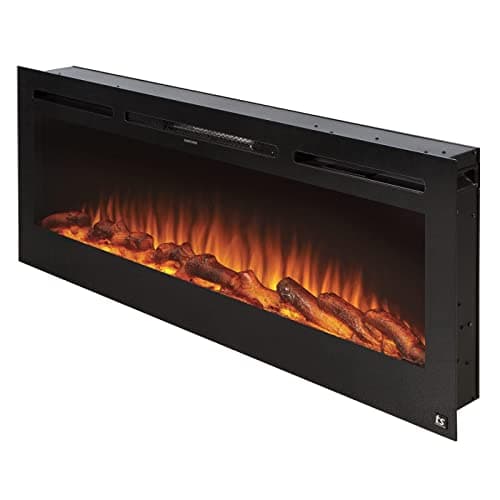 Touchstone The Sideline 50A full Care, Cleaning and Maintenance section, surface by surface, plus a reset procedure that names dust and lint as the cause. | The only care instructions worth the name | 27.5¢1,500 W · 5,118 BTU | |
| 2 | 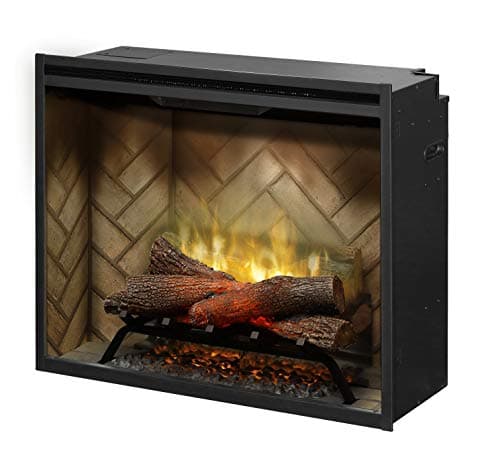 Dimplex Revillusion RBF30 30" Built-In FireboxA Maintenance section with a stated inspection interval and the blunt reason for it: dust accumulation causes a build up of heat and eventual damage. | The clearest statement of why it matters | 27.5¢1,500 W · 5,118 BTU | |
| 3 | 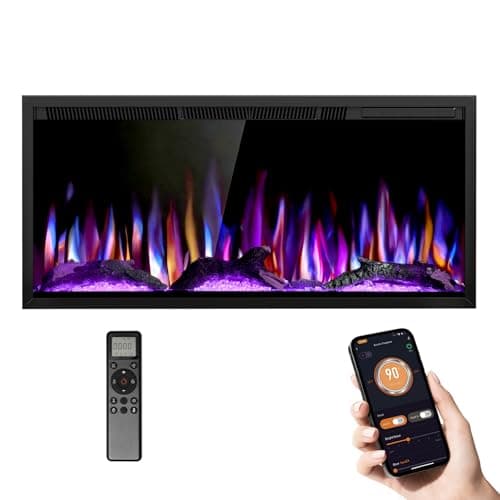 R.W.FLAME 36" Ultra-Thin Recessed & Wall-Mount FireplaceOne of the best-value recessed panels we list, and we could not reach a single piece of official care documentation for it. | A good unit with nothing published to follow | 27.5¢1,500 W · 5,118 BTU | |
| — | 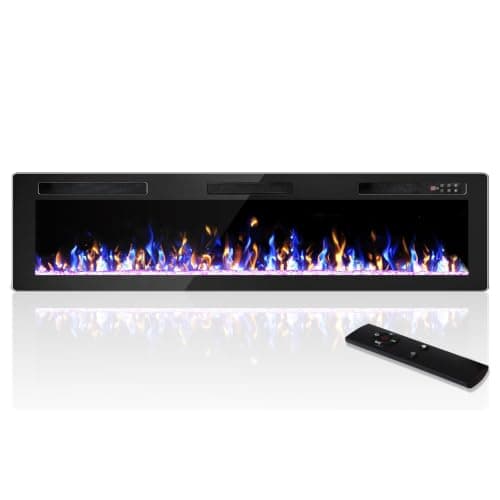 VENDROZ 72" Ultra-Thin Linear Electric FireplaceThe thinnest specification of any unit we list — no weight, no BTU, no voltage, no framing guidance — and nothing at all on care.Skip this one | Nothing, if you want to be able to look after it | 27.5¢1,500 W · 5,118 BTU |
#ad Buy links are affiliate links — we earn a commission on Amazon purchases at no extra cost to you, and it never changes the ranking. How this site is funded. Running cost is computed at 18.34¢/kWh; see what these actually cost to run.
What you cannot do yourself, and should not try
Both manufacturers draw the same line in almost identical language. Touchstone: electrical components are integrated into the fireplace and are not serviceable by the customer. Dimplex: "Except for installation and cleaning described in this manual, an authorized service representative should perform any other servicing."
That is a narrower boundary than it sounds, and it is worth respecting for a specific reason rather than a general one. The whole appliance is a 1,500 watt resistive load on a 120 V circuit — about 12.5 amps, which is most of a 15-amp circuit, as we set out on watts, amps and your circuit. Opening a panel on that is a different proposition from changing a bulb in a lamp, and on most modern units there is no bulb to change anyway: the flame is LED and the LEDs are not a replaceable part.
#1 · The only care instructions worth the name
Touchstone The Sideline 50
A full Care, Cleaning and Maintenance section, surface by surface, plus a reset procedure that names dust and lint as the cause.
Touchstone is the reason this page could be written at all. Its Sideline manual carries a dedicated Care, Cleaning and Maintenance section that tells you what to use on metal, on glass, on the vents and on plastic separately, and what not to use on each. Almost nothing else in this category publishes that.
It also connects cleaning to a failure mode rather than leaving it as housekeeping. The manual's reset procedure for the Temperature Limiting Control — the cutoff that shuts the heater off when it overheats — includes the step "Inspect the fireplace to make sure no vents are blocked or clogged with dust or lint. If they are, use a vacuum to clean the vent areas." That is the manufacturer telling you plainly that dust is what trips it.
The unit itself is the site's most-recommended wall fireplace on its own merits — 50 inches, fully specified down to the rough opening, and the subject of its own Sideline 50 review.
The honest costs are the usual ones for this range and nothing to do with upkeep: at 5 1/2 inches deep it needs 2x6 framing or a chase rather than a 2x4 bay, and the flame is layered LED rather than anything exotic. Note too that Touchstone's warranty explicitly excludes damage caused by "lack of maintenance" — the instructions are not advisory.
What it does not do: At 5 1/2 in deep it does not sit flush in a standard 2x4 stud bay. Recessing needs a framed cavity; surface-mounting it works but leaves the unit standing proud of the wall, which reads very differently in a small room.
Published specs
- Dimensions:
- 50 3/8 in W x 21 1/2 in H x 5 1/2 in D
- Weight:
- 59 lb
- Heater:
- Coil wire heater with blower, 1,500 W — about 5,000 BTU/hr
- Electrical:
- 120 V — plug in or hardwire
- Form:
- Recessed or wall-mounted linear unit
- Line:
- The volume seller of the Sideline range (model 80004)
What it costs to run
- 27.5¢/hr on full heat
- $99.04 across a 90-day winter at 4 hrs a night
- 5,118 BTU/hr · 12.5 A on a 120 V circuit
Computed at 18.34¢/kWh (EIA, June 2026). Your rate will differ — work out your own.
#ad We earn a commission on this link at no cost to you. How this is funded. Price as of November 3, 2026.
Specs from: Touchstone Sideline 50 (80004) product page — 50 3/8 x 21 1/2 x 5 1/2 in, 59 lb, coil wire heater with blower.
#2 · The clearest statement of why it matters
Dimplex Revillusion RBF30 30" Built-In Firebox
A Maintenance section with a stated inspection interval and the blunt reason for it: dust accumulation causes a build up of heat and eventual damage.
Dimplex is the second manufacturer whose manual says this, and it says it harder. The Revillusion manual gives an actual interval — inspect "regularly, depending upon conditions, and at a minimum yearly intervals" — which is more than almost anyone else commits to.
And it gives the mechanism in one sentence: the firebox "should not be operated with an accumulation of dust or dirt on or in the firebox, as this can cause a build up of heat and eventual damage." Two manufacturers, two separate documents, the same finding. That is as close to a consensus as this category produces.
Its cleaning instructions are specific too: dust and vacuum the firebox as needed, use a damp cloth and a mild detergent on painted surfaces, and "Never use abrasive cleaners." Plus the safety framing both makers share — disconnect power and let the heater cool first.
The costs here are about the product, not the upkeep. At 12 1/8 inches deep it is a firebox needing a purpose-built enclosure rather than a plug-in panel, the higher output rating needs a hardwired higher-voltage supply, and it is by far the most expensive unit on this page. We review it in full on the Revillusion RBF30.
What it does not do: This is a firebox, not a plug-in wall unit. At 12 1/8 in deep it will not go into a 2x4 or even a 2x6 wall — it needs a purpose-built enclosure. The higher BTU figures require a higher-voltage hardwired supply and a licensed electrician.
Published specs
- Dimensions:
- 31 1/8 in W x 26 5/8 in H x 12 1/8 in D
- Weight:
- 50 lb
- Form:
- Built-in firebox — framed into a wall or a surround, not a stud bay
- Heat output:
- Up to 8,794 BTU/hr on the higher-voltage configuration
- Flame:
- Revillusion mirror-free viewing area with herringbone brick interior
- Heater:
- Fan-forced
What it costs to run
- 27.5¢/hr on full heat
- $99.04 across a 90-day winter at 4 hrs a night
- 5,118 BTU/hr · 12.5 A on a 120 V circuit
Computed at 18.34¢/kWh (EIA, June 2026). Your rate will differ — work out your own.
#ad We earn a commission on this link at no cost to you. How this is funded. Price as of November 3, 2026.
Specs from: Dimplex Revillusion RBF30 owner's manual; Retailer listing — RBF30 dimensions and weight.
#3 · A good unit with nothing published to follow
R.W.FLAME 36" Ultra-Thin Recessed & Wall-Mount Fireplace
One of the best-value recessed panels we list, and we could not reach a single piece of official care documentation for it.
This is not a criticism of the fireplace, which is why it is a pick rather than a skip. At 36 inches and 3.86 inches deep it is one of the few units thin enough for a standard 2x4 stud bay, it publishes a real wattage, a real BTU figure and a 400 square foot rating, and it is among the most-bought units on this site.
What it does not have is anything to read. We went looking for R.W.FLAME maintenance or installation documentation while writing this page and found no official support site at all; the third-party manual aggregators that host its PDFs returned errors on every attempt. So there is no manufacturer statement about what to clean, what not to use, or how often.
In practice the two manuals above are a reasonable guide for any unit of this type — they agree with each other, and the physics of a dusty vent does not change by brand. But following another manufacturer's instructions is a workaround, not documentation, and you should know that is what you are doing.
The honest cost, then, is exactly that gap. If something goes wrong you have no published procedure to follow and no stated maintenance interval, and if a warranty claim ever turns on whether the unit was looked after, there is nothing written down to point at.
What it does not do: No mantel, no surround and no trim for a masonry opening. Recessing it means cutting drywall and, in most homes, running a receptacle inside the cavity.
Published specs
- Heater:
- 750 W low / 1,500 W high
- Electrical:
- 120 V
- Heat output:
- 5,100 BTU/hr (manufacturer figure)
- Depth:
- 3.86 in — thin enough for a 2x4 stud bay
- Coverage:
- Rated by the manufacturer for up to 400 sq ft
- Flame:
- 12 flame colors, 12 ember-bed colors, 5 brightness levels, 5 speeds
- Sizes in the line:
- 30, 36, 42, 50, 60 and 68 in
What it costs to run
- 27.5¢/hr on full heat
- $99.04 across a 90-day winter at 4 hrs a night
- 5,118 BTU/hr · 12.5 A on a 120 V circuit
Computed at 18.34¢/kWh (EIA, June 2026). Your rate will differ — work out your own.
#ad We earn a commission on this link at no cost to you. How this is funded. Price as of November 3, 2026.
Specs from: R.W.FLAME recessed/wall-mount product page — full specifications.
Skip this one
VENDROZ 72" Ultra-Thin Linear Electric Fireplace
The thinnest specification of any unit we list — no weight, no BTU, no voltage, no framing guidance — and nothing at all on care.
A brand that will not publish a voltage is not going to tell you how to maintain the thing, and that is the whole reason this is the skip on a cleaning page.
VENDROZ publishes no rough opening, no framing guidance of any kind, no weight, no BTU figure, no thermostat range and no voltage. It is the thinnest specification of any 72-inch unit in our catalog, and we flagged it on that basis long before this page existed.
On a cleaning and maintenance page the consequence is concrete rather than abstract. Every unit in this category has a heater, a fan and vents, and every unit will eventually have dust in those vents. Both manufacturers above describe what happens next — heat builds up, and on a Touchstone the cutoff trips. With nothing published you have no procedure, no interval and no idea which cleaners will damage the finish.
There is also a brand-identity problem worth knowing: the name is spelled VENDROZ in the listing title and VENDORZ in Amazon's own brand field and at other sellers. If you want 72 inches of fire, buy it from someone who writes things down.
What it does not do: VENDROZ publishes no rough opening, no framing guidance of any kind, no weight, no BTU figure, no thermostat range and no voltage — the thinnest specification of any 72-inch unit we list. The brand is spelled VENDROZ in the listing title and VENDORZ in Amazon's own brand field and at other sellers, which is a fair indication of how much brand there is behind it. If a flush recess is the reason you want a shallow unit, LEMBERI's near-identical 72 x 18.11 x 3.25 in body does state a fit for standard 2x4 and 2x6 studs and publishes a weight, for roughly fifteen dollars more.
Published specs
- Dimensions:
- 72 in W x 18.11 in H x 3.2 in D
- Heater:
- 750 W / 1,500 W, and it will run flame-only with the heat off
- Coverage:
- Rated by the manufacturer for about 400 sq ft
- Flame:
- 12 flame colors, 12 crystal-bed colors, 5 flame speeds and brightness levels
- Timer:
- 1 to 8 hours
- Front:
- Temperature-resistant tempered glass
- Installation:
- Recessed into a wall or surface-mounted; manual and hardware included
- Safety:
- ETL certified, auto-heat and overheat protection
What it costs to run
- 27.5¢/hr on full heat
- $99.04 across a 90-day winter at 4 hrs a night
- 5,118 BTU/hr · 12.5 A on a 120 V circuit
Computed at 18.34¢/kWh (EIA, June 2026). Your rate will differ — work out your own.
#ad We earn a commission on this link at no cost to you. How this is funded. Price as of November 3, 2026.
Specs from: Amazon listing — VENDROZ 72 in ultra-thin recessed and wall-mounted electric fireplace (model 72B-GBL-SSDQ): 72 x 18.11 x 3.2 in, 750/1500 W, about 400 sq ft, 12 flame and 12 crystal-bed colors, 5 flame speeds, 1-8 h timer, ETL certified, tempered glass front; VENDORZ 72 in electric fireplace retailer specification — 3.2 in frame depth, 750W/1500W, about 400 sq ft, 12 flame colors, 12 crystal bed colors, 5 flame speeds, 1-8 h timer, ETL certified.
Questions people actually ask
Do electric fireplaces need maintenance?
Yes, though far less than any fire that burns something. The job that actually matters is keeping dust out of the vents. Dimplex's manual states that a firebox "should not be operated with an accumulation of dust or dirt on or in the firebox, as this can cause a build up of heat and eventual damage", and sets a minimum inspection interval of yearly. Touchstone's manual tells you to vacuum or dust the heater and vent areas, and names dust and lint as what to look for when the overheat cutoff has tripped.
How do you clean the glass on an electric fireplace?
With a good quality glass cleaner sprayed onto a cloth or towel — not onto the fireplace — and dried with a paper towel or a lint-free cloth. Touchstone's manual is explicit that you should never use abrasive cleansers, liquid sprays or anything that could scratch the surface. Spraying liquid directly at a unit with vents in it is how liquid gets inside the housing.
How often should I clean an electric fireplace?
Dimplex publishes a floor of yearly, and says to inspect "regularly, depending upon conditions" — which is the part that matters, because conditions vary enormously. A unit running most evenings in a carpeted room with pets collects dust far faster than one used at weekends. The practical rule is to vacuum the vents at the start of the heating season and check again mid-winter.
Can neglecting maintenance void the warranty?
On a Touchstone it is a stated exclusion. The warranty does not cover damage caused by "misuse, alterations, accident, lack of maintenance, abuse or neglect". The same warranty separately excludes damage from "damaging chemicals or cleaners", so using the wrong product is also excluded — which is why the manual's warning against brass polish and household cleaners on metal trim is worth taking literally.
My electric fireplace keeps turning itself off. Is that a cleaning problem?
It often is. Touchstone's manual describes a Temperature Limiting Control that turns the heater off automatically if it reaches an unsafe temperature, and step three of the reset is to check whether the vents are blocked or clogged with dust or lint and vacuum them if so. Unplug it, switch it off, wait five minutes, clear the vents, and plug it back in. If it continues after that, the manual says to have the outlet and wiring inspected by a professional — and our troubleshooting guide covers the other causes.
Sources
Every figure on this page is either taken from one of these documents or computed from a formula shown on the page. Nothing here is recalled from memory.
- Touchstone Sideline Series owner's manual (rev. 251114), Care, Cleaning and Maintenance — "ALWAYS turn the heater OFF and unplug the power cord from the outlet before cleaning, performing maintenance, or moving the fireplace"; "NEVER immerse in water or spray with water"; metal: "Buff using a soft cloth, slightly dampened with citrus oil-based product. DO NOT use brass polish or household cleaners, as these products will damage the metal trim"; glass: "Use a good quality glass cleaner sprayed onto a cloth or towel. Dry thoroughly with a paper towel or lint-free cloth. NEVER use abrasive cleansers, liquid sprays, or any cleaner that could scratch the surface"; vents: "Use a vacuum or duster to remove dust and dirt from the heater and vent areas"; plastic: damp cloth with mild dish soap and warm water; "RISK OF ELECTRIC SHOCK! DO NOT OPEN any panels. No user-serviceable parts inside!"; "The fan motors are lubricated at the factory and will not require lubrication"; "Electrical components are integrated in the fireplace and are not serviceable by the customer". Warranty section: does not cover damage caused by "misuse, alterations, accident, lack of maintenance, abuse or neglect", nor damage due to "water, weather damage, long periods of dampness, condensation, damaging chemicals or cleaners"
- Touchstone Sideline Series owner's manual (rev. 251114), Operation and Specifications — all Sideline models 120 V AC, max 1500 W, 12 AMP; the heater runs in two stages, "Low heat (750w)" and "High heat(1500w)", and "the heater blows cool air for 10 seconds before the heater turns on, and after it turns off"; timer settings range from 0.5 hours to 8 hours (30, 1H-8H); "If the room temperature is ABOVE the temperature listed on the display, the heater will not turn ON"; tested to CSA standards for fixed and location-dedicated electric room appliances; one-year warranty with replacement parts free of charge in the first year, replacement parts then covered 90 days or the remainder of the original year, whichever is greater; "This fireplace is not intended for outdoor use. Use of this fireplace outdoors voids this warranty"
- Dimplex Revillusion built-in electric firebox owner's manual, Maintenance — inspect "regularly, depending upon conditions, and at a minimum yearly intervals. Remove dust and clean the logs, grate, and base as required"; the firebox "should not be operated with an accumulation of dust or dirt on or in the firebox, as this can cause a build up of heat and eventual damage"; "Dust and vacuum the firebox as needed. Use a damp cloth and a mild detergent to clean painted surfaces of the built-in electric firebox. Never use abrasive cleaners"; "WARNING: Disconnect power and allow heater to cool before attempting any maintenance or cleaning to reduce the risk of fire, electric shock, or injury"; "CAUTION: Except for installation and cleaning described in this manual, an authorized service representative should perform any other servicing"
- Dimplex Revillusion RBF30 owner's manual — built-in firebox installation and ratings
Read next
- Electric fireplace troubleshooting
Every common symptom with its likely cause and fix — beeping, clicking, dead remote, stopped flames, no heat. No products.
- How long do electric fireplaces last?
No maker publishes a service life, so buy on the only number they do publish: the warranty. Dimplex gives five years on IgniteXL, Napoleon two, Touchstone one.
- Watts, amps and your circuit
12.5 amps on a 15-amp circuit. Why the ceiling exists, and where we stop and an electrician starts.
- Are electric fireplaces safe?
No combustion, no carbon monoxide, no flue. The four electrical considerations that do matter.
- Touchstone Sideline 50: a specification review
The best-documented unit in the category: a front heating vent, an 8-inch published TV clearance, and a 750-watt low stage the product page omits. One-year warranty is the weak point.