Roundup · updated for the 2026 heating season
The best electric fireplaces for a basement
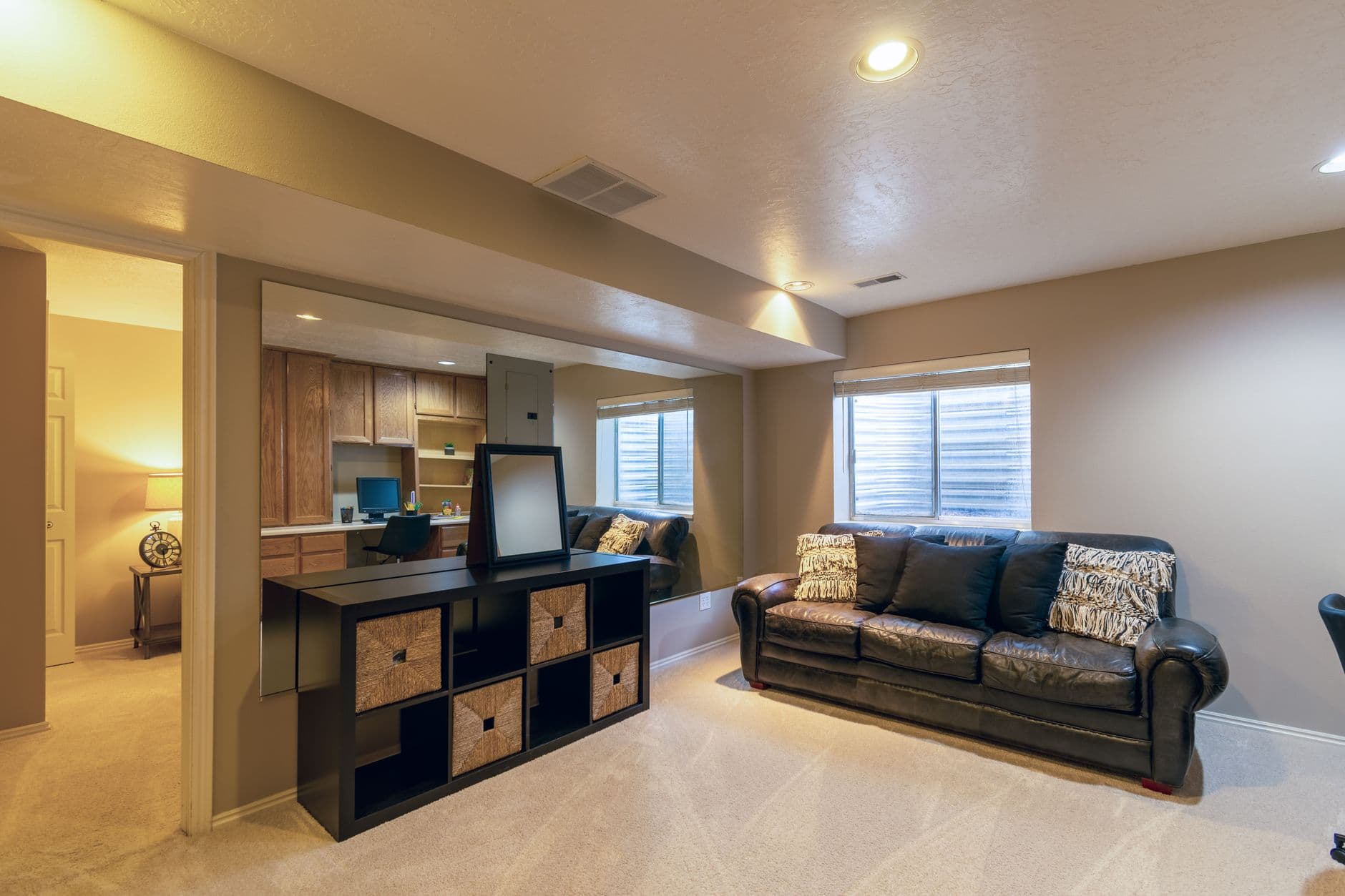
Below grade, the walls are cold, the floor is colder, and the air is damper than anywhere else in the house. That changes which fireplace makes sense and what you should expect from it.
By Scooter M.Published September 21, 2026Last reviewed September 21, 2026
Disclosure: the buy links below are affiliate links. We earn a commission on Amazon purchases at no extra cost to you. It has never changed a ranking on this site, and every roundup here names a unit we think you should skip. How this site is funded.
The short answer
A basement is the hardest room in the house for one of these, and you should buy accordingly. Every electric fireplace is capped at 1,500 W — about 5,118 BTU per hour — and a below-grade room loses heat through cold masonry on every side including the floor. That makes a fireplace genuine supplemental heat down there and nothing more. Choose infrared if you can, a two-stage heater if you cannot, and be realistic about what one unit will do to a large cold room.
Why below grade is different
Four things change once a room is underground, and together they explain why a fireplace that comfortably warms a 250 square foot bedroom can feel inadequate in a basement of the same size.
- The walls are a heat sink. Masonry against soil sits near ground temperature year-round and pulls warmth out of the room continuously. Upstairs walls have insulation and warm rooms on the other side.
- The floor is cold and you are standing on it. A concrete slab is the single largest cold surface in a basement, and it is the one in direct contact with people.
- The air is damper. Below grade is where humidity collects, which is why so many basements run a dehumidifier. Damp air at the same temperature feels colder.
- Ceilings are usually low. The one genuine advantage: less volume of air to warm, and the heat stays nearer head height.
Quick picks: basement electric fireplaces
Ranked. The running cost column is computed from each unit's rated wattage, not quoted from a manufacturer. Tap a row for the full write-up.
| # | Product | Best for | Cost per hour | Price |
|---|---|---|---|---|
| 1 | 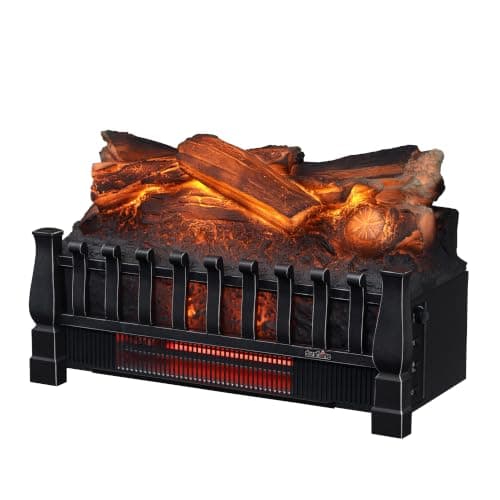 Duraflame DFI030ARU 20" Infrared Electric Fireplace Log SetInfrared warms objects rather than air — which is exactly what you want in a room whose air is constantly being chilled by the walls. | The right heater type for a cold room | 27.5¢1,500 W · 5,118 BTU | |
| 2 | 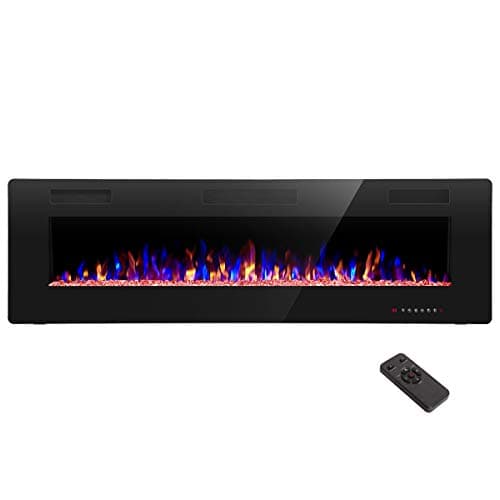 R.W.FLAME 60" Ultra-Thin Recessed & Wall-Mount FireplaceSixty inches of flame with a real 750 W low stage at 3.85 inches deep — the most fireplace per dollar for a big below-grade room. | A finished basement wall, on a budget | 27.5¢1,500 W · 5,118 BTU | |
| 3 | 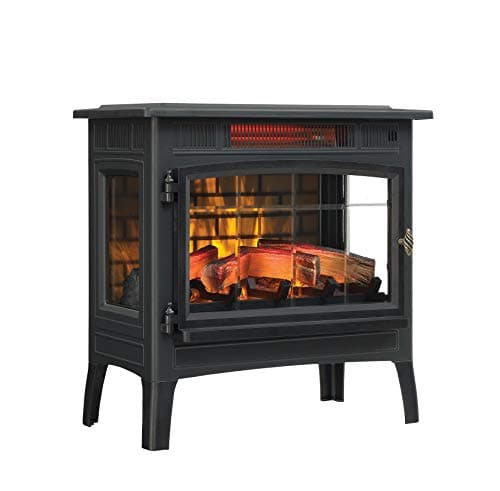 Duraflame DFI-5010-01 3D Infrared Fireplace StoveA freestanding stove that needs nothing from the building — the only sensible option if the walls are still block and studs. | An unfinished basement, or a rental | 27.5¢1,500 W · 5,118 BTU | |
| 4 | 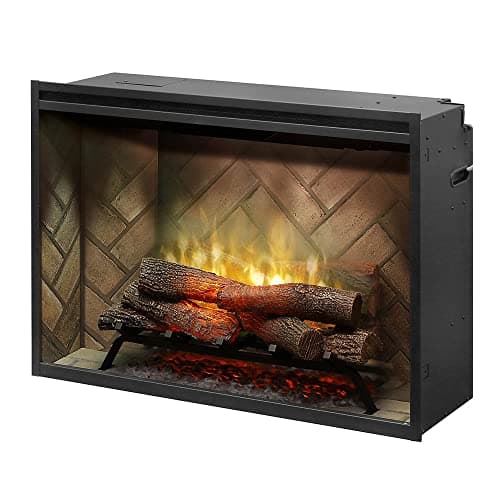 Dimplex Revillusion RBF36 36" Built-In FireboxThe only unit here that can genuinely exceed the 1,500 W ceiling — and a basement is the likeliest room in the house to already have the panel next to it. | The one case for a 240 V circuit | 25.2¢1,375 W · 4,692 BTU | |
| — | Dimplex Opti-Myst Revive 25" Water Vapor FireplaceNo heat at all and a water reservoir to maintain — the worst possible match for a cold, damp room.Skip this one | Nothing in a basement | No heaterflame effect only |
#ad Buy links are affiliate links — we earn a commission on Amazon purchases at no extra cost to you, and it never changes the ranking. How this site is funded. Running cost is computed at 18.34¢/kWh; see what these actually cost to run.
The arithmetic, honestly
Our usual rule of thumb is around 20 BTU per square foot for supplemental heat in an insulated room at ordinary ceiling height. A basement is not that room, and pretending otherwise is how people end up disappointed.
| Basement size | At 20 BTU/sq ft (upstairs rule) | What 1,500 W actually gives you |
|---|---|---|
| 200 sq ft | about 4,000 BTU/hr | 5,118 BTU/hr — comfortable |
| 300 sq ft | about 6,000 BTU/hr | 5,118 BTU/hr — marginal |
| 500 sq ft | about 10,000 BTU/hr | 5,118 BTU/hr — supplemental only |
| 800 sq ft open plan | about 16,000 BTU/hr | Not close — zone one seating area instead |
The honest conclusion for a large finished basement: buy the fireplace for the seating area rather than the room. Put it where people sit, choose infrared so the warmth lands on them rather than on air the walls are chilling, and let the house's actual heating system handle the volume. Do they actually heat a room and BTU and room size work through the numbers in full.
What it costs to run down there
Basements get used in long sessions — a film, an evening, a whole Saturday — so running cost matters more than it does in a room you pass through. At the June 2026 US residential average of 18.34 cents per kilowatt-hour:
| Usage | Hours | Heat on (1,500 W) | Flame only (~100 W) |
|---|---|---|---|
| One evening | 4 | $1.10 | $0.07 |
| A week of evenings | 28 | $7.70 | $0.51 |
| A month, 4 hrs a night | 120 | $33.01 | $2.20 |
| A 90-day winter, 4 hrs a night | 360 | $99.04 | $6.60 |
| Per hour | 1 | 27.5¢ | 1.8¢ |
| Usage | Hours | Heat on (750 W) | Flame only (~100 W) |
|---|---|---|---|
| One evening | 4 | $0.55 | $0.07 |
| A week of evenings | 28 | $3.85 | $0.51 |
| A month, 4 hrs a night | 120 | $16.51 | $2.20 |
| A 90-day winter, 4 hrs a night | 360 | $49.52 | $6.60 |
| Per hour | 1 | 13.8¢ | 1.8¢ |
A basement will hold a thermostat at full output longer than a bedroom will, so assume the higher figure rather than the lower one when budgeting. The running cost calculator will do it against your own tariff.
Damp, and the one thing to check first
Electric fireplaces have no combustion, no flue and no carbon monoxide, which removes the ventilation problem that makes fuel-burning heaters a poor fit for a sealed below-grade room. That is a genuine advantage of electric down there and worth stating plainly.
- Do not add humidity on purpose. This is why the water-vapor unit is our skip. A basement usually needs less airborne moisture, not more.
- Check the circuit before anything else. Basement circuits are frequently shared with a freezer, a dehumidifier, a washer or a sump pump. 1,500 W is 12.5 amps continuous — see watts, amps and your circuit.
- Never run one through an extension lead, which in an unfinished basement is exactly the temptation.
- Mind the mounting surface. Furring strips over masonry are not the same as stud framing; confirm the fixing before hanging 50 pounds of fireplace.
- Keep it clear of the dehumidifier's air path, or you will be heating and drying the same air in a loop.
Questions people actually ask
Will an electric fireplace heat a basement?
It will heat the area around it, not a whole large basement. Every unit is capped at 1,500 W — about 5,118 BTU per hour — and below-grade rooms lose heat through cold masonry on all sides. Treat it as supplemental heat for a seating area, with the house's system handling the room.
What kind of electric fireplace is best for a basement?
Infrared, if you can. It warms people and objects directly rather than heating air that the cold walls are continuously chilling. Failing that, a unit with a genuine 750 W low stage and a thermostat, so it can run gently for long sessions rather than cycling hard.
Are electric fireplaces safe in a damp basement?
There is no combustion, no flue and no carbon monoxide, which is a real advantage in a below-grade room. The precautions are electrical: plug directly into a wall receptacle, never an extension lead, and do not share a circuit with a dehumidifier, freezer or sump pump.
Should I get a water vapor fireplace for a basement?
We would not. The flame effect produces no heat at all, and it works by raising mist into the room — adding humidity to the dampest part of the house, often while a dehumidifier is running. It is a lovely product in the wrong room.
Can I run a 240 V electric fireplace in a basement?
It is the one room where that is often practical, because the electrical panel is usually right there. A 240 V unit like the Dimplex Revillusion RBF36 can produce up to 8,786 BTU per hour instead of 4,435 — but it needs a licensed electrician, a dedicated circuit and usually a permit.
Sources
Every figure on this page is either taken from one of these documents or computed from a formula shown on the page. Nothing here is recalled from memory.
- Duraflame DFI030ARU — infrared quartz log set, 1,000 sq ft rating
- R.W.FLAME 60 in recessed / wall-mount listing — 60 x 18.1 x 3.85 in, 750/1500 W, 120 V
- Duraflame DFI-5010 user manual — 120 V, 12.5 A
- Dimplex Revillusion RBF36 listing — 1375/1975/2575 W at 120/208/240 V, 4435/6739/8786 BTU
- Dimplex Opti-Myst Revive 25 in — 120 V, 1,250 W
- US Consumer Product Safety Commission — portable heater safety guidance
- EIA Electric Power Monthly, Table 5.3 — US residential average, June 2026
Read next
- The best electric fireplaces for large rooms
No plug-in unit heats a large room — here is why, what helps anyway, and the 240 V category that genuinely exceeds the ceiling.
- The best infrared electric fireplaces
Five infrared units where the maker states the heater type, plus the hybrid problem that makes the word unreliable on a listing.
- BTU and room size
BTU-to-square-feet, banded — with a calculator that reports the shortfall as honestly as the fit.
- Plug-in vs hardwired electric fireplaces
What hardwiring actually buys you, which units support both, and why one popular firebox produces less heat than a plug-in unit on a normal circuit.
- Do electric fireplaces actually heat a room?
Yes, up to about 256 square feet. Above that it is supplemental heat, and no plug-in unit does better.