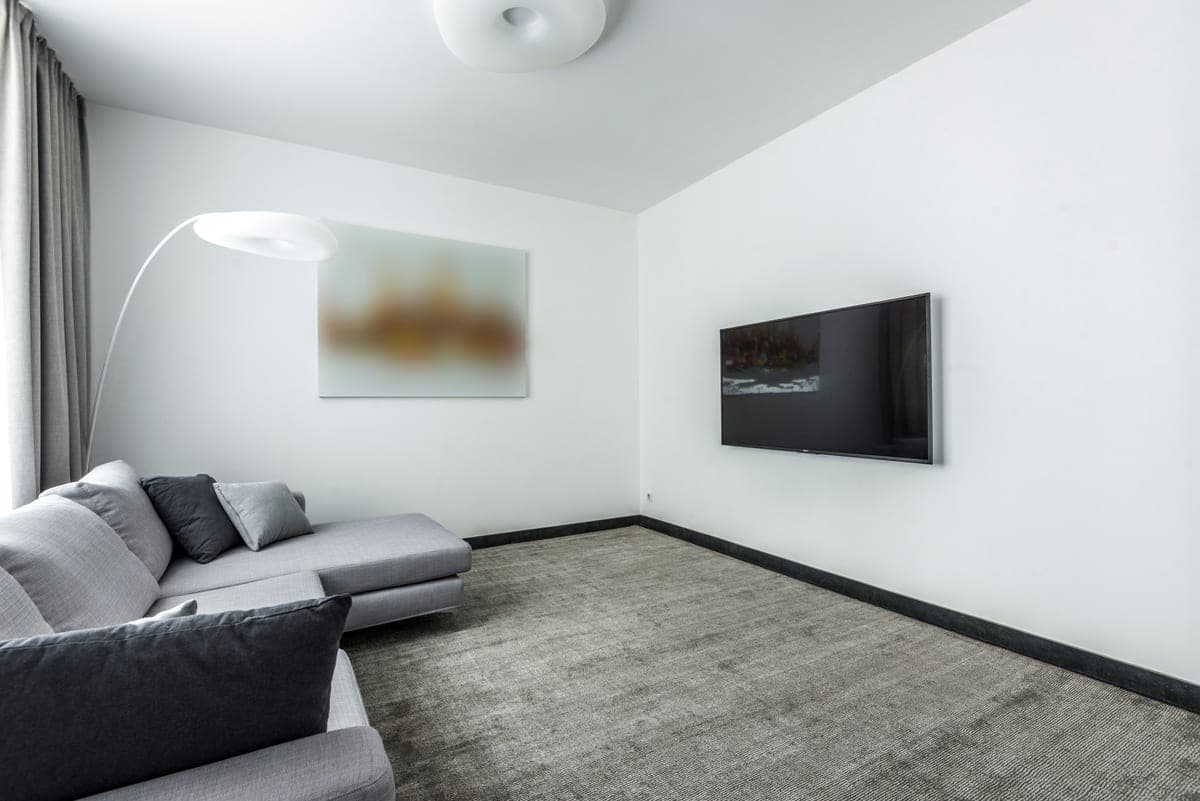
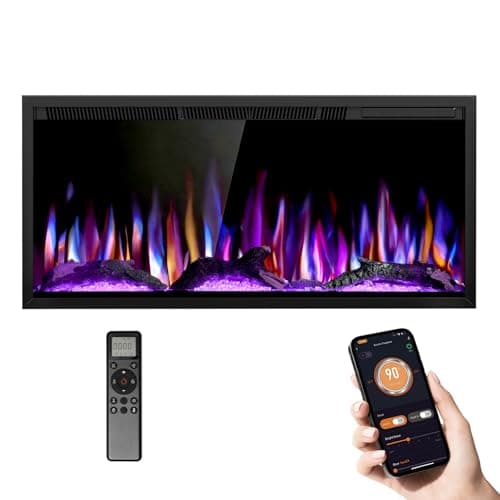
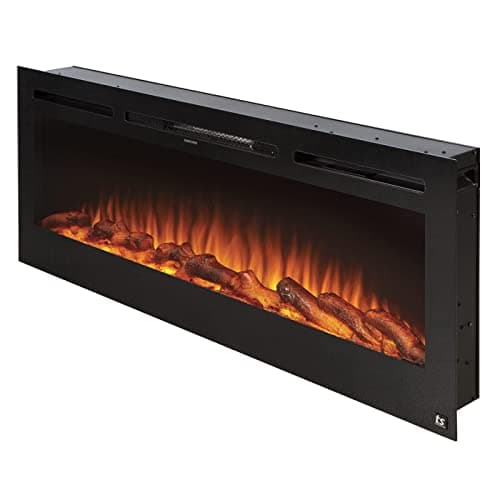
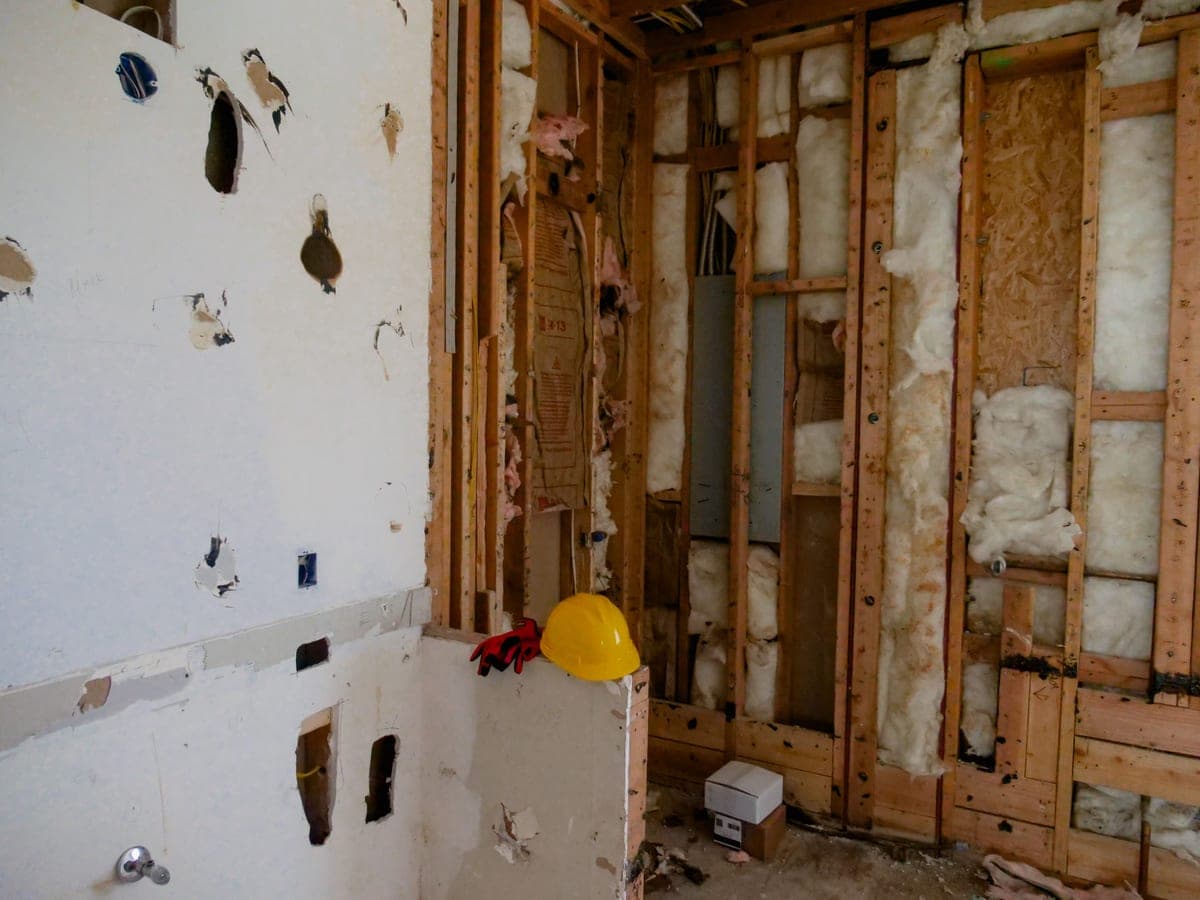
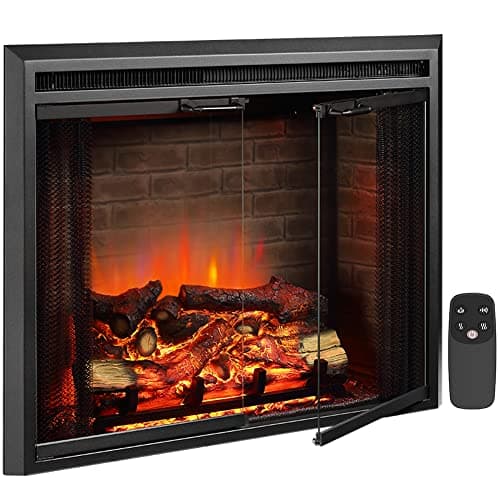
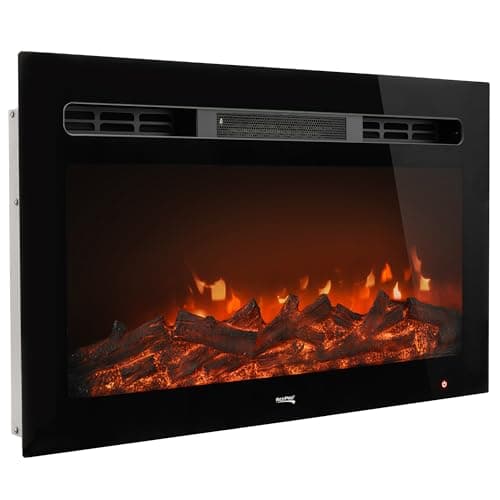
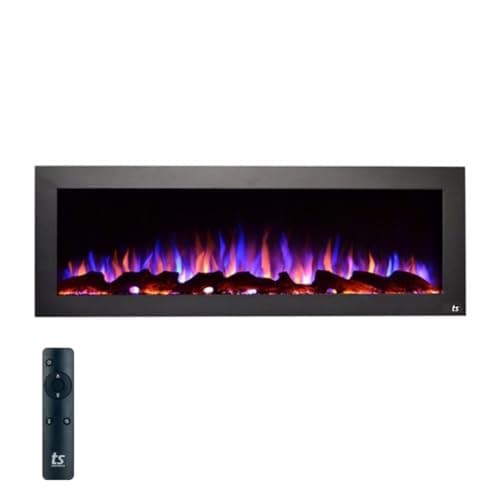
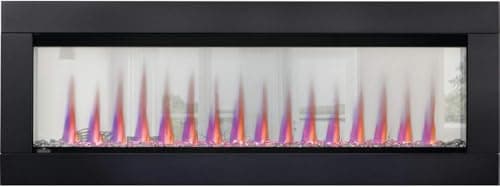
A band of flame in a wall, at eye level, with nothing underneath it. The most modern shape in the category and the one with the largest gap between the easy install and the good-looking one.
Everything in wall-mount & recessed
Each roundup below shows its top pick with a buy link, so you never have to dig three pages deep to find one.
Portrait-format fireplaces for a narrow pier or chimney chase, the two Napoleon units that define the category, and honest alternatives when neither is in stock.
Why see-through electric fireplaces are rare, how they differ from two-sided and three-sided units, the one family you can actually buy, and the 240-volt requirement nobody mentions.
Surface-mounted and recessed are the same unit, installed two ways
Nearly every linear electric fireplace sold today is dual-install: you can hang it on the wall like a large picture, or cut into the wall and set it flush. The unit is identical. What differs is the labor, the cost, and how it looks when it is done.
Surface-mounting takes an afternoon: find studs, hang the bracket, hook the unit on, plug it in. Recessing means cutting drywall, checking what is inside the cavity, framing an opening, almost always adding a receptacle inside the recess, and patching and painting afterward. The finished result is dramatically better — a flush unit reads as architecture, a hung one reads as an appliance — and the work is genuinely more involved than the product listings suggest.
The depth question, which decides everything
A standard interior wall framed with 2x4 studs gives you about 3.5 inches of usable cavity depth. That is the number every recessed installation lives or dies by. Manufacturers know it, which is why the popular models are built astonishingly thin — R.W.FLAME's recessed range, for instance, publishes a 3.86-inch depth across sizes from 30 to 68 inches, so the unit sits almost flush with only a slight proud edge.
Under 3.5 in deep — fits a 2x4 cavity with no furring. The easiest recessed job there is.
3.5 to 5 in — needs a small proud reveal, or furring strips to build the wall out.
Over 5 in — needs a 2x6 wall, a built-out false wall, or a chase. This is a construction job, not a weekend.
Any depth, exterior wall — you are cutting into insulation and possibly a vapor barrier. Talk to somebody before you cut.
Why wall units are the best placement for heat
Every plug-in electric fireplace in the United States shares the same 1,500 W ceiling and the same roughly 5,118 BTU per hour. What differs between form factors is where that heat leaves the box. A wall unit at 40 to 50 inches off the floor blows warm air out at seated chest height, straight into the part of the room where people actually are. A console pushes it out at shin level and a firebox insert pushes it into a masonry recess. Same energy, better delivery.
One thing to watch: not every wall unit is 1,500 W. TURBRO's 36-inch In-Flame is rated 1,400 W and 4,780 BTU per hour — genuinely less than the class maximum, and the only unit in our catalog where the figure is not the usual ceiling. It is a small difference and an honest one to know about.
Where to start
If you have not decided between surface and flush, read wall-mounted vs recessed first — it is the decision that constrains everything else. If you are choosing between this shape and a firebox insert, insert vs wall-mount lays out the fork. If you already know what you want, the best wall-mount units roundup has the shortlist with running costs.
Questions people actually ask
+Can an electric fireplace be installed in a wall?
Yes — most linear electric fireplaces are designed for it and ship with brackets for both surface-mounting and recessing. The constraint is depth: a standard 2x4 wall gives about 3.5 inches of cavity, so the unit needs to be thinner than that to sit flush. Several popular models publish depths under 4 inches specifically for this.
+Do wall mounted electric fireplaces give off heat?
Yes, and it is the best-placed heat in the category. A wall unit vents at roughly seated chest height, which is where people are, rather than at ankle level. Output is the same 1,500 W ceiling shared by every 120 V plug-in unit — about 5,118 BTU per hour.
+How much does it cost to recess an electric fireplace?
The unit aside, the variable is electrical work. Cutting and framing an opening in a standard interior wall is a competent DIY job; adding a receptacle inside that cavity generally is not, and that is where most of the cost sits. Because it depends on local code and your existing circuits, we point you to a licensed electrician rather than quoting a number we cannot stand behind.
+Does a wall mounted electric fireplace need a dedicated circuit?
At 1,500 W a unit draws 12.5 amps, which is most of a 15-amp circuit on its own. Manufacturers routinely specify a dedicated circuit for this reason. Whether your existing wiring can carry it is a question for an electrician — see watts, amps and your circuit for the arithmetic behind the requirement.
Sources
Every figure on this page is either taken from one of these documents or computed from a formula shown on the page. Nothing here is recalled from memory.