Comparison · the top-of-funnel decision
Electric vs gas fireplace
Gas produces far more heat and costs far more to install. Electric produces a fixed 5,118 BTU and installs in an afternoon. Here is the whole comparison, including where gas wins outright.
By Scooter M.Published September 2, 2026Last reviewed September 2, 2026
Disclosure: the buy links below are affiliate links. We earn a commission on Amazon purchases at no extra cost to you. It has never changed a ranking on this site, and every roundup here names a unit we think you should skip. How this site is funded.
The short version
Gas produces far more heat — a typical gas insert is 20,000 to 40,000 BTU/hr against electric's fixed 5,118 — and looks better, because it is a real flame. Electric installs in an afternoon for a fraction of the cost, needs no venting, no gas line, no permit and no annual service, and can be run as a flame effect for under two cents an hour. Choose gas for heat; choose electric for everything else.
Side by side
| Electric | Gas | |
|---|---|---|
| Heat output | ~5,118 BTU/hr, fixed by the 120 V circuit | Typically 20,000–40,000 BTU/hr |
| Install | Plug in. An afternoon at most | Gas line, venting, permit, professional install |
| Venting | None. No combustion | Direct vent or B-vent, unless ventless |
| Running cost | ~27.5¢/hr on full heat at 18.34¢/kWh | Depends on gas rate; usually cheaper per BTU |
| Flame | An optical effect. Convincing in the evening | A real flame. Convincing always |
| Maintenance | None | Annual service, and it is not optional |
| Safety | No CO, no combustion, no flue | Requires a CO detector and correct venting |
| Flame without heat | Yes, at under 2¢/hr | No. The flame is the heat |
| Reversible | Lift it out | It is a permanent installation |
Where gas genuinely wins
It is worth being straightforward about this rather than defending electric because we sell electric. Gas wins on the two things people most want from a fireplace.
- Heat, by a factor of four to eight. A gas insert can be a genuine primary heat source for a large room. No electric fireplace can, at any price, because of the circuit.
- Realism, outright. It is a real flame with real combustion. Nothing electric matches it in daylight, and only water vapor gets close in any light.
- Cost per BTU, usually. Natural gas is generally cheaper per unit of heat than electricity in most US markets, so if you are heating a lot, gas is the cheaper fuel.
- It works in a power cut. Many gas appliances have a millivolt system that runs without electricity. An electric fireplace obviously does not.
Where electric genuinely wins
- Install cost and complexity. No line, no flue, no permit, no trades. This is not a close comparison.
- Flame without heat. The single most-used feature of an electric fireplace, and gas cannot do it — the flame *is* the heat.
- Any room, anywhere. A bedroom, a basement, an apartment, a room with no exterior wall. Gas needs venting; electric needs a receptacle.
- Zero maintenance and zero CO risk. No annual service, no detector requirement, nothing to go wrong that a plumber has to fix.
- Reversibility. It lifts out. A gas installation is permanent and shows up on a home inspection.
Quick picks
Ranked. The running cost column is computed from each unit's rated wattage, not quoted from a manufacturer. Tap a row for the full write-up.
| # | Product | Best for | Cost per hour | Price |
|---|---|---|---|---|
| 1 | 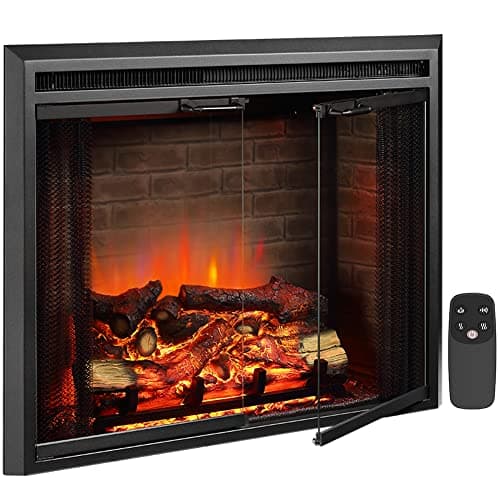 PuraFlame Klaus 33" Electric Fireplace InsertIf you already have the opening and you are not going back to fuel, this fills it with no venting and no gas line. | Replacing a decommissioned gas or wood firebox | 27.5¢1,500 W · 5,118 BTU | |
| 2 | 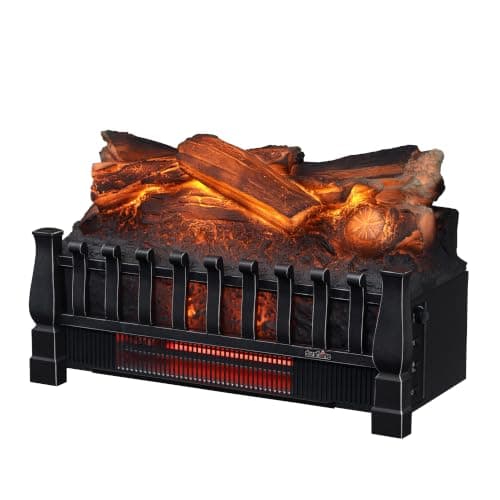 Duraflame DFI030ARU 20" Infrared Electric Fireplace Log SetAn infrared log set that drops into the existing firebox. Nothing to size, nothing to trim, and it lifts back out. | The cheapest way to stop using gas | 27.5¢1,500 W · 5,118 BTU | |
| 3 | Dimplex Opti-Myst Revive 25" Water Vapor FireplaceThe only electric flame that competes with a real one on movement. It also produces no heat, which is the trade. | Matching gas realism without the gas | No heaterflame effect only |
#ad Buy links are affiliate links — we earn a commission on Amazon purchases at no extra cost to you, and it never changes the ranking. How this site is funded. Running cost is computed at 18.34¢/kWh; see what these actually cost to run.
The running-cost comparison, honestly
| Usage | Hours | Heat on (1,500 W) | Flame only (~100 W) |
|---|---|---|---|
| One evening | 4 | $1.10 | $0.07 |
| A week of evenings | 28 | $7.70 | $0.51 |
| A month, 4 hrs a night | 120 | $33.01 | $2.20 |
| A 90-day winter, 4 hrs a night | 360 | $99.04 | $6.60 |
| Per hour | 1 | 27.5¢ | 1.8¢ |
We are not going to publish a corresponding gas figure, because a gas fireplace's running cost depends on its BTU rating and your local gas rate, and we have neither. What is safe to say is the general shape: gas is usually cheaper per BTU delivered, and an electric fireplace at 5,118 BTU/hr is producing far fewer BTU in the first place — so the total spend depends entirely on how much heat you actually want.
#1 · Replacing a decommissioned gas or wood firebox
PuraFlame Klaus 33" Electric Fireplace Insert
If you already have the opening and you are not going back to fuel, this fills it with no venting and no gas line.
The commonest version of this decision is not really electric versus gas — it is 'I have a fireplace I no longer use and I want something in it'. In that case electric wins by default: no line, no flue, no permit, no annual service.
33 1/16 inches wide, 750/1500 W, with its own glass door, mesh screen and brick-look interior.
Check the rear width of the masonry opening. It tapers, and that is where fits become returns.
What it does not do: No trim kit in the base version — an existing masonry opening wider than 33 in leaves a visible gap unless you buy the trim separately.
Published specs
- Heater:
- 750 W / 1,500 W, two settings
- Width:
- 33 1/16 in
- Height:
- 25 9/16 in
- Flame:
- LED, three intensity settings, runs with heat off
- Front:
- Glass door, mesh screen, three-sided brick interior
- Log:
- Resin cast log, 11 13/16 in high, on a grate over the ember bed
What it costs to run
- 27.5¢/hr on full heat
- $99.04 across a 90-day winter at 4 hrs a night
- 5,118 BTU/hr · 12.5 A on a 120 V circuit
Computed at 18.34¢/kWh (EIA, June 2026). Your rate will differ — work out your own.
#ad We earn a commission on this link at no cost to you. How this is funded. Price as of October 17, 2026.
Specs from: PuraFlame Klaus insert listing (specifications and dimensions); Walmart product listing — 750/1500 W rating confirmed.
#2 · The cheapest way to stop using gas
Duraflame DFI030ARU 20" Infrared Electric Fireplace Log Set
An infrared log set that drops into the existing firebox. Nothing to size, nothing to trim, and it lifts back out.
If you are decommissioning a gas fireplace and want the opening to look alive again, a log set is the lowest-commitment option there is.
Infrared quartz heat, rated by Duraflame for supplemental heating up to 1,000 square feet, with independent flame and heat controls.
It is entirely reversible, which matters if you might restore the gas appliance later.
What it does not do: The 1,000 sq ft figure is the manufacturer's supplemental-heat rating, not a claim that it will hold temperature in a 1,000 sq ft room. See our BTU page for what the wattage actually buys.
Published specs
- Heater:
- Infrared quartz, rated by the manufacturer for up to 1,000 sq ft
- Width:
- 20 in
- Form:
- Drop-in log set for an existing firebox
- Flame:
- LED with resin cast logs and glowing embers
- Control:
- Remote with adjustable thermostat
What it costs to run
- 27.5¢/hr on full heat
- $99.04 across a 90-day winter at 4 hrs a night
- 5,118 BTU/hr · 12.5 A on a 120 V circuit
Computed at 18.34¢/kWh (EIA, June 2026). Your rate will differ — work out your own.
#ad We earn a commission on this link at no cost to you. How this is funded. Price as of October 17, 2026.
Specs from: Duraflame DFI030ARU listing — infrared, 1,000 sq ft rating; Bed Bath & Beyond product page — 20 in infrared log set.
#3 · Matching gas realism without the gas
Dimplex Opti-Myst Revive 25" Water Vapor Fireplace
The only electric flame that competes with a real one on movement. It also produces no heat, which is the trade.
The strongest argument for gas over electric is that a gas flame is a real flame and looks like one. Water vapor is the only electric mechanism that gets close, because the flame occupies real space rather than being a lit surface.
Dimplex publishes 120 V and 1,250 W for the Revive 25. The flame effect produces no heat and the mist is cool to the touch.
So it competes with gas on looks and loses on heat entirely. If you want both, gas is the honest answer.
What it does not do: No heat from the flame effect at all, and it needs a water reservoir refilled. If you want warmth, this is the wrong product and no amount of enthusiasm changes that.
Published specs
- Electrical:
- 120 V, 1,250 W
- Width:
- 25 in
- Flame:
- Ultrasonic water mist from ordinary tap water, lit by LEDs
- Heat:
- The flame effect produces NO heat. Heaters are a separate option on some models
- Install:
- Hardwired, or a compatible 120 V power cord
What it costs to run
No heater. The flame effect alone draws far less than a heating unit — see what these cost to run.
Computed at 18.34¢/kWh (EIA, June 2026). Your rate will differ — work out your own.
#ad Dimplex is not a program we have joined, so we earn nothing here. How this is funded. Price as of October 17, 2026.
Specs from: Dimplex Optimyst water vapor fireplaces — how the mist flame works; Dimplex Opti-Myst Revive 25 in — 120 V, 1,250 W.
Questions people actually ask
Is electric or gas cheaper to run?
Per unit of heat, gas is usually cheaper in most US markets. But an electric fireplace produces far less heat in the first place — about 5,118 BTU/hr against 20,000 or more for gas — so total spend depends on how much warmth you actually want. Electric run as a flame effect only, at under two cents an hour, is cheaper than any gas appliance can be.
Which is better, an electric or gas fireplace insert?
Gas for heat and realism; electric for install cost, flexibility and running the flame without heat. If you have an existing firebox and no gas line, electric wins on practicality by a wide margin.
Can I convert a gas fireplace to electric?
Yes, and it is common. The gas appliance is removed and capped by a qualified person, and an electric insert or log set drops into the opening. The gas line must be properly capped — that part is a licensed plumber's job, not a DIY one.
Do electric fireplaces produce carbon monoxide?
No. There is no combustion of any kind, which is why they need no venting and no CO detector. This is one of the main reasons they are used in bedrooms and basements where a fuel-burning appliance would be a bigger undertaking.
Sources
Every figure on this page is either taken from one of these documents or computed from a formula shown on the page. Nothing here is recalled from memory.
- EIA Electric Power Monthly, Table 5.3 — US residential average, June 2026
- Wikipedia — Electric fireplace (mechanism and history)
- PuraFlame Klaus 33 in insert — 750/1500 W, dimensions
- Dimplex Opti-Myst Revive 25 in — 120 V, 1,250 W
- EcoCostSavings — measured wattage and BTU across 117 electric fireplace models
Read next
- Are electric fireplace inserts worth it?
Worth it if you want a dead firebox to look alive with no venting. Not worth it as a heating strategy. The arithmetic for both.
- Electric fireplace vs space heater
Identical heat, identical running cost. What the price difference actually buys, and when a space heater is the honest answer.
- Are electric fireplaces safe?
No combustion, no carbon monoxide, no flue. The four electrical considerations that do matter.
- Electric fireplace inserts for an existing fireplace
What fits a real masonry firebox, why the rear width is the constraint, and the three units that suit brick.
- Electric fireplace vs wood-burning fireplace
An open fire is 10-20% efficient and can be a net heat loss. Electric delivers everything it draws but caps at 1,500 W. Which trade that favors, and when the answer is a wood insert instead.