Buyer's guide · updated for the 2026 heating season
Electric fireplace trim kits
Nearly every insert is narrower than the hole you are putting it in. A trim kit is the usual answer — but it only works within a narrow band of gap sizes, and outside that band you need a different fix.
By Scooter M.Published September 21, 2026Last reviewed September 21, 2026
Disclosure: the buy links below are affiliate links. We earn a commission on Amazon purchases at no extra cost to you. It has never changed a ranking on this site, and every roundup here names a unit we think you should skip. How this site is funded.
The short answer
A trim kit is a flat frame that covers the margin between your insert and your opening — and it only works inside a band. Too small a gap and you do not need one; too large and nothing on the market covers it. The reliable fix is to buy an insert whose manufacturer sells a matched surround, like the PuraFlame Klaus with its trim kit at 44.1 by 31.5 inches. If your opening is bigger than that, stop trying to fill it and use a log set instead.
What a trim kit actually is
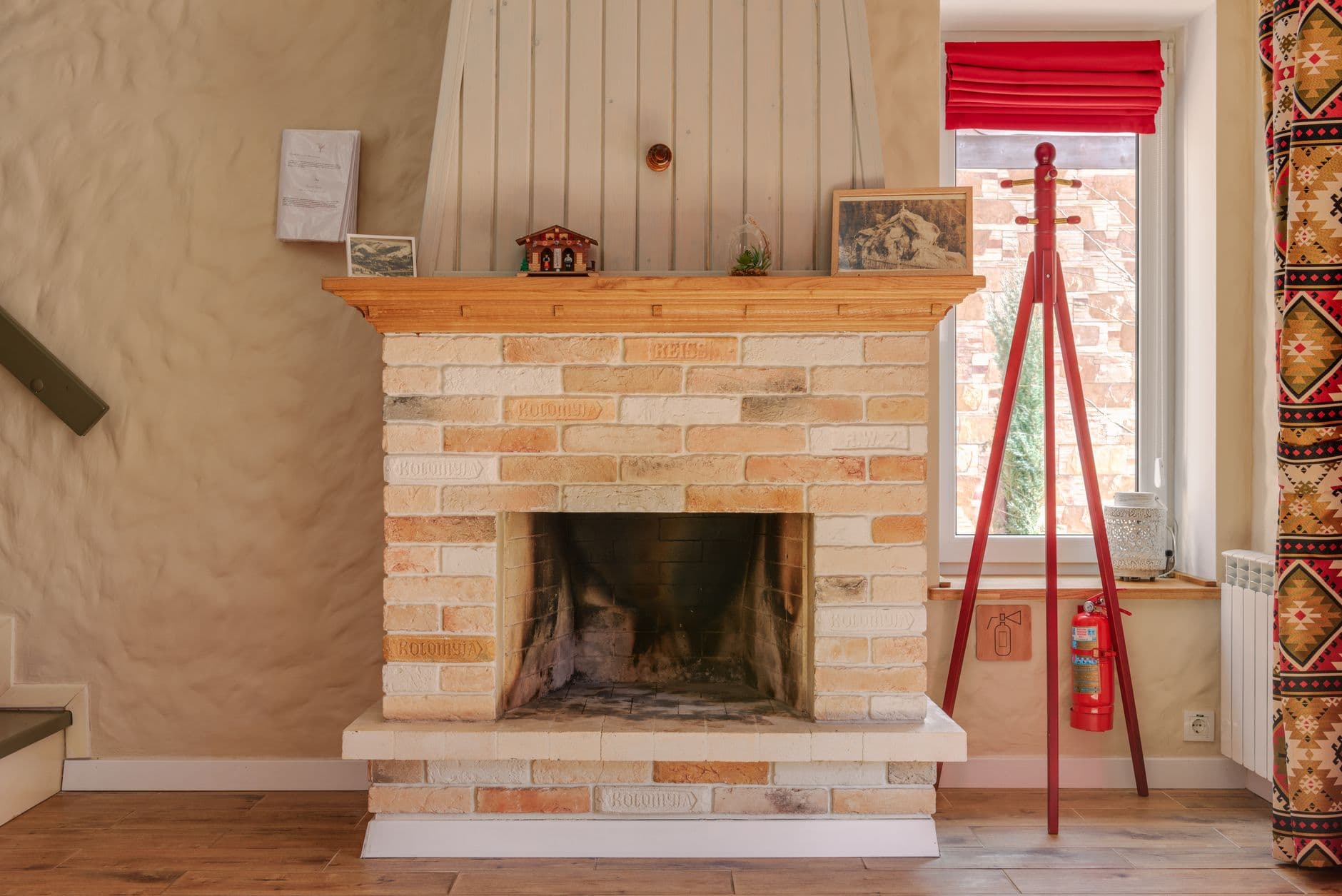
It is a metal frame, usually black, that sits against the face of the masonry and overlaps the edges of the insert. It hides the rough edge of the opening, the fixings and any daylight between the firebox and the brick. It is cosmetic — it does nothing for heat, nothing for safety and nothing for the install beyond tidying the line where two things meet.
The reason it matters so much in this category is that inserts are sold by firebox width while fireplaces are built at whatever width the mason felt like. Almost nobody's opening is exactly 33 inches. So the normal outcome of buying an insert is a gap, and the normal fix is a frame.
The gap arithmetic
Work this out before you buy anything. Measure the opening, subtract the insert width, halve it — that is the margin on each side the trim has to cover.
| Your opening | Gap each side of a 33 in insert | What works |
|---|---|---|
| 34 in | about 1/2 in | No trim needed — or a slim universal frame |
| 36 in | about 1 1/2 in | Matched trim kit, comfortably |
| 40 in | about 3 1/2 in | Matched trim kit — near its limit |
| 44 in | about 5 1/2 in | At the edge of what the Klaus trim covers |
| 48 in and up | about 7 1/2 in | No trim kit. Use a log set and show the brick |
Quick picks: inserts with a surround, and what to do instead
Ranked. The running cost column is computed from each unit's rated wattage, not quoted from a manufacturer. Tap a row for the full write-up.
| # | Product | Best for | Cost per hour | Price |
|---|---|---|---|---|
| 1 | 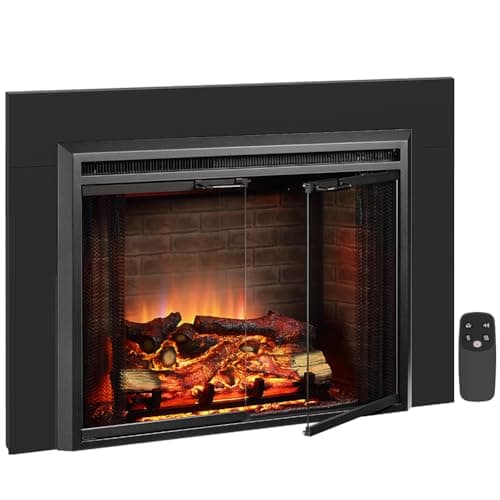 PuraFlame Klaus 33" Insert with Trim KitThe Klaus insert with its trim kit in the box — 44.1 by 31.5 inches of coverage, which is the widest honest fix on this page. | The gap solved in one purchase | 27.5¢1,500 W · 5,118 BTU | |
| 2 | 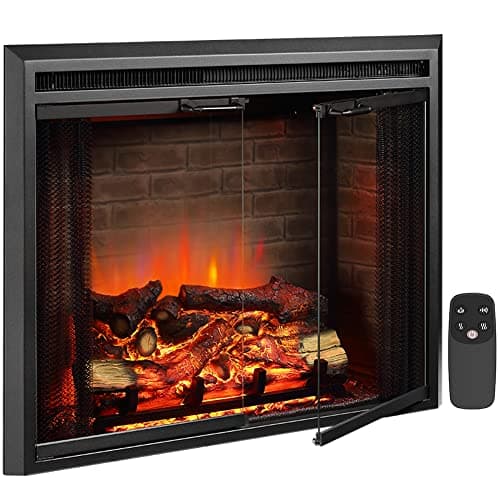 PuraFlame Klaus 33" Electric Fireplace InsertThe same insert without the surround, for a lot less — the right buy when the masonry around it already looks good. | A tidy opening that needs no trim at all | 27.5¢1,500 W · 5,118 BTU | |
| 3 | 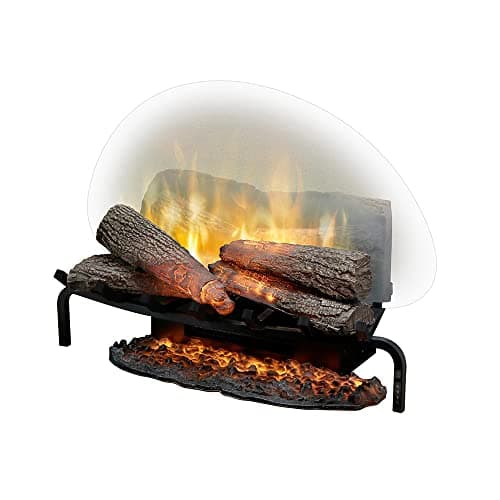 Dimplex Revillusion RLG25 25" Plug-In Log SetA log set makes the gap a feature instead of a problem — the honest answer when your opening is far wider than any insert. | When the gap is too big for any trim | 27.5¢1,500 W · 5,118 BTU | |
| — | 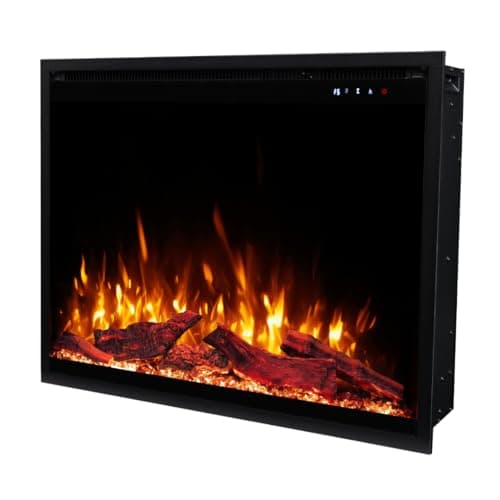 Touchstone Fireplug Pro 33 InsertA 33-inch insert with no surround option we could find — which makes it the wrong starting point for anyone shopping trim.Skip this one | Nothing, if the gap is your problem | 27.5¢1,500 W · 5,118 BTU |
#ad Buy links are affiliate links — we earn a commission on Amazon purchases at no extra cost to you, and it never changes the ranking. How this site is funded. Running cost is computed at 18.34¢/kWh; see what these actually cost to run.
Matched trim versus a universal kit
There is a market in third-party trim kits, typically sold for a specific competitor's model — you will see listings phrased as "trim for a 36 by 27 inch insert" or naming another product's ASIN outright. They cost a fraction of what a matched surround adds to an insert, and they are a legitimate option, with two caveats worth understanding.
- Fit is on you. A matched trim is engineered to overlap a specific firebox by a specific amount. A universal kit is a rectangle of the stated size; whether it sits flat against your masonry and cleanly over your insert is your problem to verify.
- Finish rarely matches exactly. Two blacks from two manufacturers are not the same black, and the difference is visible at the seam in daylight.
- Heat clearance still applies. A frame fitted tight over a heat outlet is a bad idea. Check what the insert's manual says has to stay clear.
- Buy the insert with the trim if you can. One purchase, one finish, one set of instructions, and nobody to blame but the manufacturer if it does not line up.
When a trim kit is the wrong fix entirely
Three situations come up often enough to name, and in all three the frame is not the answer.
- The opening is far too wide. Past roughly 44 inches around a 33-inch box, a trim kit stops framing and starts floating. Use a log set and let the brick do the framing — that is the argument on our log sets roundup.
- The masonry is the problem, not the gap. If the brick is stained, painted badly or crumbling, a frame around the edge draws the eye to it. You want a full insert with its own lining, which is the case we make on log sets vs inserts.
- The brick is genuinely handsome. Then buy the bare insert and leave the margin. A period fireplace with sound masonry looks better with a visible reveal than with a metal rectangle over it.
What any of these cost to run
The trim changes nothing here — it is a piece of steel. Every insert on this page runs the same 1,500 W ceiling that a 120 V circuit imposes on the whole category.
| Usage | Hours | Heat on (1,500 W) | Flame only (~100 W) |
|---|---|---|---|
| One evening | 4 | $1.10 | $0.07 |
| A week of evenings | 28 | $7.70 | $0.51 |
| A month, 4 hrs a night | 120 | $33.01 | $2.20 |
| A 90-day winter, 4 hrs a night | 360 | $99.04 | $6.60 |
| Per hour | 1 | 27.5¢ | 1.8¢ |
| Usage | Hours | Heat on (750 W) | Flame only (~100 W) |
|---|---|---|---|
| One evening | 4 | $0.55 | $0.07 |
| A week of evenings | 28 | $3.85 | $0.51 |
| A month, 4 hrs a night | 120 | $16.51 | $2.20 |
| A 90-day winter, 4 hrs a night | 360 | $49.52 | $6.60 |
| Per hour | 1 | 13.8¢ | 1.8¢ |
The Klaus is one of the cheaper units on this site with a genuine two-stage heater, which over a season is worth more than the surround. The running cost calculator will price it against your own tariff.
Questions people actually ask
What is an electric fireplace trim kit?
A flat metal frame that covers the margin between an insert and the opening it sits in, hiding the rough edge of the masonry and any daylight around the firebox. It is purely cosmetic — it does not affect heat output, safety or installation beyond tidying the join.
Do I need a trim kit for my electric fireplace insert?
Only if your opening is meaningfully wider or taller than the insert. Measure the opening, subtract the insert's dimensions and halve the difference. Under about half an inch each side you will not need one; over about five and a half inches, no trim kit will cover it and a log set is the better answer.
How big a gap can a trim kit cover?
It depends on the kit. The PuraFlame Klaus trim kit has an overall footprint of 44.1 by 31.5 inches around a 33 1/16-inch insert, which closes roughly five and a half inches each side and three top and bottom. Your opening must be smaller than the trim's overall size in both directions.
Can I use a universal trim kit on any insert?
Sometimes, and they are much cheaper, but fit is entirely your responsibility — a universal kit is a rectangle of a stated size rather than a frame engineered to overlap your specific firebox. Finishes also rarely match exactly between brands, which shows at the seam.
What if my fireplace opening is much bigger than any insert?
Stop trying to fill it. A drop-in log set sits inside the firebox and leaves the masonry visible, so the brick becomes the frame — which looks deliberate in a period fireplace, where a small metal rectangle floating in a large opening does not.
Sources
Every figure on this page is either taken from one of these documents or computed from a formula shown on the page. Nothing here is recalled from memory.
- PuraFlame Klaus 33 in insert with trim kit — 44.1 x 31.5 x 10 in overall, 750/1500 W, up to 400 sq ft, glass door, mesh screen, resin log
- PuraFlame Klaus 33 in insert — 750/1500 W, dimensions
- Dimplex Revillusion RLG25 log set — 25.625 x 19 x 13 in, 1,500 W, 120 V, 12.5 A, 5,118 BTU
- Touchstone Home Products — electric fireplace range and sizes
- EIA Electric Power Monthly, Table 5.3 — US residential average, June 2026
Read next
- Electric log sets vs fireplace inserts
One leaves your firebox visible, one covers it. Depth, effort and cost compared, with the units that suit each.
- The best electric fireplace logs
Four log sets for an existing firebox, picked on width, depth and heater type — plus the chimney above it that quietly costs more than the fire.
- Electric fireplace inserts for an existing fireplace
What fits a real masonry firebox, why the rear width is the constraint, and the three units that suit brick.
- 30-inch electric fireplace inserts
Why a 30-inch insert needs more than a 30-inch opening, and the four units worth considering in the 24 to 33-inch range.
- How to install an electric fireplace insert
Eight steps for fitting an insert into an existing firebox, and the point at which you stop and call an electrician.