Roundup · updated for the 2026 heating season
Electric fireplace inserts with a blower
This is one of the most-searched features in the category and one of the least-documented. Here are the inserts where the maker actually puts the fan in writing — and the one that leaves it out on purpose.
By Scooter M.Published September 13, 2026Last reviewed September 13, 2026
Disclosure: the buy links below are affiliate links. We earn a commission on Amazon purchases at no extra cost to you. It has never changed a ranking on this site, and every roundup here names a unit we think you should skip. How this site is funded.
The short answer
Nearly every electric fireplace that makes heat uses a fan — the real question is not whether there is a blower but whether the maker will tell you. The genuine fork in the category is fan-forced (a coil or ceramic element with a blower behind it) versus infrared quartz (a radiant element with no meaningful air movement). If you want warm air pushed into the room, you want fan-forced, and the five units above are the ones where a manufacturer actually states it.
Why this is such a hard thing to shop for
Search "electric fireplace insert with blower" and you will get a hundred listings, almost none of which use the word blower anywhere in the specification. The term survives from wood and gas inserts, where a blower is a genuinely separate, often optional component that you buy, fit and sometimes replace. On an electric unit the fan is integral, unremarkable and therefore unmentioned.
That leaves buyers doing exactly the wrong thing: inferring the heater type from the price, the photography or the flame description, none of which predict it. The only reliable signals are the words fan-forced, coil, ceramic or blower in the manufacturer's own copy, and the presence of front-facing vents on the unit itself. Everything on this page was selected on the first of those and checked against the second.
What we looked for
- A stated heater type. Fan-forced, coil, ceramic or blower, in the manufacturer's own words. Nothing qualified on inference.
- Where the air leaves the unit. Front vents let a fireplace sit flush under a television. Top vents send warm air up the wall into it.
- Two-stage heat. A 750 W low setting lets you run the fan at a lower duty cycle instead of full output or nothing.
- A thermostat. A unit that cycles to hold a temperature is quieter over an evening than one that runs flat out until you switch it off.
- Whether it fits. A verified blower in a unit that does not fit your opening is worth nothing. Depth disqualified more candidates here than heater type did.
Quick picks: inserts with a verified blower
Ranked. The running cost column is computed from each unit's rated wattage, not quoted from a manufacturer. Tap a row for the full write-up.
| # | Product | Best for | Cost per hour | Price |
|---|---|---|---|---|
| 1 | 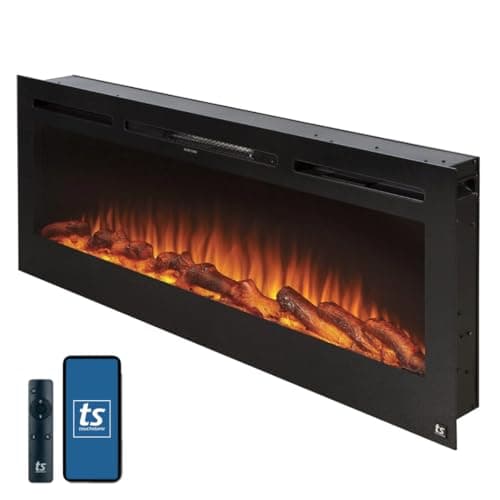 Touchstone The Sideline 50Touchstone's own product page calls it a coil wire heater with a blower. That sentence is rarer than it should be, and it is why this leads the list. | The one the maker puts in writing | 27.5¢1,500 W · 5,118 BTU | |
| 2 | 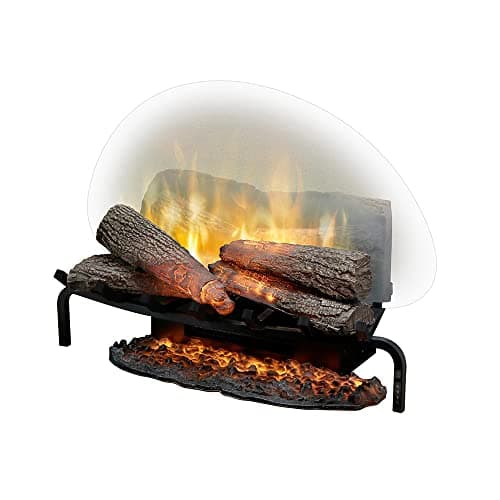 Dimplex Revillusion RLG25 25" Plug-In Log SetFan-forced ceramic, stated by Dimplex, in the one shape that drops into an existing brick opening without any building work. | A real masonry firebox | 27.5¢1,500 W · 5,118 BTU | |
| 3 | 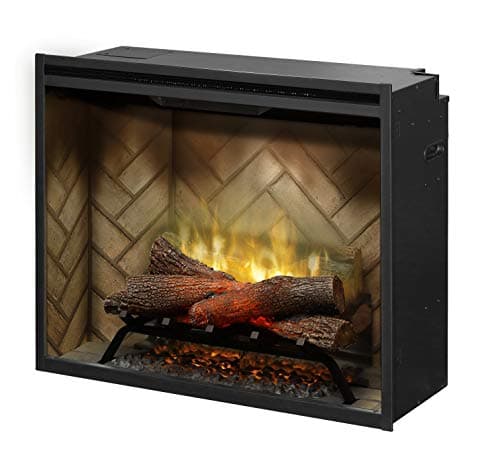 Dimplex Revillusion RBF30 30" Built-In FireboxFan-forced, and the only unit here whose published output goes meaningfully past the 120 V ceiling — but only on a supply most homes do not have. | A purpose-built enclosure | 27.5¢1,500 W · 5,118 BTU | |
| 4 | 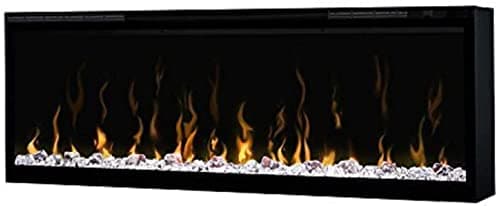 Dimplex IgniteXL 50" Linear Fireplace (XLF50)A modulating fan rather than an on-off blower, which is a genuine engineering difference and the single best answer to the noise complaint. | The only one that varies its fan speed | 27.5¢1,500 W · 5,118 BTU | |
| 5 | 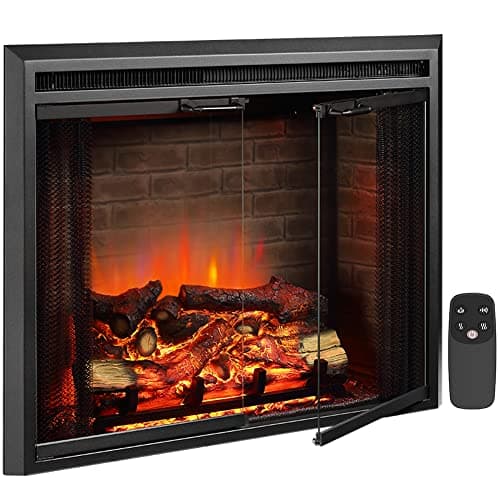 PuraFlame Klaus 33" Electric Fireplace InsertThe best-looking traditional insert at this money — but PuraFlame does not publish the heater type, so we are not going to tell you it has a blower. | The value pick, with a caveat we will not paper over | 27.5¢1,500 W · 5,118 BTU | |
| — | 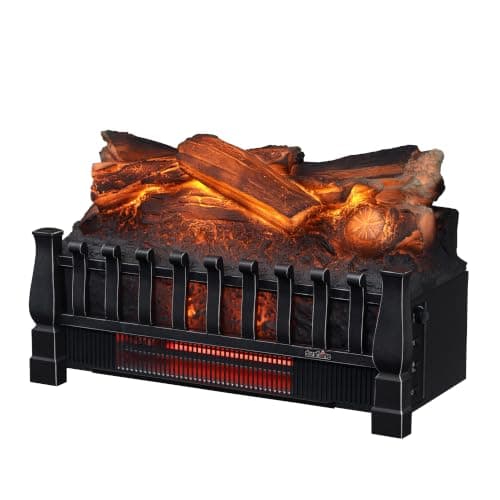 Duraflame DFI030ARU 20" Infrared Electric Fireplace Log SetA good log set with no blower by design. It is infrared quartz — it radiates rather than blowing, which is the opposite of what this page is about.Skip this one | Nothing, if a blower is what you came for | 27.5¢1,500 W · 5,118 BTU |
#ad Buy links are affiliate links — we earn a commission on Amazon purchases at no extra cost to you, and it never changes the ranking. How this site is funded. Running cost is computed at 18.34¢/kWh; see what these actually cost to run.
Fan-forced against infrared, in one table
| Fan-forced | Infrared quartz | |
|---|---|---|
| How it heats | Element plus a blower pushing warm air | Radiant energy warming objects and people |
| What it feels like | Warm air arriving, like a heater | Warmth on the skin, like sunlight |
| Noise | A fan you can hear in a quiet room | Effectively silent |
| Room air | Moves air, and with it dust | Leaves room air and humidity alone |
| Warms the room or you | The air in the room | Whatever is in front of it |
| On this page | Sideline 50, RLG25, RBF30, IgniteXL 50 | DFI030ARU (our skip) |
A blower does not buy you more heat
This is the part that disappoints people, so it is better said early than discovered later. A 120 V household circuit caps this entire category at 1,500 W, which is 12.5 amps and about 5,118 BTU per hour. A fan does not add energy to that. It moves the same energy around the room faster and more evenly, which genuinely changes how quickly a space feels warm — but the ceiling is set by the wiring, not the blower.
| Usage | Hours | Heat on (1,500 W) | Flame only (~100 W) |
|---|---|---|---|
| One evening | 4 | $1.10 | $0.07 |
| A week of evenings | 28 | $7.70 | $0.51 |
| A month, 4 hrs a night | 120 | $33.01 | $2.20 |
| A 90-day winter, 4 hrs a night | 360 | $99.04 | $6.60 |
| Per hour | 1 | 27.5¢ | 1.8¢ |
If you need more than that ceiling, the honest answer is a 240 V hardwired unit like the IgniteXL or the RBF30 on their higher-voltage configurations, and that is an electrician's job rather than a shopping decision. The full arithmetic is on BTU and room size.
Noise, honestly
A blower makes noise. Anyone telling you a fan-forced electric fireplace is silent is describing it with the heater switched off, which is a legitimate way to run one of these — the flame works independently — but not an answer to the question you asked.
In practice the sound sits somewhere near a bathroom extractor fan on the cheaper units and closer to a laptop under load on the better ones. Three things reduce it: a thermostat, so the fan runs in cycles rather than continuously; a 750 W low setting, which loads the fan less; and a modulating heater like the IgniteXL's, which ramps rather than snapping on. If noise is your primary concern and heat is secondary, infrared removes the problem entirely.
What to check before you order
- Depth of the opening, front to back. This disqualifies more units than any other measurement. The RLG25 needs 13 inches; the RBF30 needs a purpose-built enclosure.
- Where the vents are. If a television is going above it, you want front-facing vents.
- Plug-in or hardwired. Everything on this page runs on an ordinary 120 V circuit. Only the higher-BTU configurations need an electrician.
- Whether the heater runs independently of the flame. All five picks here let you run the flame with no heat, which is how most owners use them for most of the year.
- The circuit itself. 1,500 W is 12.5 amps. Do not share the circuit with another heater — see watts, amps and your circuit.
Questions people actually ask
Do all electric fireplace inserts have a blower?
No. Most units that produce heat are fan-forced and therefore have one, but infrared quartz models such as the Duraflame DFI030ARU heat by radiation and have no meaningful blower. A few flame-effect units, including the Dimplex Opti-Myst water vapor range, produce no heat at all.
Why does my electric fireplace blow cold air?
Because it is designed to. The Touchstone Sideline manual states the heater fan runs for 8 to 10 seconds before the element comes on and again after it shuts off, to prevent overheating. Cold air at the start and end of a heating cycle is normal. Cold air for several minutes with no warmth following it is not, and points at a failed element.
Does a blower make an electric fireplace heat a bigger room?
It distributes heat more evenly and makes a room feel warm faster, but it does not increase output. A 120 V circuit caps the category at 1,500 W, or roughly 5,118 BTU per hour, whether there is a fan or not.
Can I add a blower to an electric fireplace that does not have one?
No. Unlike wood and gas inserts, where blower kits are a standard accessory, the fan in an electric unit is integral to the heater assembly. If you want fan-forced heat, buy a fan-forced unit.
Is a fan-forced or infrared insert better for a bedroom?
Infrared, in most cases, because it is silent and does not move air around a sleeping space. If you want the heat but not the noise, see our picks for bedrooms.
Sources
Every figure on this page is either taken from one of these documents or computed from a formula shown on the page. Nothing here is recalled from memory.
- Touchstone Sideline 50 (80004) product page — 1-year warranty, 2-year extension available
- Touchstone Sideline Series owner's manual — covers 80004/80011/80014/80015/80025, max 1,500 W at 12 A, heater fan runs 8-10 s before and after the element
- Dimplex Revillusion RLG25 log set — 25.625 x 19 x 13 in, 1,500 W, 120 V, 12.5 A, 5,118 BTU
- Dimplex Revillusion RBF30 owner's manual — built-in firebox installation and ratings
- Dimplex IgniteXL XLF50 product page — 51.5 x 16.5 x 5 7/8 in, 73.96 lb, 120/240 V, 1,500/2,500 W, 5,118/8,530 BTU, 5-year warranty
- Dimplex — five-year IgniteXL warranty, covering parts and in-home service
- PuraFlame Klaus 33 in insert — 750/1500 W, dimensions
- Duraflame DFI030ARU — infrared quartz log set, 1,000 sq ft rating
- EIA Electric Power Monthly, Table 5.3 — US residential average, June 2026
Read next
- Infrared vs fan-forced
Identical output, different delivery. Which one suits a recess, a big room, or a dry house.
- The best electric fireplace inserts
Six inserts ranked by opening fit, flame mechanism and computed running cost — plus the one we would not buy.
- The best electric fireplaces for a bedroom
Bedrooms need about 2,500 BTU, not 5,100. Six units picked on silence, a real 750 W low stage and the ability to run flame with no heat.
- BTU and room size
BTU-to-square-feet, banded — with a calculator that reports the shortfall as honestly as the fit.
- Electric fireplace inserts for an existing fireplace
What fits a real masonry firebox, why the rear width is the constraint, and the three units that suit brick.