Comparison · updated for the 2026 heating season
Plug-in vs hardwired electric fireplaces
Three different installs get called hardwiring, and only one of them changes how much heat you get. Sorting out which is which decides whether you need an electrician at all.
By Scooter M.Published September 13, 2026Last reviewed September 13, 2026
Disclosure: the buy links below are affiliate links. We earn a commission on Amazon purchases at no extra cost to you. It has never changed a ranking on this site, and every roundup here names a unit we think you should skip. How this site is funded.
The short answer
On a 120 V circuit, hardwiring does not make an electric fireplace warmer. It hides the cord. That is the entire benefit, and for a recessed unit it is a real one. The only install that genuinely increases output is a 240 V hardwired supply, which just four units on this site support and which requires an electrician, a dedicated circuit and usually a permit. If nobody has mentioned 240 V to you, plug-in is almost certainly the right answer.
Three things get called hardwiring
Most of the confusion in this decision comes from one word covering three different jobs with three different outcomes. Separating them makes the choice obvious.
| Install | What it involves | Heat output | Electrician? |
|---|---|---|---|
| Plug-in, 120 V | Plug into an existing receptacle. Surface-mount or recess with the receptacle inside the cavity. | Up to 1,500 W — about 5,118 BTU/hr | No |
| Hardwired, 120 V | Cord removed, unit wired directly into a 120 V branch circuit. | Identical — up to 1,500 W | Usually yes |
| Hardwired, 240 V | Dedicated 240 V circuit run to the unit. Supported by a minority of models only. | Up to 2,500 W — about 8,530 BTU/hr | Yes, plus a permit in most places |
What hardwiring at 120 V actually buys
It is worth being specific, because "cleaner install" is doing a lot of work in most articles on this subject. Hardwiring a 120 V unit gets you three things.
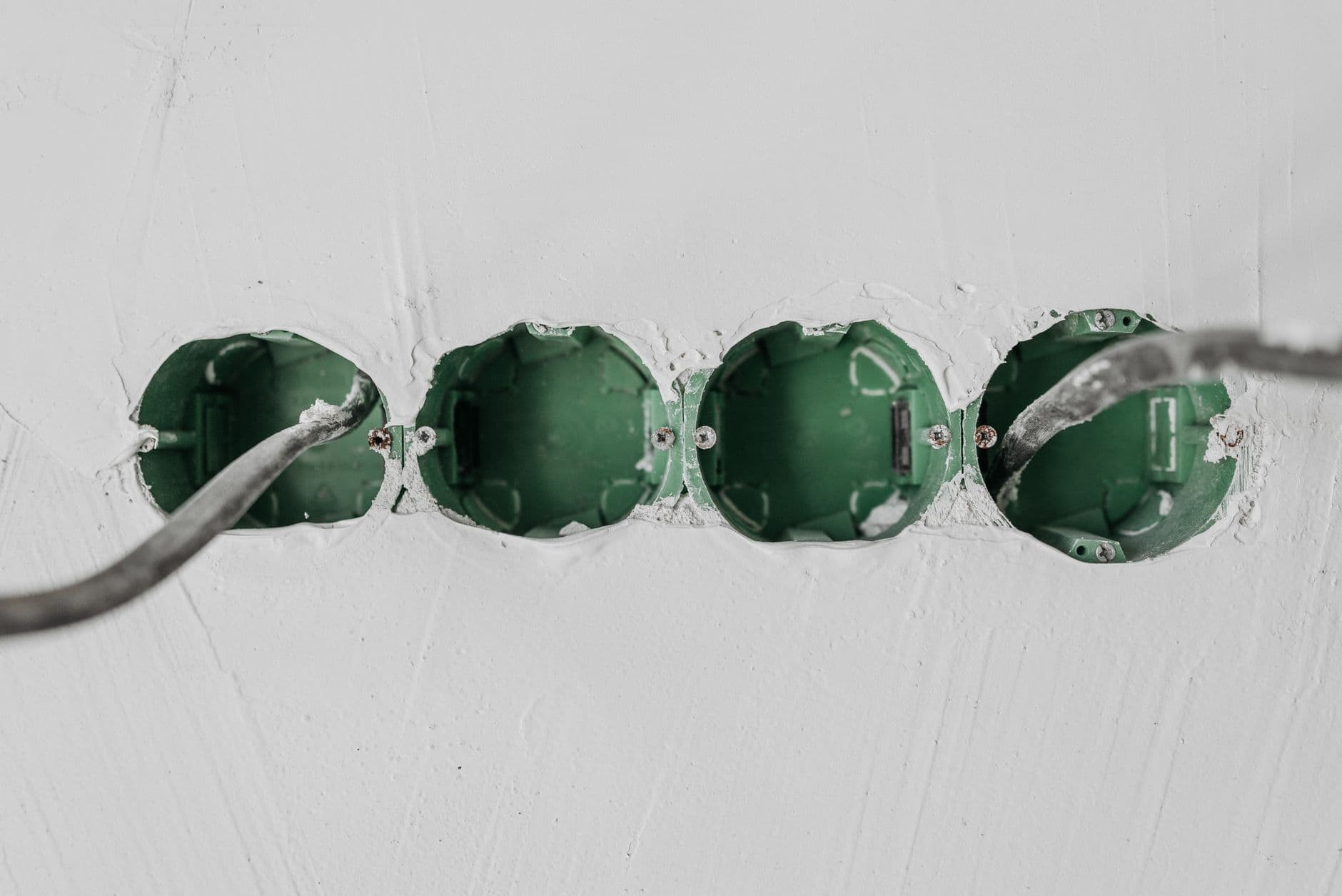
- No visible cord. On a fully recessed unit at eye level, a cord running down the wall is the detail that undoes the whole install. This is the real reason people hardwire.
- No receptacle inside the cavity. Recessing a plug-in unit means putting a receptacle in the wall cavity behind it, which is itself electrical work in most homes. If you are paying someone to do that anyway, hardwiring is often the same visit.
- Nothing to unplug. For a unit above a mantel or behind a fixed surround, access after the wall is closed up is effectively zero either way — but a hardwired connection is designed for that, and a plug wedged behind drywall is not.
What it does not buy: more heat, faster warm-up, lower running cost, or a quieter fan. Those are properties of the heater, not the connection.
Quick picks by wiring approach
Ranked. The running cost column is computed from each unit's rated wattage, not quoted from a manufacturer. Tap a row for the full write-up.
| # | Product | Best for | Cost per hour | Price |
|---|---|---|---|---|
| 1 | 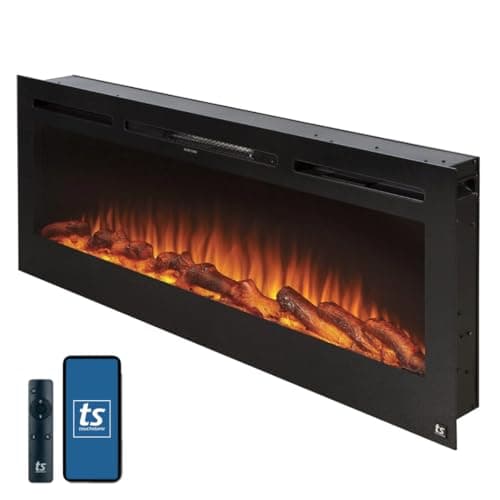 Touchstone The Sideline 50Plug it in this weekend, hardwire it later if you ever finish the wall properly. Touchstone supports both on the same unit. | Keeping both options open | 27.5¢1,500 W · 5,118 BTU | |
| 2 | 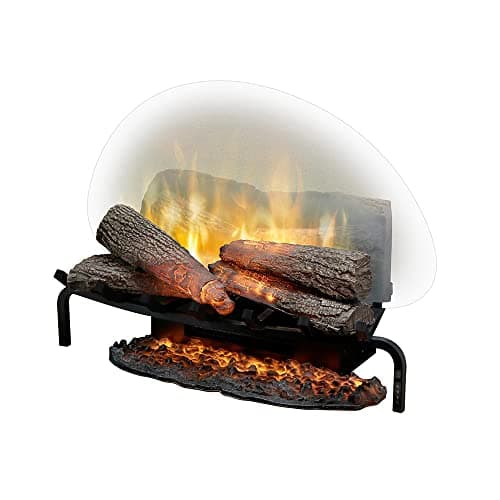 Dimplex Revillusion RLG25 25" Plug-In Log SetPlug-in only, and in an existing masonry opening that is a feature rather than a limitation. | A firebox where plug-in is the right answer | 27.5¢1,500 W · 5,118 BTU | |
| 3 | 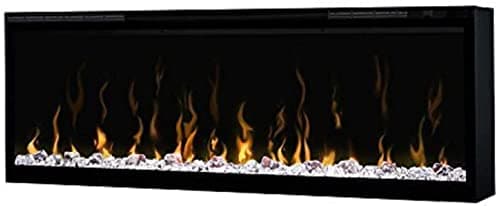 Dimplex IgniteXL 50" Linear Fireplace (XLF50)The 240 V configuration is the one install on this site that buys real extra heat — 8,530 BTU instead of 5,118. | The only reason to genuinely want hardwiring | 27.5¢1,500 W · 5,118 BTU | |
| 4 | 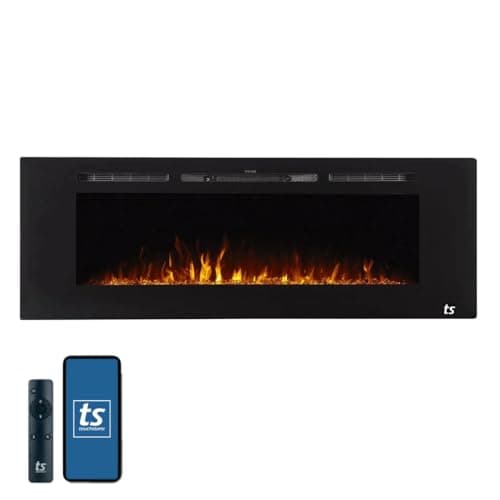 Touchstone The Sideline 60 (80011)Plug in or hardwire at 120 V, with a two-stage heater and a thermostat. The 60-inch version of the sensible answer. | The same choice, five inches wider | 27.5¢1,500 W · 5,118 BTU | |
| — | 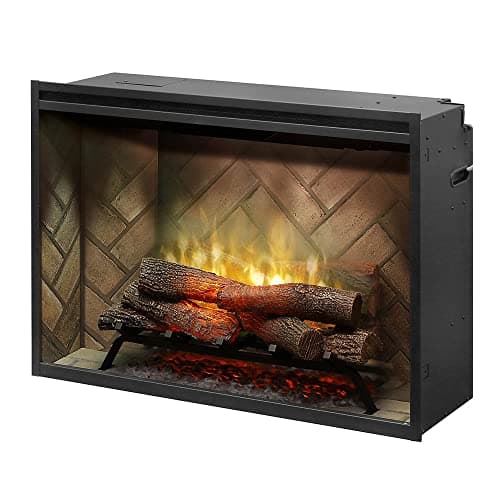 Dimplex Revillusion RBF36 36" Built-In FireboxOn a normal household circuit this produces 4,435 BTU — less heat than a cheap plug-in unit. The headline figure needs a supply most homes do not have.Skip this one | Nothing, unless you are genuinely running 240 V | 25.2¢1,375 W · 4,692 BTU |
#ad Buy links are affiliate links — we earn a commission on Amazon purchases at no extra cost to you, and it never changes the ranking. How this site is funded. Running cost is computed at 18.34¢/kWh; see what these actually cost to run.
The ceiling that decides all of this
A standard US household branch circuit is 120 V, and a portable appliance on one is limited to 1,500 W — 12.5 amps — by the National Electrical Code and by the plug on the end of the cord. That single limit is why almost every electric fireplace in every roundup you have read quotes the same 5,118 BTU per hour. It is not a coincidence and it is not brands copying each other. It is the wiring.
| Usage | Hours | Heat on (1,500 W) | Flame only (~100 W) |
|---|---|---|---|
| One evening | 4 | $1.10 | $0.07 |
| A week of evenings | 28 | $7.70 | $0.51 |
| A month, 4 hrs a night | 120 | $33.01 | $2.20 |
| A 90-day winter, 4 hrs a night | 360 | $99.04 | $6.60 |
| Per hour | 1 | 27.5¢ | 1.8¢ |
Doubling the supply voltage is the only way past it, and that is a different circuit, not a different cable on the same one. If a listing promises a big BTU number, find the voltage table before you believe it — as the RBF36 above demonstrates, the headline figure and the figure your house will deliver can differ by a factor of two.
Safety, briefly and seriously
- Never run one of these on an extension cord or a power strip. A 12.5 amp continuous load is exactly the thing they are not rated for, and it is the most common cause of heater fires in the CPSC's guidance.
- Do not share the circuit with another heater, a microwave or anything else with a large continuous draw. See watts, amps and your circuit.
- Hardwiring is notifiable work in most jurisdictions. A permit and an inspection are normal for a new dedicated circuit, and skipping them can affect insurance.
- A 240 V install is not a DIY job under any circumstances, regardless of how the manual reads.
So which should you choose?
- Renting, or unsure? Plug-in. Nothing permanent, nothing to undo, no disclosure when you leave.
- Existing masonry firebox? Plug-in. The opening is already there and a log set like the RLG25 is designed for exactly this.
- Recessing into a wall at eye level? Hardwire at 120 V if an electrician is already involved. The cord is the only thing you are solving, and it is worth solving.
- Genuinely need more than 5,118 BTU? 240 V hardwired, on a unit rated for it, installed by an electrician. Everything else is the same heat in a different package.
- Chasing a big BTU number on a listing? Check the voltage table first. That is the step this whole page exists to insist on.
Questions people actually ask
Does hardwiring an electric fireplace make it heat better?
Not on a 120 V circuit. A hardwired 120 V unit produces exactly the same output as the same unit plugged in — up to 1,500 W, or about 5,118 BTU per hour. Only a 240 V supply on a model rated for it increases output, to around 8,530 BTU per hour.
Can I hardwire any electric fireplace?
No. The unit has to be designed for it. The Touchstone Sideline range can be plugged in or hardwired at 120 V; the Dimplex Revillusion RLG25 log set is plug-in only. Removing the cord from a unit that is not rated for hardwiring is unsafe and voids the warranty.
Can I plug an electric fireplace into an extension cord?
No. At 1,500 W it draws 12.5 amps continuously, which is beyond what extension cords and power strips are designed to carry safely. It should go directly into a wall receptacle, ideally one not shared with another high-draw appliance.
Do I need a permit to hardwire an electric fireplace?
In most US jurisdictions a new dedicated circuit is notifiable work requiring a permit and an inspection, and a 240 V circuit almost always is. Rules are local, so confirm with your authority having jurisdiction before the work rather than after.
Is a plug-in electric fireplace safe to leave on?
Plugged directly into a wall receptacle on a circuit that is not shared with another heater, yes — these are thermostatically controlled with overheat cutouts. On an extension cord, no. See are electric fireplaces safe.
Sources
Every figure on this page is either taken from one of these documents or computed from a formula shown on the page. Nothing here is recalled from memory.
- Touchstone Sideline 50 (80004) product page — 1-year warranty, 2-year extension available
- Touchstone Sideline 60 (80011) product page — 60 x 21.5 x 5.5 in, 5,000 BTU, 400 sq ft
- Touchstone Sideline Series owner's manual — covers 80004/80011/80014/80015/80025, max 1,500 W at 12 A, heater fan runs 8-10 s before and after the element
- Dimplex Revillusion RLG25 log set — 25.625 x 19 x 13 in, 1,500 W, 120 V, 12.5 A, 5,118 BTU
- Dimplex Revillusion RBF36 listing — 1375/1975/2575 W at 120/208/240 V, 4435/6739/8786 BTU
- Dimplex IgniteXL XLF50 product page — 51.5 x 16.5 x 5 7/8 in, 73.96 lb, 120/240 V, 1,500/2,500 W, 5,118/8,530 BTU, 5-year warranty
- Dimplex — five-year IgniteXL warranty, covering parts and in-home service
- NFPA — National Electrical Code (NFPA 70), the standard behind US branch-circuit limits
- US Consumer Product Safety Commission — portable heater safety guidance
- EIA Electric Power Monthly, Table 5.3 — US residential average, June 2026
Read next
- Watts, amps and your circuit
12.5 amps on a 15-amp circuit. Why the ceiling exists, and where we stop and an electrician starts.
- How to mount or recess an electric fireplace
Hanging one takes an afternoon. Recessing takes a weekend and an electrician. Both procedures, step by step.
- What installing an electric fireplace insert really costs
Trim kits, receptacles, framing and electrical work — the costs that arrive after the unit does.
- Electric fireplaces for apartments and rentals
No cutting, no hardwiring, nothing to repair at move-out. Five units ranked by reversibility, plus the shared-wall noise problem nobody mentions.
- BTU and room size
BTU-to-square-feet, banded — with a calculator that reports the shortfall as honestly as the fit.