Sized roundup · 36 inches
36-inch electric fireplace inserts
The most common opening size in American homes, and the size where the gap between nominal width and actual width causes the most returns.
By Scooter M.Published September 2, 2026Last reviewed September 2, 2026
Disclosure: the buy links below are affiliate links. We earn a commission on Amazon purchases at no extra cost to you. It has never changed a ranking on this site, and every roundup here names a unit we think you should skip. How this site is funded.
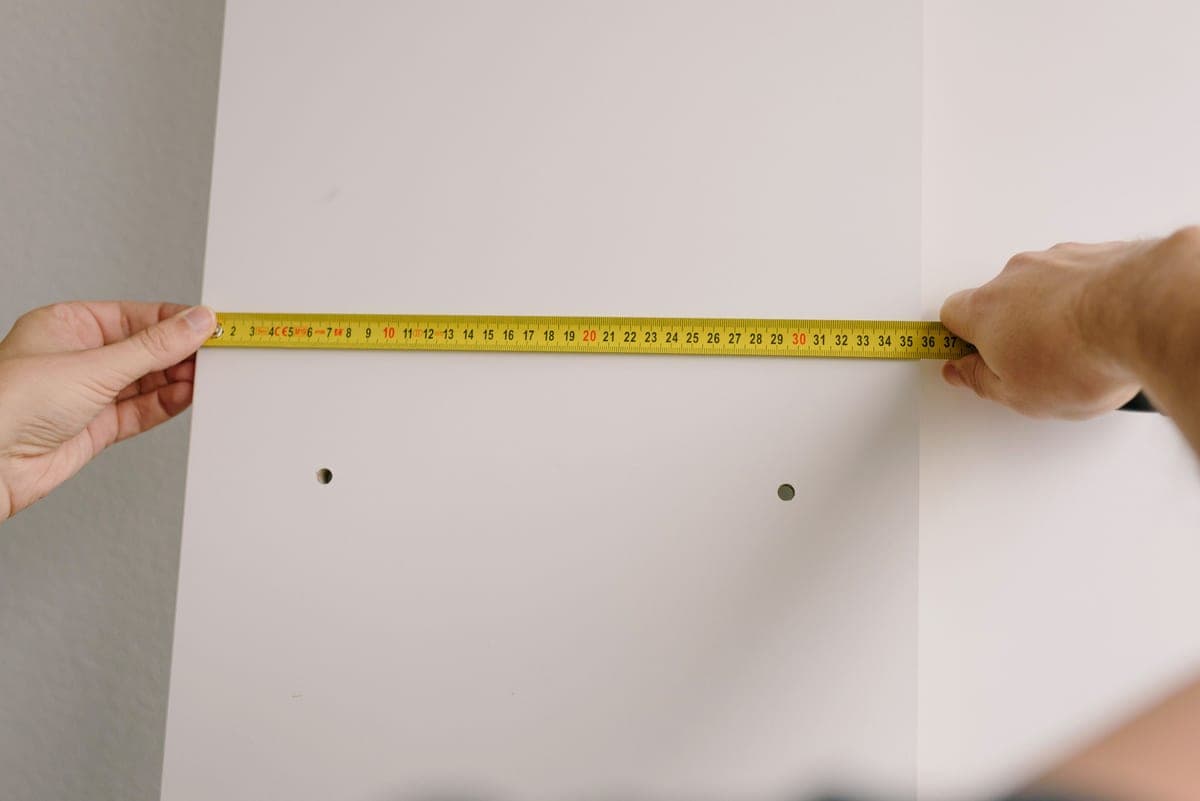
What "36 inch" actually means on a product page
It means the unit is roughly 36 inches wide — usually the visible face, sometimes the firebox opening, occasionally the rough-in dimension. Those three numbers can differ by two inches on the same product. Before you buy, find the manufacturer's stated overall width and the rough opening it requires, and compare both against your own measurements.
This is not manufacturers being deceptive so much as an industry with no standard for which dimension the nominal size refers to. A recessed unit's rough-opening requirement is what your framing has to accommodate; its overall width is what you see afterward; and for a masonry insert what matters is whether the box clears the taper at the back of the firebox. Three different numbers, one label.
Framed cavity or masonry? The answer changes the shortlist
| Your 36 inches is… | What to buy | Why |
|---|---|---|
| A framed stud cavity | A recessed linear unit under 3.86 in deep | Fits a 2x4 bay flush. No furring, no built-out wall, no chase |
| A masonry firebox | A 33 in insert plus a trim kit, or a log set | Masonry tapers. A full 36 in unit in a 36 in opening leaves no tolerance |
| A flat wall with no opening | A surface-mounted wall unit | You are not fitting an insert at all — see wall-mount |
Quick picks at 36 inches
Ranked. The running cost column is computed from each unit's rated wattage, not quoted from a manufacturer. Tap a row for the full write-up.
| # | Product | Best for | Cost per hour | Price |
|---|---|---|---|---|
| 1 | 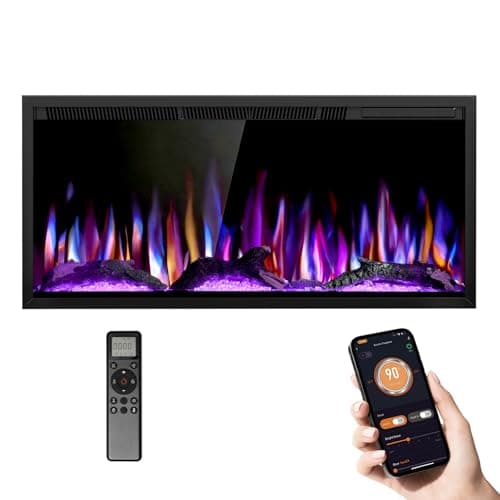 R.W.FLAME 36" Ultra-Thin Recessed & Wall-Mount Fireplace3.86 inches deep, 750/1500 W, and part of a range that also runs 30, 42, 50, 60 and 68 — so if 36 turns out wrong you have a route out. | A 36-inch framed cavity | 27.5¢1,500 W · 5,118 BTU | |
| 2 | Touchstone The Sideline 36The entry model of a range built by a company that only makes fireplaces. Same 36 inches, better finish, more money. | A 36-inch wall recess with better housing | 27.5¢1,500 W · 5,118 BTU | |
| 3 | 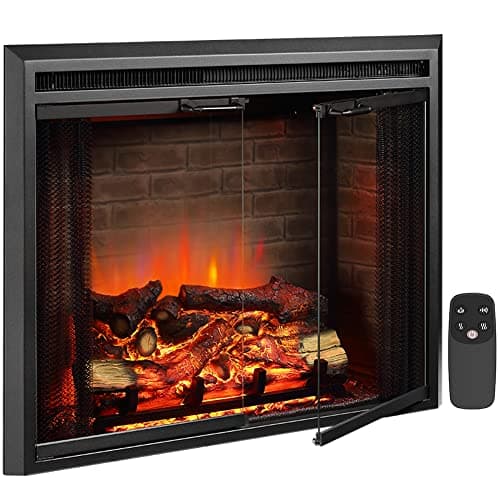 PuraFlame Klaus 33" Electric Fireplace Insert33 inches nominal, so it sits inside a 36-inch masonry opening with a small gap that a trim kit closes. In brick, that is the right approach anyway. | A 36-inch masonry opening (with trim) | 27.5¢1,500 W · 5,118 BTU | |
| — | TURBRO In-Flame INF36-W 36" Wall-Mounted Fireplace1,400 W, not 1,500 — the only unit here that is genuinely below the class ceiling, and it is a surface-mount design being shopped as an insert.Skip this one | Wall-hanging rather than recessing | 25.7¢1,400 W · 4,777 BTU |
#ad Buy links are affiliate links — we earn a commission on Amazon purchases at no extra cost to you, and it never changes the ranking. How this site is funded. Running cost is computed at 18.34¢/kWh; see what these actually cost to run.
Running cost at 36 inches
Width has no effect on running cost, which surprises people. A 36-inch unit and a 60-inch unit both cap at 1,500 W, because the constraint is the circuit rather than the size of the box. The wider unit spreads the same heat across a longer flame.
| Usage | Hours | Heat on (1,500 W) | Flame only (~100 W) |
|---|---|---|---|
| One evening | 4 | $1.10 | $0.07 |
| A week of evenings | 28 | $7.70 | $0.51 |
| A month, 4 hrs a night | 120 | $33.01 | $2.20 |
| A 90-day winter, 4 hrs a night | 360 | $99.04 | $6.60 |
| Per hour | 1 | 27.5¢ | 1.8¢ |
The one exception on this page is the TURBRO at 1,400 W, which costs about 25.7 cents an hour instead of 27.5 — marginally less to run, and marginally less heat, in exact proportion.
#1 · A 36-inch framed cavity
R.W.FLAME 36" Ultra-Thin Recessed & Wall-Mount Fireplace
3.86 inches deep, 750/1500 W, and part of a range that also runs 30, 42, 50, 60 and 68 — so if 36 turns out wrong you have a route out.
For a framed opening at 36 inches this is the straightforward answer. The depth figure is the reason: at 3.86 inches it drops into a 2x4 stud bay with a slight proud edge and no furring, which is the difference between an afternoon and a weekend.
The heater is 750 W low and 1,500 W high at 120 V, with a manufacturer figure of 5,100 BTU per hour and a 400 square foot supplemental rating. Flame configuration is unusually deep — 12 flame colors, 12 ember-bed colors, five brightness levels, five speeds.
It is a linear unit, so it looks nothing like a traditional fireplace. In a modern room that is the point; in a period room it will look like what it is.
What it does not do: No mantel, no surround and no trim for a masonry opening. Recessing it means cutting drywall and, in most homes, running a receptacle inside the cavity.
Published specs
- Heater:
- 750 W low / 1,500 W high
- Electrical:
- 120 V
- Heat output:
- 5,100 BTU/hr (manufacturer figure)
- Depth:
- 3.86 in — thin enough for a 2x4 stud bay
- Coverage:
- Rated by the manufacturer for up to 400 sq ft
- Flame:
- 12 flame colors, 12 ember-bed colors, 5 brightness levels, 5 speeds
- Sizes in the line:
- 30, 36, 42, 50, 60 and 68 in
What it costs to run
- 27.5¢/hr on full heat
- $99.04 across a 90-day winter at 4 hrs a night
- 5,118 BTU/hr · 12.5 A on a 120 V circuit
Computed at 18.34¢/kWh (EIA, June 2026). Your rate will differ — work out your own.
#ad We earn a commission on this link at no cost to you. How this is funded. Price as of October 17, 2026.
Specs from: R.W.FLAME recessed/wall-mount product page — full specifications.
#2 · A 36-inch wall recess with better housing
Touchstone The Sideline 36
The entry model of a range built by a company that only makes fireplaces. Same 36 inches, better finish, more money.
Touchstone's Sideline range starts at 36 inches and runs to 72, and the 36 is the model that fits the same openings as the R.W.FLAME above. It is recessed or surface-mounted, and it is the volume product for people who want a linear fireplace without going to the Elite tier.
The heater is the usual 1,500 W ceiling — about 5,118 BTU per hour and 27.5 cents an hour to run. That is identical to every other unit on this page, and worth restating because Sideline pricing sits above the mass-market alternatives. You are buying the housing, the glass and the brand's warranty, not more warmth.
Touchstone publishes less numeric detail on its collection page than the retailer listings do for other units, so confirm exact dimensions with the brand before cutting anything.
What it does not do: A linear unit with no logs and no mantel. If you want something that reads as a traditional fireplace, this is the wrong shape entirely.
Published specs
- Width:
- 36 in
- Form:
- Recessed or wall-mounted linear unit
- Line:
- Entry model of the Sideline range (36 to 72 in)
What it costs to run
- 27.5¢/hr on full heat
- $99.04 across a 90-day winter at 4 hrs a night
- 5,118 BTU/hr · 12.5 A on a 120 V circuit
Computed at 18.34¢/kWh (EIA, June 2026). Your rate will differ — work out your own.
#ad We earn a commission on this link at no cost to you. How this is funded. Price as of October 17, 2026.
Specs from: Touchstone electric fireplaces collection — The Sideline 36.
#3 · A 36-inch masonry opening (with trim)
PuraFlame Klaus 33" Electric Fireplace Insert
33 inches nominal, so it sits inside a 36-inch masonry opening with a small gap that a trim kit closes. In brick, that is the right approach anyway.
This is the answer for the reader whose 36 inches is a brick firebox rather than a framed cavity. A full 36-inch insert in a 36-inch masonry opening leaves no tolerance at all, and masonry openings taper — so the practical move is to fit a 33-inch unit and trim the difference.
Published dimensions are 33 1/16 inches wide by 25 9/16 high, with 750/1500 W heat and a glass door, mesh screen and brick-effect interior. In an existing fireplace that housing is doing real work.
The trim kit is usually a separate purchase. Budget for it rather than being surprised by it.
What it does not do: No trim kit in the base version — an existing masonry opening wider than 33 in leaves a visible gap unless you buy the trim separately.
Published specs
- Heater:
- 750 W / 1,500 W, two settings
- Width:
- 33 1/16 in
- Height:
- 25 9/16 in
- Flame:
- LED, three intensity settings, runs with heat off
- Front:
- Glass door, mesh screen, three-sided brick interior
- Log:
- Resin cast log, 11 13/16 in high, on a grate over the ember bed
What it costs to run
- 27.5¢/hr on full heat
- $99.04 across a 90-day winter at 4 hrs a night
- 5,118 BTU/hr · 12.5 A on a 120 V circuit
Computed at 18.34¢/kWh (EIA, June 2026). Your rate will differ — work out your own.
#ad We earn a commission on this link at no cost to you. How this is funded. Price as of October 17, 2026.
Specs from: PuraFlame Klaus insert listing (specifications and dimensions); Walmart product listing — 750/1500 W rating confirmed.
Skip this one
TURBRO In-Flame INF36-W 36" Wall-Mounted Fireplace
1,400 W, not 1,500 — the only unit here that is genuinely below the class ceiling, and it is a surface-mount design being shopped as an insert.
We are flagging this one, and the reason is a number rather than a fault. Home Depot lists it at 4,780 BTU per hour on a 1,400 W convective heater. Every other 36-inch unit on this page is 1,500 W and about 5,118 BTU. That is roughly a 7% shortfall, which is small but real, and it is the only time in this catalog where the wattage is not the usual maximum.
The second reason is form factor: it is designed to hang on a wall, with an optional standing base. It is not built to sit flush in a recess the way the R.W.FLAME and Sideline are, and shopping it as a 36-inch insert leads people to the wrong install.
As a wall-hung unit it is fine, and it belongs in the wall-mount roundup rather than here. Buying it for a recess is the mistake this entry exists to prevent.
What it does not do: It is 1,400 W, not 1,500 W. That is 100 W less than the class ceiling — a real difference of about 340 BTU/hr, and the only unit in this catalog where the number is not the usual maximum.
Published specs
- Heater:
- 1,400 W convective
- Heat output:
- 4,780 BTU/hr
- Width:
- 36 in
- Mounting:
- Wall-mounted, with an optional standing base
- Control:
- Thermostat, timer, remote
What it costs to run
- 25.7¢/hr on full heat
- $92.43 across a 90-day winter at 4 hrs a night
- 4,777 BTU/hr · 11.7 A on a 120 V circuit
Computed at 18.34¢/kWh (EIA, June 2026). Your rate will differ — work out your own.
#ad We earn a commission on this link at no cost to you. How this is funded. Price as of October 17, 2026.
Specs from: Home Depot product page — TURBRO INF36-W, 4,780 BTU; TURBRO 36 in wall-mounted fireplace listing — 1,400 W heater.
Questions people actually ask
Will a 36-inch insert fit a 36-inch opening?
Not reliably. Nominal width is not a standardized measurement, and masonry openings taper toward the back. For a framed cavity, check the manufacturer's rough-opening requirement. For masonry, fit a 33-inch unit with a trim kit instead.
Is a 36-inch fireplace big enough for a living room?
For heat, width is irrelevant — every unit caps at 1,500 W and about 5,118 BTU per hour regardless of size. For proportion, a 36-inch unit reads well on a wall up to roughly 10 feet wide and starts to look undersized beyond that.
How deep does the wall need to be for a 36-inch recessed unit?
A standard 2x4 interior wall gives about 3.5 inches of cavity. Units published under about 4 inches deep — R.W.FLAME's range lists 3.86 — sit nearly flush in that. Anything deeper needs furring, a 2x6 wall, or a built-out chase.
Sources
Every figure on this page is either taken from one of these documents or computed from a formula shown on the page. Nothing here is recalled from memory.
- EIA Electric Power Monthly, Table 5.3 — US residential average, June 2026
- R.W.FLAME recessed / wall-mount range — 3.86 in depth, 750/1500 W, 5,100 BTU
- Touchstone Home Products — electric fireplace range and sizes
- PuraFlame Klaus 33 in insert — 750/1500 W, dimensions
- Home Depot — TURBRO INF36-W, 1,400 W, 4,780 BTU
Read next
- 50-inch electric fireplace inserts
What fits at 50 inches, why wider does not mean warmer, and the units worth shortlisting.
- 60-inch electric fireplace inserts
Four 60-inch units ranked by recess depth, the one spec that actually differs at this width - plus the 65-inch model that keeps appearing in 60-inch results.
- The best electric fireplace inserts
Six inserts ranked by opening fit, flame mechanism and computed running cost — plus the one we would not buy.
- Depth and clearance
3.5 inches of cavity in a standard wall, and what fits it. Plus the clearances that actually matter.
- 30-inch electric fireplace inserts
Why a 30-inch insert needs more than a 30-inch opening, and the four units worth considering in the 24 to 33-inch range.
- 42-inch electric fireplaces
Why 42 inches is dominated by unbranded ultra-thins, the one unit that publishes a full specification, and the branded alternatives either side of the size.