Roundup · updated for the 2026 heating season
The best infrared electric fireplaces
Infrared is the quiet half of this category and the half that does not dry a room out. It is also the specification most listings are vaguest about, which is the problem this page sets out to fix.
By Scooter M.Published September 14, 2026Last reviewed September 14, 2026
Disclosure: the buy links below are affiliate links. We earn a commission on Amazon purchases at no extra cost to you. It has never changed a ranking on this site, and every roundup here names a unit we think you should skip. How this site is funded.
The short answer
Infrared warms objects and people; fan-forced warms air. That single difference is why infrared units are effectively silent, why they do not leave a room feeling dry, and why they feel warm almost immediately when you are sitting near one. What infrared does not do is produce more heat — every unit here is capped at the same 1,500 W by a 120 V circuit. Buy it for how the heat feels, not for how much of it there is.
The word is used more loosely than it should be
This was the genuinely surprising part of putting the page together. "Infrared" appears in an enormous number of listing titles, and a meaningful share of the units carrying it are not purely radiant. Several combine a quartz tube with a conventional resistance element, which means there is still a fan and still moving air — just less of it.
The practical consequence for a buyer: treat the title as marketing and the specification as evidence. If a listing says infrared but publishes no heater description anywhere, you do not know what you are getting. Every unit on this page is here because a manufacturer put the element in writing.
What we looked for
- A stated heater type. Infrared quartz, in the manufacturer's own words. Nothing qualified on a listing title alone.
- Honesty about hybrids. A unit that admits it combines quartz with a resistance element ranks above one that stays silent about the question.
- A published noise figure, where one exists. Almost nobody quotes decibels. One unit here does, and it earned its place partly on that.
- A thermostat with a usable range. Radiant heat is easy to overshoot with, so cycling matters.
- Format coverage. Infrared is concentrated in log sets and stoves. Finding a genuinely infrared recessed insert or linear wall unit is much harder, and both are on this page.
Quick picks: infrared electric fireplaces
Ranked. The running cost column is computed from each unit's rated wattage, not quoted from a manufacturer. Tap a row for the full write-up.
| # | Product | Best for | Cost per hour | Price |
|---|---|---|---|---|
| 1 | 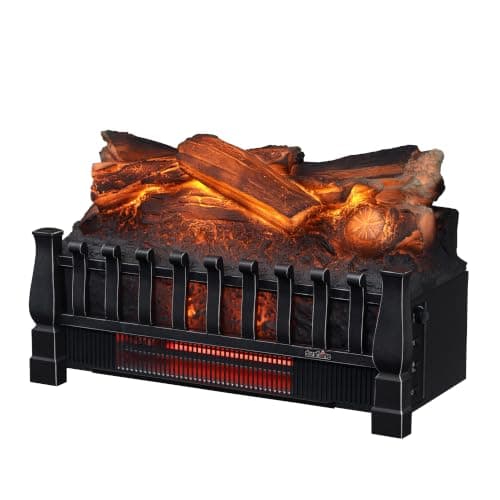 Duraflame DFI030ARU 20" Infrared Electric Fireplace Log SetThe cleanest infrared buy on the site: a drop-in log set with a genuine quartz element, no fan, and nothing to build. | An existing masonry firebox | 27.5¢1,500 W · 5,118 BTU | |
| 2 | 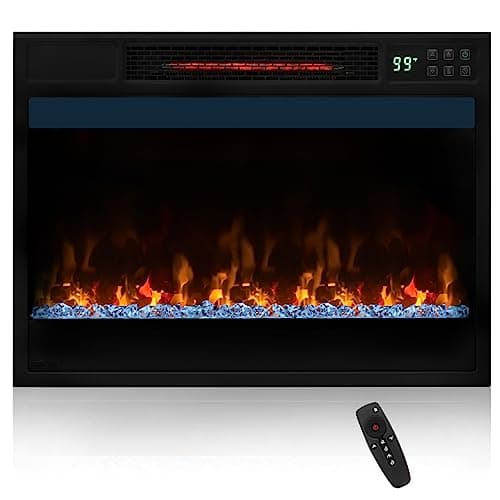 Tangkula 23" Infrared Quartz Recessed InsertThe rare recessed insert that names its heater — and is honest enough to admit it is a hybrid rather than pure radiant. | A recessed opening, at the lowest price here | 27.5¢1,500 W · 5,118 BTU | |
| 3 | 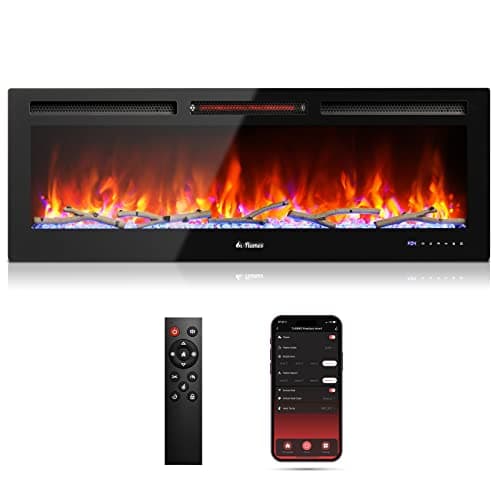 TURBRO In-Flame INF50W-3D 50" Smart WiFi Infrared FireplaceThe only wall-mounted unit here with a quartz heater and a published noise figure — 42 dB, which almost nobody quotes. | A linear wall unit that is actually infrared | 27.5¢1,500 W · 5,118 BTU | |
| 4 | 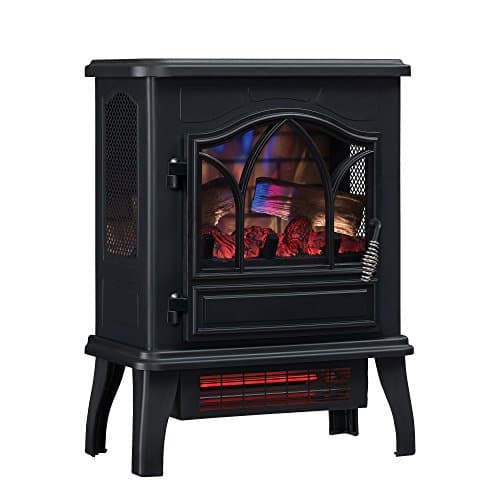 Duraflame DFI-470-04 3D Infrared Quartz StoveInfrared quartz and a 3D flame in a body about seventeen inches wide, for the least money on this page. | Best value, and the smallest footprint | 27.5¢1,500 W · 5,118 BTU | |
| 5 | 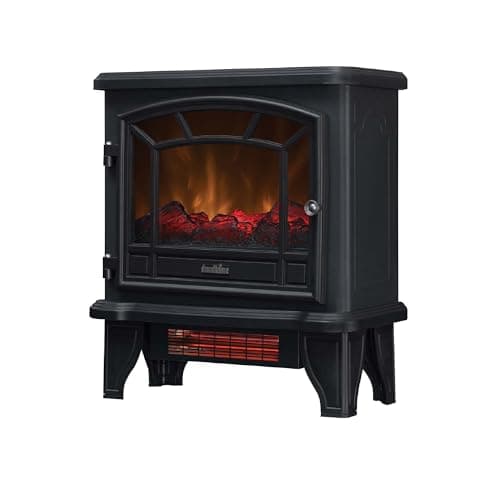 Duraflame Infrared Quartz Electric Fireplace Stove HeaterThe infrared heater in the body most people picture when they say stove — metal, mullioned door, arched detailing. | Looking like an actual wood stove | 27.5¢1,500 W · 5,118 BTU | |
| — | 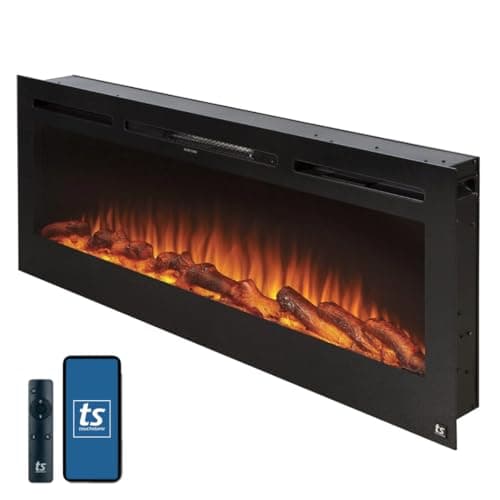 Touchstone The Sideline 50An excellent fireplace that is explicitly not infrared — Touchstone calls it a coil wire heater with a blower, which is the opposite of this page.Skip this one | Nothing, if you came here for infrared | 27.5¢1,500 W · 5,118 BTU |
#ad Buy links are affiliate links — we earn a commission on Amazon purchases at no extra cost to you, and it never changes the ranking. How this site is funded. Running cost is computed at 18.34¢/kWh; see what these actually cost to run.
The five, side by side
| Unit | Format | Heater as published | Published coverage |
|---|---|---|---|
| Duraflame DFI030ARU | Drop-in log set | Infrared quartz | Up to 1,000 sq ft |
| Tangkula 23 in | Recessed insert | Infrared quartz tube plus resistor wire | Up to 1,000 sq ft |
| TURBRO INF50W-3D | Linear wall unit | 1,500 W infrared quartz | 400-1,000 sq ft |
| Duraflame DFI-470-04 | Freestanding stove | Infrared quartz | Up to 1,000 sq ft |
| Duraflame Infrared Quartz Stove | Freestanding stove | Infrared quartz | Up to 1,000 sq ft |
| Touchstone Sideline 50 (our skip) | Recessed linear | Coil wire heater with blower | About 400 sq ft |
Infrared does not buy you more heat
It is worth being blunt about this, because the marketing around infrared frequently implies otherwise. A 120 V household circuit limits this entire category to 1,500 W, which is 12.5 amps. Watts convert to BTU at a fixed rate, so every full-power unit on this page lands within a rounding error of the same figure regardless of how the element is built.
| Usage | Hours | Heat on (1,500 W) | Flame only (~100 W) |
|---|---|---|---|
| One evening | 4 | $1.10 | $0.07 |
| A week of evenings | 28 | $7.70 | $0.51 |
| A month, 4 hrs a night | 120 | $33.01 | $2.20 |
| A 90-day winter, 4 hrs a night | 360 | $99.04 | $6.60 |
| Per hour | 1 | 27.5¢ | 1.8¢ |
What changes is distribution. Fan-forced heat raises the temperature of the room's air and spreads it around; radiant heat lands on whatever is in front of the unit and warms that. Neither is more efficient in any meaningful sense — the same electricity becomes the same heat. The arithmetic is on BTU and room size, and the running cost calculator will do it against your own tariff.
Where infrared genuinely wins
- A room you sleep in. No fan means nothing cycling on at two in the morning. This is the strongest case there is, and it is why infrared leads our bedroom picks.
- A room that already feels dry in winter. Radiant heat does not repeatedly cycle air across a hot element, so it leaves humidity roughly where it was.
- Sitting close to it. Within a few feet, radiant heat reaches you almost immediately. A fan-forced unit has to warm the room first.
- Anywhere dust is a nuisance. Moving air moves dust. Not moving air does not.
- A room where you want the heat on and the noise off. The flame runs independently on every unit here, but when you do want warmth, this is the quiet way to get it.
Where it does not
- A large open-plan room. Radiant heat warms what it points at. Without a fan to distribute it, the far corners stay cold. See best for large rooms.
- Wanting the whole room warm quickly. Fan-forced raises air temperature faster, which is what most people actually mean by "heats the room".
- A flush install in a 2x4 wall. The genuinely infrared linear unit here is 4.6 inches deep, which does not sit flush in a standard stud bay.
- Standing across the room from it. Radiant output falls off with distance in a way convected warm air does not.
How to check a listing yourself
- Find the heater line in the specification, not the title. If there is no heater description anywhere on the page, treat the word infrared as unverified.
- Look for the word quartz. A genuine radiant element is almost always described as an infrared quartz tube or lamp.
- Watch for "and". Quartz *combined with* a resistance wire or a PTC element means a hybrid with a fan.
- Check for vents on the front face. A unit with prominent heat outlets is moving air through them.
- Treat square-foot ratings as supplemental figures whichever element it uses — see do they actually heat a room.
Questions people actually ask
Is an infrared electric fireplace better than a regular one?
It is different rather than better. Infrared is quieter because there is no blower, does not dry a room the way convection heat can, and feels warm quickly when you are close to it. A fan-forced unit warms the air in a whole room faster. Both are capped at the same 1,500 W on a household circuit.
Do infrared electric fireplaces use less electricity?
No. A 1,500 W infrared unit draws exactly the same power and costs exactly the same per hour to run as a 1,500 W fan-forced one. The difference is where the heat goes, not how much of it there is.
Are infrared fireplaces quiet?
A genuinely radiant unit has no blower and is effectively silent. Hybrids that combine a quartz tube with a resistance element still move some air. The TURBRO INF50W-3D is the only unit on this page that publishes a figure, at 42 dB or lower.
Is infrared heat safe to run around children and pets?
There is no combustion, no flue and no carbon monoxide, and overheat shutoff is standard across the category. The glass and the element housing do get warm, so clearance in front of the unit should be kept clear, and it must be plugged directly into a wall receptacle rather than an extension cord.
Can I get an infrared electric fireplace that recesses into a wall?
Yes, but the choice is much narrower than it is for fan-forced units, because most recessed and linear fireplaces use a coil or ceramic element with a blower. The Tangkula 23-inch insert and the TURBRO INF50W-3D are the two on this page that mount into a wall.
Sources
Every figure on this page is either taken from one of these documents or computed from a formula shown on the page. Nothing here is recalled from memory.
- Duraflame DFI030ARU — infrared quartz log set, 1,000 sq ft rating
- Tangkula 23 in infrared quartz recessed insert — 1,500 W, 12.5 A, 5,120 BTU, 1,000 sq ft, 60-99 °F thermostat, 8 h timer, quartz tube plus resistor wire
- Home Depot — TURBRO INF50W-3D, 50 in, 1,500 W infrared quartz, 50 x 16 x 4.6 in, 47.6 lb, 400-1,000 sq ft, 42 dB
- Duraflame DFI-470-04 3D infrared quartz stove — 17 1/2 x 23 x 10.7 in, 5,200 BTU, 1,000 sq ft
- Twin-Star Home — Duraflame Infrared Quartz Electric Fireplace Stove Heater, 5,200 BTU, 1,000 sq ft, adjustable thermostat
- Touchstone Sideline 50 (80004) product page — 1-year warranty, 2-year extension available
- EcoCostSavings — measured wattage and BTU across 117 electric fireplace models
- EIA Electric Power Monthly, Table 5.3 — US residential average, June 2026
Read next
- Infrared vs fan-forced
Identical output, different delivery. Which one suits a recess, a big room, or a dry house.
- Electric fireplace inserts with a blower
Which inserts genuinely have a blower, sourced from the manufacturer rather than assumed — plus the 8-second quirk every fan-forced unit shares.
- The best electric fireplaces for a bedroom
Bedrooms need about 2,500 BTU, not 5,100. Six units picked on silence, a real 750 W low stage and the ability to run flame with no heat.
- Freestanding electric fireplace stoves
No opening, no framing, no electrician. Four stoves compared on heater type, flame depth and the floor space they genuinely need.
- BTU and room size
BTU-to-square-feet, banded — with a calculator that reports the shortfall as honestly as the fit.