Comparison · the install decision
Wall-mounted vs recessed
Usually the same unit, installed two ways. One takes an afternoon and looks like an appliance; one takes a weekend and an electrician, and looks built in.
By Scooter M.Published September 2, 2026Last reviewed September 2, 2026
Disclosure: the buy links below are affiliate links. We earn a commission on Amazon purchases at no extra cost to you. It has never changed a ranking on this site, and every roundup here names a unit we think you should skip. How this site is funded.
The decision in one table
| Surface-mounted | Recessed | |
|---|---|---|
| Work involved | Find studs, hang bracket, plug in | Cut, frame, add receptacle, fit, patch, paint |
| Time | An afternoon | A weekend, plus an electrician and paint drying |
| Wall depth needed | None | About 3.5 in of cavity in a 2x4 wall |
| Electrical | Existing wall outlet | A receptacle inside the cavity — usually an electrician |
| How it looks | A fireplace hung on a wall | An opening in the wall |
| Reversible | Completely — patch four screw holes | No. You cut a hole |
| Renting? | Yes, with permission | No |
| Running cost | Identical | Identical |
Surface-mount if you rent, if you might move it, if the wall is masonry or exterior, or if you want it working this weekend. Recess if you own the house, the wall is interior stud framing, and the fireplace is meant to be a permanent feature of the room. The unit is usually the same either way.
What recessing actually buys you
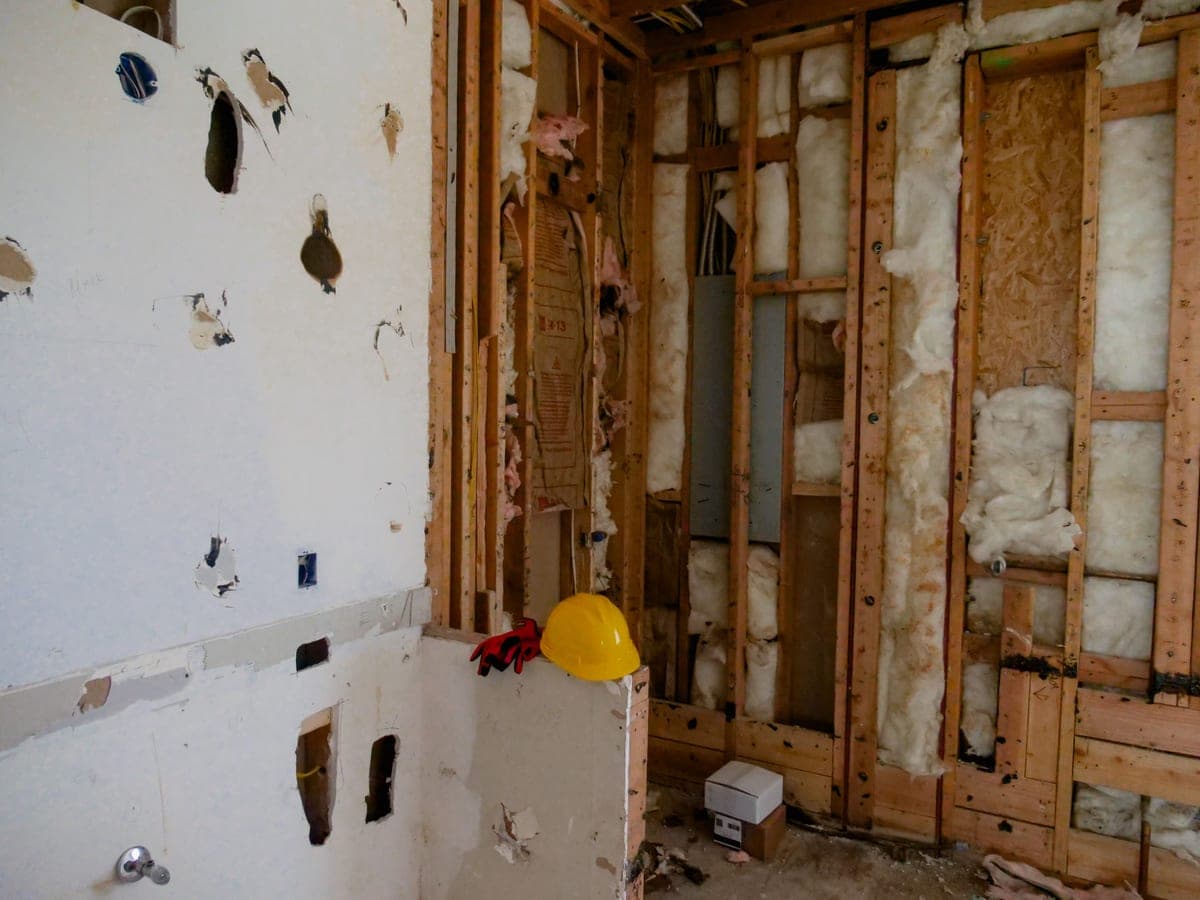
Flush installation removes the single strongest cue that you are looking at an appliance. A hung unit has a visible edge, a shadow line and a bracket — your eye reads 'object on wall'. A flush unit has none of those, and your eye reads 'opening'. It is a genuinely large difference in perceived quality and it costs nothing extra in the unit itself.
It also gets the fireplace out of the room. A hung unit projecting four or five inches into a walkway is something people brush past; a flush one is not there at all.
What recessing actually costs you
- A receptacle inside the cavity. A cord hanging out of a flush fireplace defeats the whole point. This is the largest line item and it is usually an electrician's job.
- Framing, and possibly a header. If the opening crosses a stud, that stud is carrying load and needs a header above the opening. Not something to improvise.
- Drywall finishing. Patching, taping, sanding and matching paint around a fresh opening is the step people underestimate.
- Irreversibility. You cut a hole in a wall. If you sell the house, the next owner inherits a fireplace-shaped opening.
Quick picks
Ranked. The running cost column is computed from each unit's rated wattage, not quoted from a manufacturer. Tap a row for the full write-up.
| # | Product | Best for | Cost per hour | Price |
|---|---|---|---|---|
| 1 | 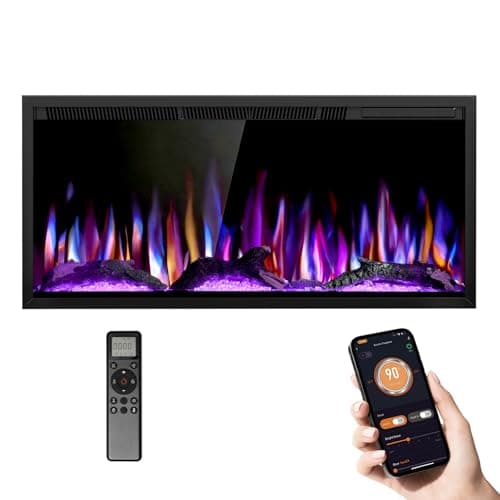 R.W.FLAME 36" Ultra-Thin Recessed & Wall-Mount Fireplace3.86 inches deep and dual-install, so it hangs on the wall today and recesses later if you change your mind. | Either install, done properly | 27.5¢1,500 W · 5,118 BTU | |
| 2 | 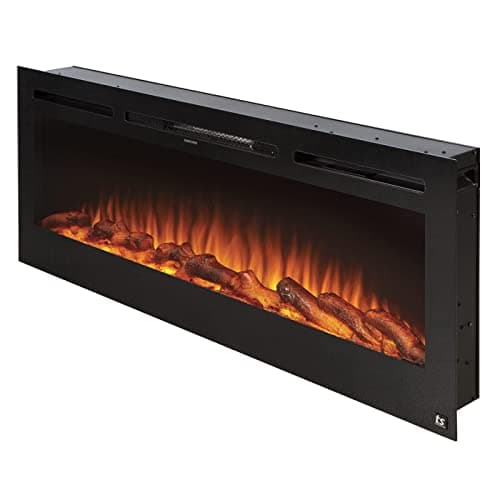 Touchstone The Sideline 50Built primarily to be recessed, which is where a linear fireplace earns its money. | Recessing, if the wall allows | 27.5¢1,500 W · 5,118 BTU | |
| — | TURBRO In-Flame INF36-W 36" Wall-Mounted FireplaceA hanging design with an optional standing base, and 1,400 W rather than 1,500. Do not buy it planning to recess it.Skip this one | Surface-mounting only | 25.7¢1,400 W · 4,777 BTU |
#ad Buy links are affiliate links — we earn a commission on Amazon purchases at no extra cost to you, and it never changes the ranking. How this site is funded. Running cost is computed at 18.34¢/kWh; see what these actually cost to run.
| Usage | Hours | Heat on (1,500 W) | Flame only (~100 W) |
|---|---|---|---|
| One evening | 4 | $1.10 | $0.07 |
| A week of evenings | 28 | $7.70 | $0.51 |
| A month, 4 hrs a night | 120 | $33.01 | $2.20 |
| A 90-day winter, 4 hrs a night | 360 | $99.04 | $6.60 |
| Per hour | 1 | 27.5¢ | 1.8¢ |
#1 · Either install, done properly
R.W.FLAME 36" Ultra-Thin Recessed & Wall-Mount Fireplace
3.86 inches deep and dual-install, so it hangs on the wall today and recesses later if you change your mind.
The thin depth is what makes this a genuine either-way purchase. Hang it now, and if you decide in a year that you want it flush, the unit already fits a 2x4 cavity — no need to buy a different fireplace.
750 W low and 1,500 W high at 120 V, manufacturer figure of 5,100 BTU per hour, 400 square feet supplemental, and the whole 30-to-68-inch range on the same spec.
The thing that does not carry over between the two installs is the power. Surface-mounted, you plug into a wall outlet. Recessed, you need one inside the cavity.
What it does not do: No mantel, no surround and no trim for a masonry opening. Recessing it means cutting drywall and, in most homes, running a receptacle inside the cavity.
Published specs
- Heater:
- 750 W low / 1,500 W high
- Electrical:
- 120 V
- Heat output:
- 5,100 BTU/hr (manufacturer figure)
- Depth:
- 3.86 in — thin enough for a 2x4 stud bay
- Coverage:
- Rated by the manufacturer for up to 400 sq ft
- Flame:
- 12 flame colors, 12 ember-bed colors, 5 brightness levels, 5 speeds
- Sizes in the line:
- 30, 36, 42, 50, 60 and 68 in
What it costs to run
- 27.5¢/hr on full heat
- $99.04 across a 90-day winter at 4 hrs a night
- 5,118 BTU/hr · 12.5 A on a 120 V circuit
Computed at 18.34¢/kWh (EIA, June 2026). Your rate will differ — work out your own.
#ad We earn a commission on this link at no cost to you. How this is funded. Price as of October 17, 2026.
Specs from: R.W.FLAME recessed/wall-mount product page — full specifications.
#2 · Recessing, if the wall allows
Touchstone The Sideline 50
Built primarily to be recessed, which is where a linear fireplace earns its money.
Touchstone's Sideline range is dual-install like most of the category, but the frameless-adjacent presentation is designed around a flush result. Hung on a wall it looks fine; recessed it looks like architecture.
The same 1,500 W ceiling as everything else — about 5,118 BTU per hour and 27.5 cents an hour to run.
Confirm exact dimensions with the brand before you frame anything: Touchstone publishes less numeric detail on collection pages than mass-market retailer listings do.
What it does not do: At 5 1/2 in deep it does not sit flush in a standard 2x4 stud bay. Recessing needs a framed cavity; surface-mounting it works but leaves the unit standing proud of the wall, which reads very differently in a small room.
Published specs
- Dimensions:
- 50 3/8 in W x 21 1/2 in H x 5 1/2 in D
- Weight:
- 59 lb
- Heater:
- Coil wire heater with blower, 1,500 W — about 5,000 BTU/hr
- Electrical:
- 120 V — plug in or hardwire
- Form:
- Recessed or wall-mounted linear unit
- Line:
- The volume seller of the Sideline range (model 80004)
What it costs to run
- 27.5¢/hr on full heat
- $99.04 across a 90-day winter at 4 hrs a night
- 5,118 BTU/hr · 12.5 A on a 120 V circuit
Computed at 18.34¢/kWh (EIA, June 2026). Your rate will differ — work out your own.
#ad We earn a commission on this link at no cost to you. How this is funded. Price as of October 17, 2026.
Specs from: Touchstone Sideline 50 (80004) product page — 50 3/8 x 21 1/2 x 5 1/2 in, 59 lb, coil wire heater with blower.
Skip this one
TURBRO In-Flame INF36-W 36" Wall-Mounted Fireplace
A hanging design with an optional standing base, and 1,400 W rather than 1,500. Do not buy it planning to recess it.
Home Depot lists it at 1,400 W and 4,780 BTU per hour, with an optional standing base — the giveaway that this is designed to hang or stand rather than to sit flush in a wall.
That makes it the wrong purchase for anyone who might recess later, which is a decision a lot of people change their mind about.
It is also the only unit in this catalog below the 1,500 W class ceiling. Small, real, and not offset by anything.
What it does not do: It is 1,400 W, not 1,500 W. That is 100 W less than the class ceiling — a real difference of about 340 BTU/hr, and the only unit in this catalog where the number is not the usual maximum.
Published specs
- Heater:
- 1,400 W convective
- Heat output:
- 4,780 BTU/hr
- Width:
- 36 in
- Mounting:
- Wall-mounted, with an optional standing base
- Control:
- Thermostat, timer, remote
What it costs to run
- 25.7¢/hr on full heat
- $92.43 across a 90-day winter at 4 hrs a night
- 4,777 BTU/hr · 11.7 A on a 120 V circuit
Computed at 18.34¢/kWh (EIA, June 2026). Your rate will differ — work out your own.
#ad We earn a commission on this link at no cost to you. How this is funded. Price as of October 17, 2026.
Specs from: Home Depot product page — TURBRO INF36-W, 4,780 BTU; TURBRO 36 in wall-mounted fireplace listing — 1,400 W heater.
Questions people actually ask
Is recessing an electric fireplace worth it?
Visually, yes — flush installation removes the strongest cue that you are looking at an appliance, and it is a large difference in how finished the room reads. Practically it depends on whether you own the house and whether the wall is interior stud framing.
Can any wall-mount fireplace be recessed?
Most modern linear units are dual-install, but check the depth. A unit deeper than about 3.5 inches will not sit flush in a standard 2x4 wall without furring or a built-out chase.
Can I recess into an exterior wall?
It is possible and it is a different job — you are cutting into insulation and possibly a vapor barrier, and reducing the thermal performance of that wall section. Talk to a builder before you cut. This is outside what we can advise on.
Does recessing change the heat output?
No. It changes nothing electrical. Both installs use the same unit, the same 1,500 W and the same roughly 5,118 BTU per hour, and both cost the same to run.
Sources
Every figure on this page is either taken from one of these documents or computed from a formula shown on the page. Nothing here is recalled from memory.
- EIA Electric Power Monthly, Table 5.3 — US residential average, June 2026
- R.W.FLAME recessed / wall-mount range — 3.86 in depth, 750/1500 W, 5,100 BTU
- Touchstone Home Products — electric fireplace range and sizes
- Home Depot — TURBRO INF36-W, 1,400 W, 4,780 BTU
- NFPA — National Electrical Code (NFPA 70), the standard behind US branch-circuit limits
Read next
- How to mount or recess an electric fireplace
Hanging one takes an afternoon. Recessing takes a weekend and an electrician. Both procedures, step by step.
- Depth and clearance
3.5 inches of cavity in a standard wall, and what fits it. Plus the clearances that actually matter.
- The best wall-mount electric fireplaces
Linear wall units ranked on recess depth, real wattage and running cost — including the one that is 100 W short.
- What installing an electric fireplace insert really costs
Trim kits, receptacles, framing and electrical work — the costs that arrive after the unit does.
- Electric fireplaces for apartments and rentals
No cutting, no hardwiring, nothing to repair at move-out. Five units ranked by reversibility, plus the shared-wall noise problem nobody mentions.