How-to · both installs
How to mount or recess an electric fireplace
Two procedures. The first takes an afternoon and anyone can do it. The second involves cutting a hole in a wall and a step you should not do yourself.
By Scooter M.Published September 2, 2026Last reviewed September 2, 2026
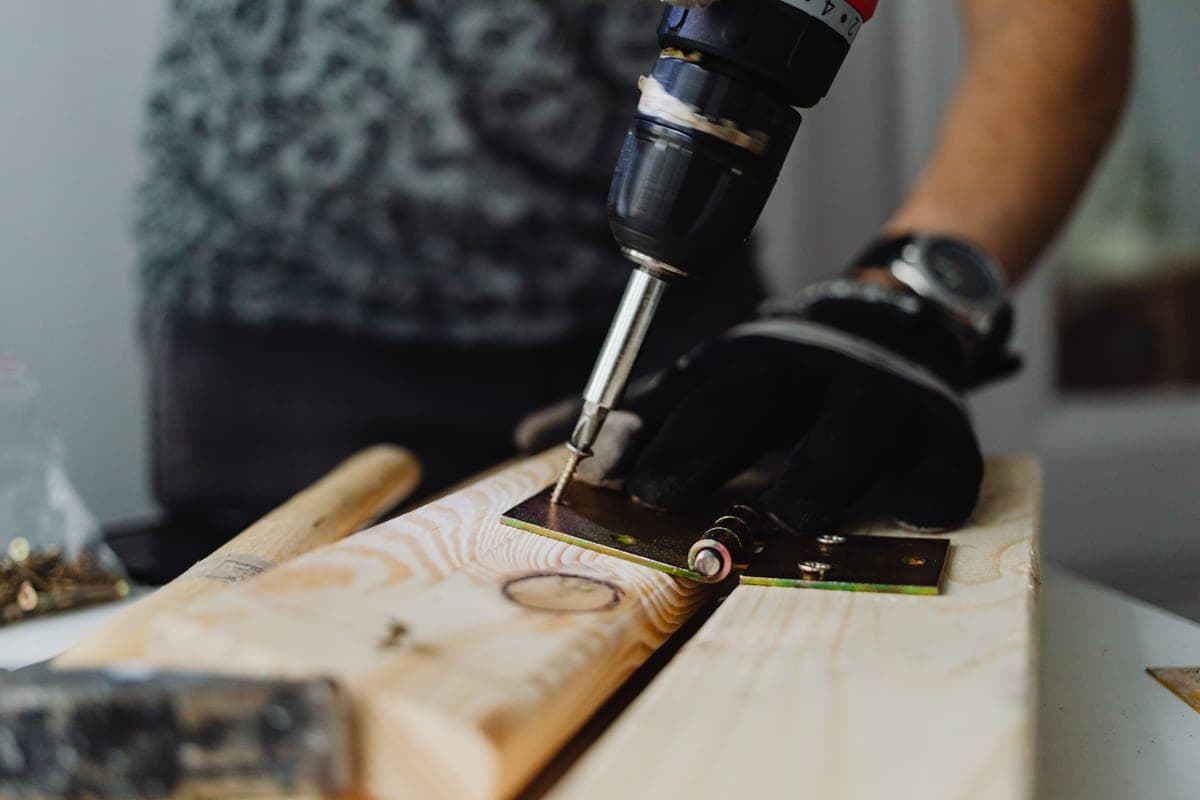
Which procedure you need
Surface-mounting is a bracket job: find studs, fix the bracket, hang the unit, plug it in. Anyone comfortable hanging a heavy mirror can do it. Recessing adds cutting, framing and — the part that is not DIY — a receptacle inside the wall cavity.
Procedure A — surface-mounting
- Find the studs with a stud finder and mark them. These units are heavy; drywall anchors alone are not adequate.
- Set the height. Center of the flame at roughly 40 to 50 inches puts it at seated eye level. Mark it, then sit down and look at the mark before you drill.
- Level the bracket and fix it into at least two studs. Check level again after the first screw — brackets rotate.
- Hang the unit onto the bracket. Most are a hook-and-drop design and most need two people at 50 inches and up.
- Plug into a wall receptacle. Never a power strip or extension cord — at 1,500 W this is a 12.5 amp continuous load.
- Test on low first, then full heat, and let it run fifteen minutes to confirm the breaker holds and nothing rattles against the wall.
Procedure B — recessing
- Check the depth first. A standard 2x4 wall gives about 3.5 inches of cavity. If your unit is deeper than that, stop and plan a furred-out or 2x6 wall before you cut anything.
- Find the studs and work out what is inside the wall. Wiring and plumbing both live in cavities. Cut a small inspection hole and look before you cut a large one.
- Mark the rough opening from the manufacturer's stated dimensions, not from the unit's overall width. These differ.
- Cut the drywall to the marked line. A drywall saw and patience beat a multi-tool and enthusiasm.
- Frame the opening. If it crosses a stud, that stud carries load and the opening needs a header above it with cripples either side. If you are not confident about that, this is the point to get a carpenter.
- STOP. Electrical goes here. A receptacle inside the cavity, added by a licensed electrician. Manufacturers frequently specify a dedicated circuit, and whether yours needs a permit is a local question. Do not run a cord out of a flush-mounted unit — it defeats the entire purpose and looks worse than surface-mounting.
- Fit the unit into the framed opening and secure it per the manual.
- Patch, tape, sand and paint. This is the step that decides whether the result looks built-in or cut in. Do not rush the finishing.
Tools
| Surface-mount | Recess (in addition) |
|---|---|
| Stud finder | Drywall saw or multi-tool |
| Drill and driver | Framing lumber, or a header kit |
| Spirit level | Circular saw or handsaw |
| Tape measure and pencil | Drywall compound, tape, sanding block |
| A second person | Paint that matches the wall, and a test patch |
What it costs to run once it is in
| Usage | Hours | Heat on (1,500 W) | Flame only (~100 W) |
|---|---|---|---|
| One evening | 4 | $1.10 | $0.07 |
| A week of evenings | 28 | $7.70 | $0.51 |
| A month, 4 hrs a night | 120 | $33.01 | $2.20 |
| A 90-day winter, 4 hrs a night | 360 | $99.04 | $6.60 |
| Per hour | 1 | 27.5¢ | 1.8¢ |
Worth knowing at install time because it shapes how you use it. Most owners settle into flame-only for the majority of hours and the heater for genuinely cold evenings — at under two cents an hour against 27.5, that is arithmetic rather than frugality.
Mistakes we see repeatedly
- Mounting too high. A fireplace at 60 inches gives everyone a stiff neck and looks like a television that lost an argument.
- Cutting before checking depth. A hole that will not take the unit is a genuinely bad afternoon.
- Cutting a stud without a header. Structural, and not visible until something sags.
- Planning to run a cord out of a recess. It looks worse than surface-mounting. Solve the power first.
- Skipping the paint test patch. Fresh paint over a fresh patch rarely matches an aged wall on the first go.
Questions people actually ask
How high should a wall mounted electric fireplace be?
Center of the flame at roughly 40 to 50 inches, which puts it at seated eye level for a sofa. Mark the height, then sit down and look at the mark before drilling — this is the single most useful thirty seconds in the whole install.
Can I recess an electric fireplace myself?
The cutting and framing, yes, if you are comfortable with basic carpentry and understand headers. The receptacle inside the cavity should go to a licensed electrician — it is licensed work in most jurisdictions and the failure mode is a fire.
Do I need a header when recessing?
If the opening crosses a load-bearing stud, yes. Cutting a stud removes a load path and something has to carry it. If you are unsure whether a wall is load-bearing, that is the point to ask a carpenter.
How long does it take?
Surface-mounting: an afternoon. Recessing: a weekend for the carpentry, plus an electrician's visit, plus drying time for compound and paint across a few days.
Sources
Every figure on this page is either taken from one of these documents or computed from a formula shown on the page. Nothing here is recalled from memory.
- NFPA — National Electrical Code (NFPA 70), the standard behind US branch-circuit limits
- US Consumer Product Safety Commission — portable heater safety guidance
- R.W.FLAME recessed / wall-mount range — 3.86 in depth, 750/1500 W, 5,100 BTU
- EIA Electric Power Monthly, Table 5.3 — US residential average, June 2026
Read next
- Depth and clearance
3.5 inches of cavity in a standard wall, and what fits it. Plus the clearances that actually matter.
- Wall-mounted vs recessed
The same fireplace, two installs. What each costs in work, and what each looks like when finished.
- Watts, amps and your circuit
12.5 amps on a 15-amp circuit. Why the ceiling exists, and where we stop and an electrician starts.
- What installing an electric fireplace insert really costs
Trim kits, receptacles, framing and electrical work — the costs that arrive after the unit does.
- Plug-in vs hardwired electric fireplaces
What hardwiring actually buys you, which units support both, and why one popular firebox produces less heat than a plug-in unit on a normal circuit.