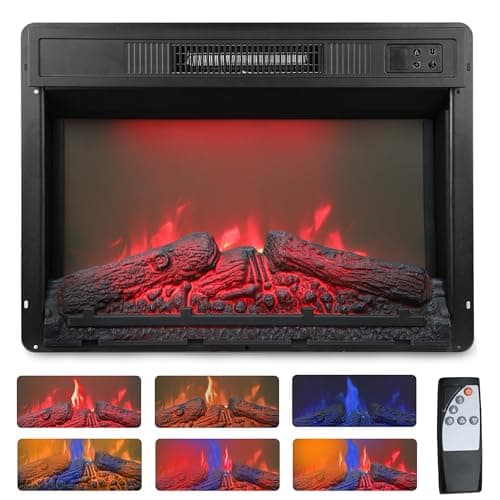
You have a hole in a wall — a dead brick firebox, or a framed opening waiting for something. This is the section about filling it, with the measurements and the running costs written down.
Everything in inserts
Each roundup below shows its top pick with a buy link, so you never have to dig three pages deep to find one.
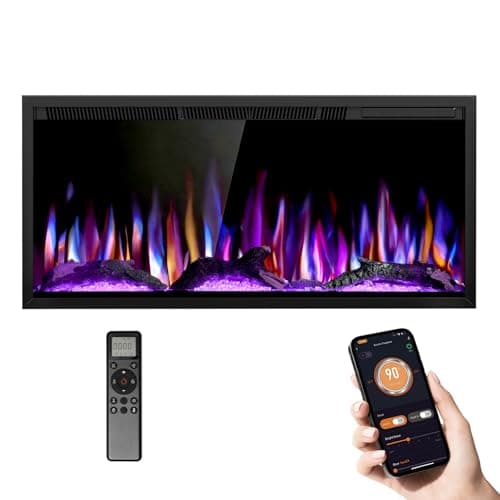
Four 60-inch units ranked by recess depth, the one spec that actually differs at this width - plus the 65-inch model that keeps appearing in 60-inch results.
Why 42 inches is dominated by unbranded ultra-thins, the one unit that publishes a full specification, and the branded alternatives either side of the size.
Replacing a dead firebox in a TV stand or mantel: the four measurements that decide the fit, why replacement insert means two incompatible products, and three units that fit real cutouts.
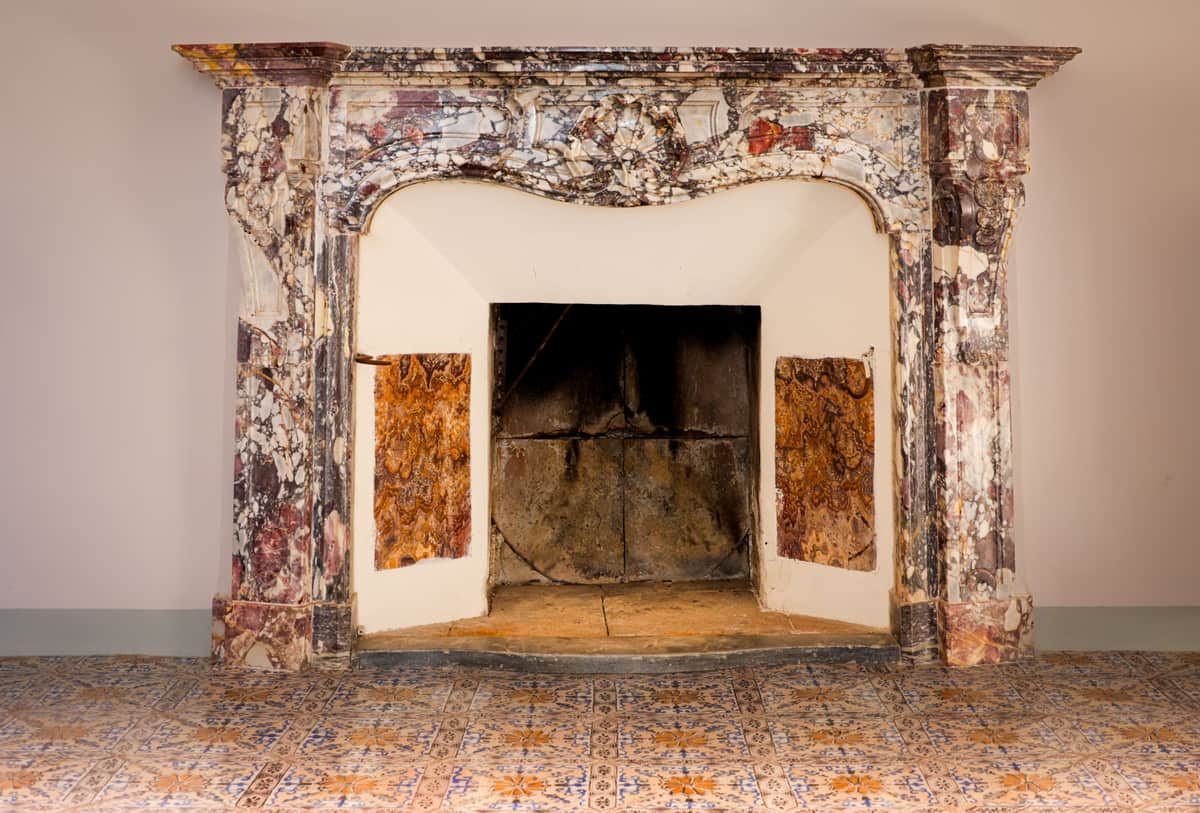
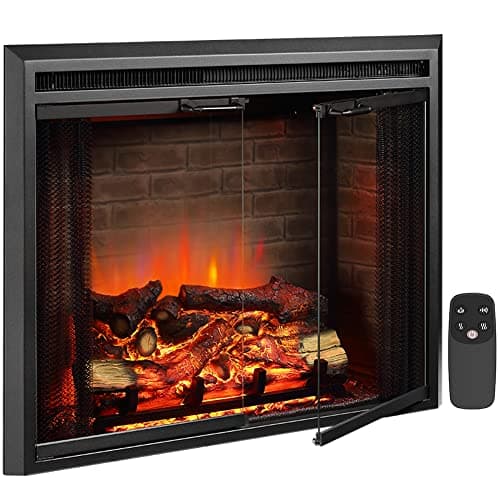
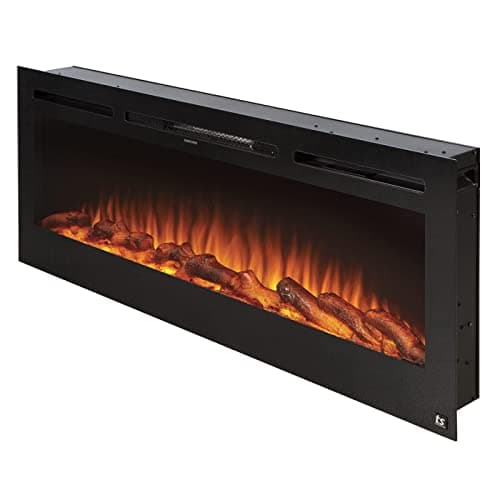
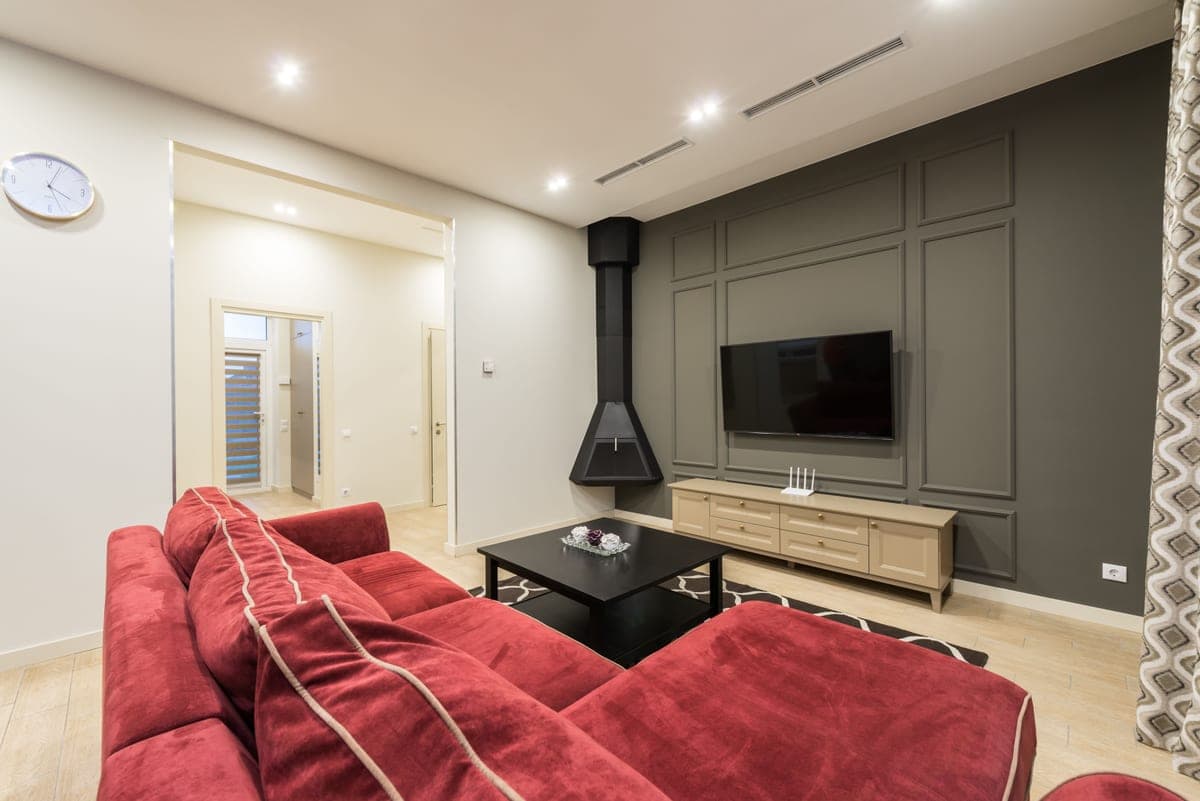
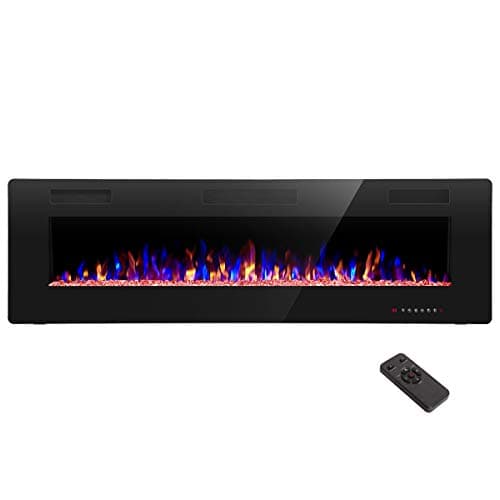
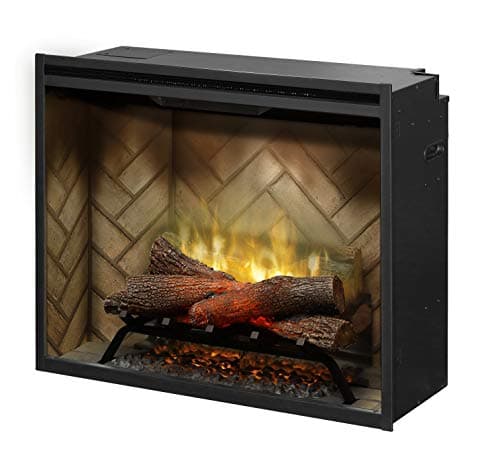
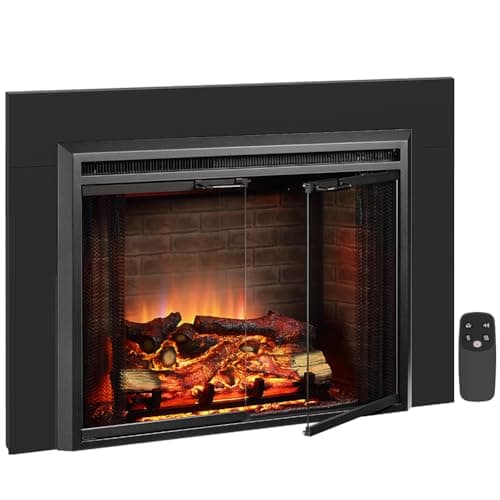
An electric fireplace insert is a self-contained firebox that drops into an opening you already have. That opening is usually one of two things: a masonry firebox left behind when a wood or gas fireplace was decommissioned, or a stud cavity framed specifically to receive one. The insert brings its own housing, its own glass or mesh front, and its own heater. You plug it in.
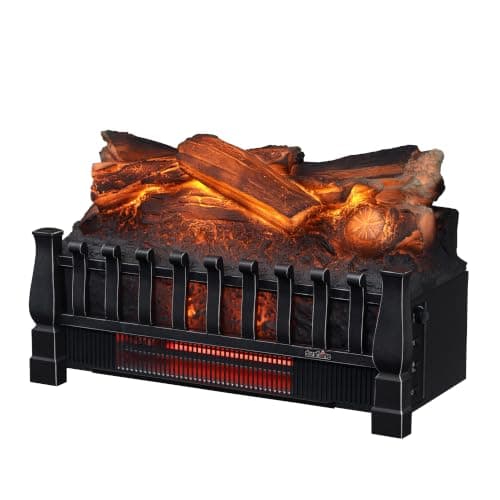
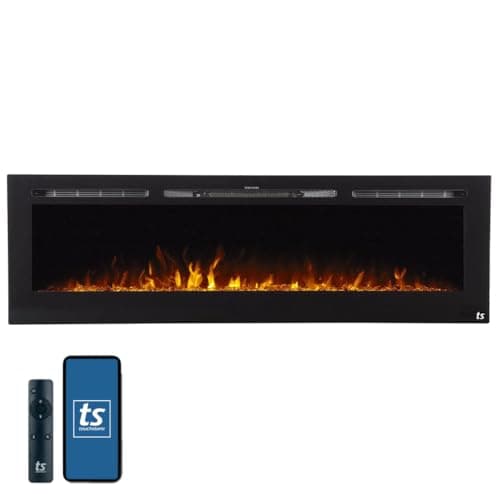
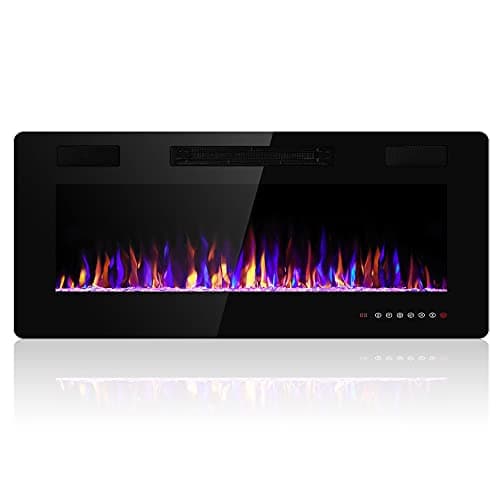
That is the whole idea, and it is worth stating plainly because the word "insert" gets used for at least three different products in this category. A log set is a bare tray of resin logs with a heater behind it — no enclosure, no glass, so the old firebox stays visible around it. A full insert is a boxed unit with a front, sized to fill the opening. A linear recessed unit is a wide, frameless band of flame designed for a cavity you frame yourself, and it belongs in the wall-mount section rather than here. Buying the wrong one of the three is the single most common mistake in this category, and it is entirely avoidable with a tape measure.
Measure the opening before you read another word
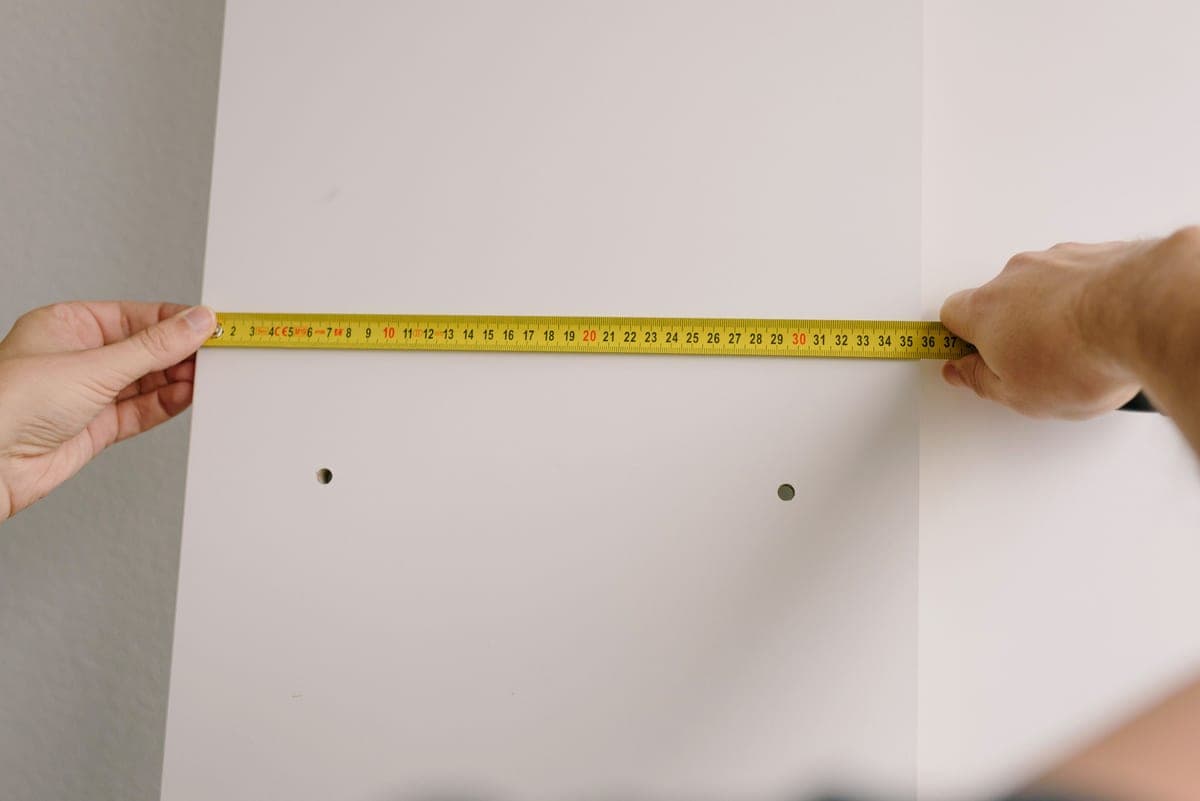
Every insert is sold by nominal width — 20, 26, 33, 36, 50 inches — and that number is the unit, not the hole. Masonry openings taper: they are frequently narrower at the back than at the front, and the back is what constrains you. Measure width at the front, width at the back, height, and depth, and write all four down. Then subtract nothing and add nothing, because the trim kit is what covers the difference, and trim kits are usually sold separately.
Front width — what you see. This decides whether the finished result looks deliberate.
Rear width — the real constraint. An insert that clears the front and fouls the back does not go in.
Height — usually generous in masonry, tight in a framed cavity.
Depth — a log set needs almost none; a full insert typically wants 8 inches or more.
Power — where is the nearest receptacle, and is it on a circuit already carrying something else? See watts, amps and your circuit.
The one number that decides nothing
Heat output. Every plug-in electric fireplace sold in the United States runs on a 120 V circuit, and 1,500 W is the practical ceiling before you trip a standard breaker. That is about 5,118 BTU per hour, on every unit, at every price. A $200 log set and a $1,600 recessed linear unit produce the same heat, because physics and the National Electrical Code say they must.
What an insert costs to own, not just to buy
The purchase price is the number everyone quotes. The one that matters over a winter is the running cost, and it is computable exactly: watts divided by 1,000, times your electricity rate. At the June 2026 US residential average of 18.34 cents per kWh, a 1,500 W insert costs 27.5 cents an hour on full heat — about $99 across a 90-day winter at four hours a night.
That figure is roughly 53% higher than the numbers still circulating in this category, which were computed at around 12 cents per kWh and never updated. We think being right about this is more useful than being cheerful about it. The full working, including the flame-only column that changes the calculation entirely, is on what these cost to run.
Where to start
If you have a masonry firebox and want the least disruptive option, start with inserts for an existing fireplace. If you already know your opening, go straight to 36-inch or 50-inch. If you are still deciding whether the whole idea is worth it, are inserts worth it gives the honest conditional answer, and installation cost covers what you will spend beyond the box.
Questions people actually ask
+Can you put an electric fireplace insert in an existing fireplace?
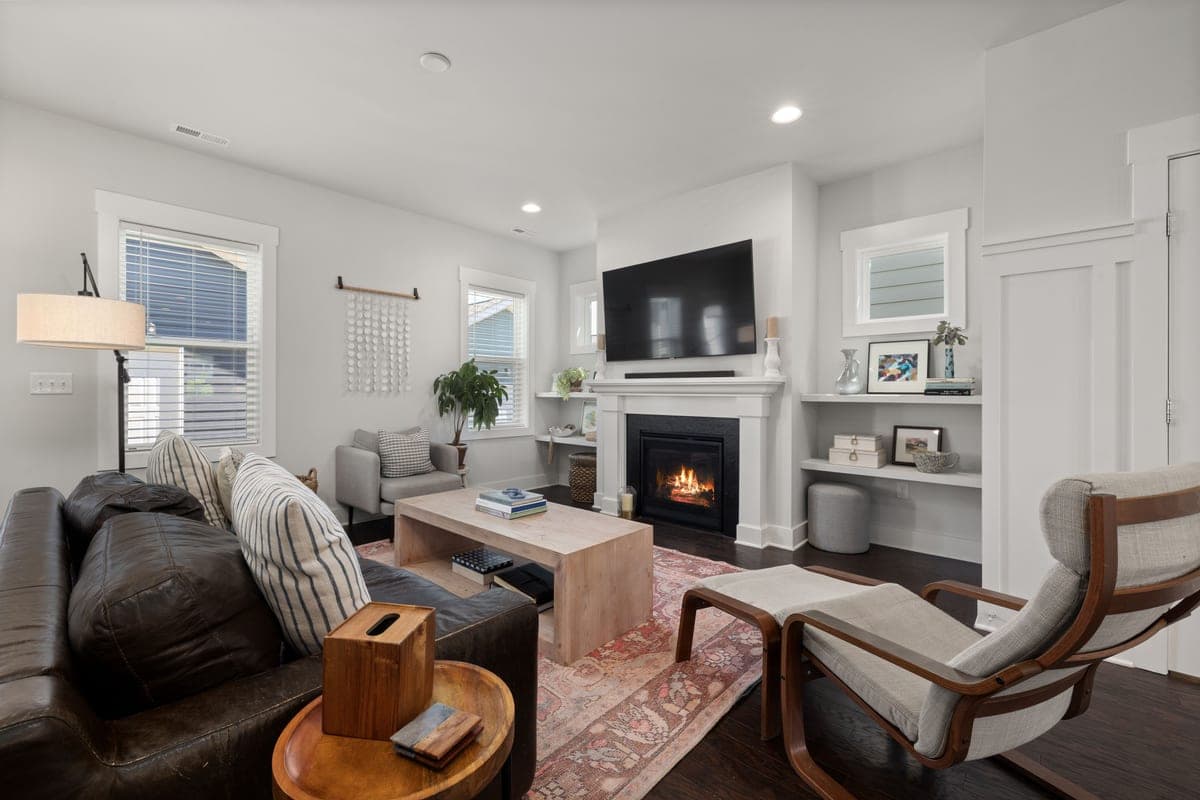
Yes, and it is the most common use for one. A decommissioned masonry firebox needs no venting, no gas line and no chimney work — the insert sits inside it and plugs into a nearby receptacle. The two things to check first are the opening dimensions at the BACK as well as the front, and whether there is a receptacle within reach. Full detail on inserts for an existing fireplace.
+Do electric fireplace inserts need a chimney?
No. There is no combustion, so there is nothing to vent — no smoke, no carbon monoxide, no flue. If you have a chimney it can stay capped and unused. This is the main reason people fit them into fireplaces that were closed off years ago.
+How much heat does an electric fireplace insert give off?
About 5,118 BTU per hour at the 1,500 W ceiling that every 120 V plug-in unit shares. On the common 20-BTU-per-square-foot rule of thumb, that is enough to be the only heat source in a room of roughly 256 square feet, and supplemental heat in anything bigger. Work out your own room on the room size calculator.
+Is a log set the same as an insert?
No. A log set is a bare tray of resin logs with a heater behind it and no enclosure, so the original firebox remains visible around it. It is cheaper, far easier to fit, and looks appropriate in a real masonry opening. A full insert brings its own housing and front, and fills the opening completely.
Sources
Every figure on this page is either taken from one of these documents or computed from a formula shown on the page. Nothing here is recalled from memory.