Will it warm the room, and what will it do to the bill? Both questions have exact answers. This section is the arithmetic, with the source for every figure and nothing rounded in the product's favor.
Everything in heat & running cost
Each roundup below shows its top pick with a buy link, so you never have to dig three pages deep to find one.
The ceiling: 1,500 watts, and why every unit hits it
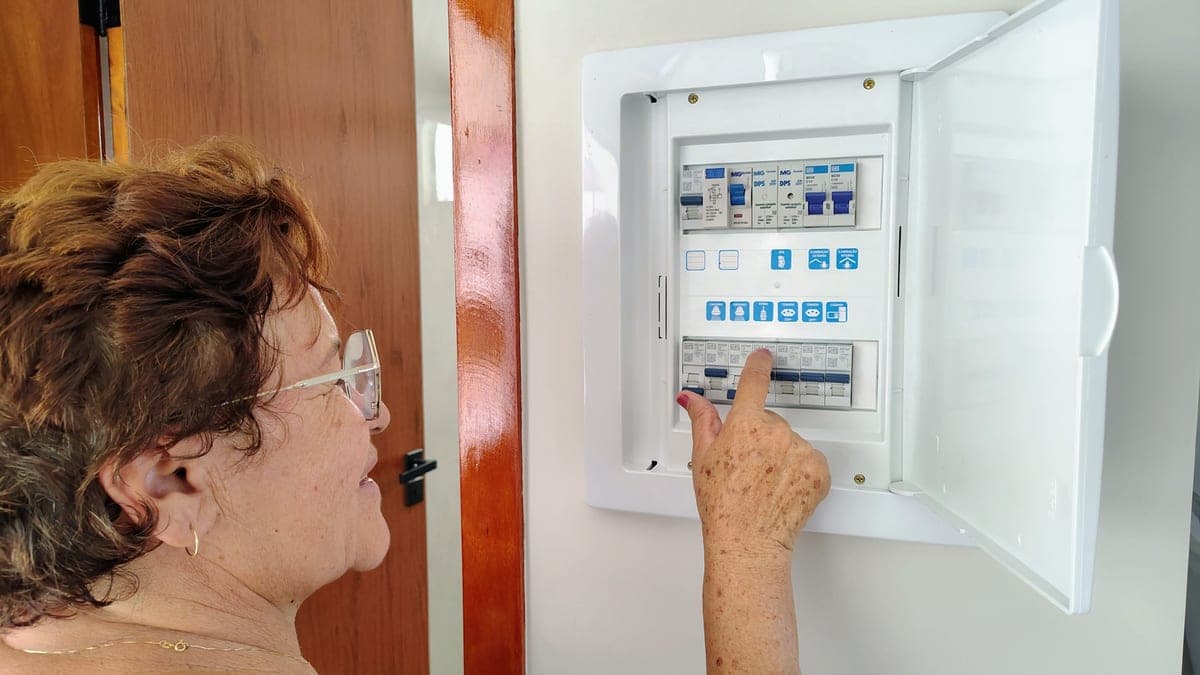
A standard US household circuit is 120 volts and 15 amps. Continuous loads are conventionally limited to 80% of a circuit's rating, which lands you at 12 amps — and 12.5 amps at 120 volts is 1,500 watts. That is why essentially every plug-in electric fireplace sold in the United States is rated 1,500 W on high. It is not a design choice made by a product team. It is the wall.
Convert that to heat and you get 1,500 × 3.412 = 5,118 BTU per hour. Every 1,500 W unit produces that, whether it cost $180 or $1,800. There is no premium tier of heat in this category, because there cannot be one without rewiring your house.
What 5,118 BTU actually covers
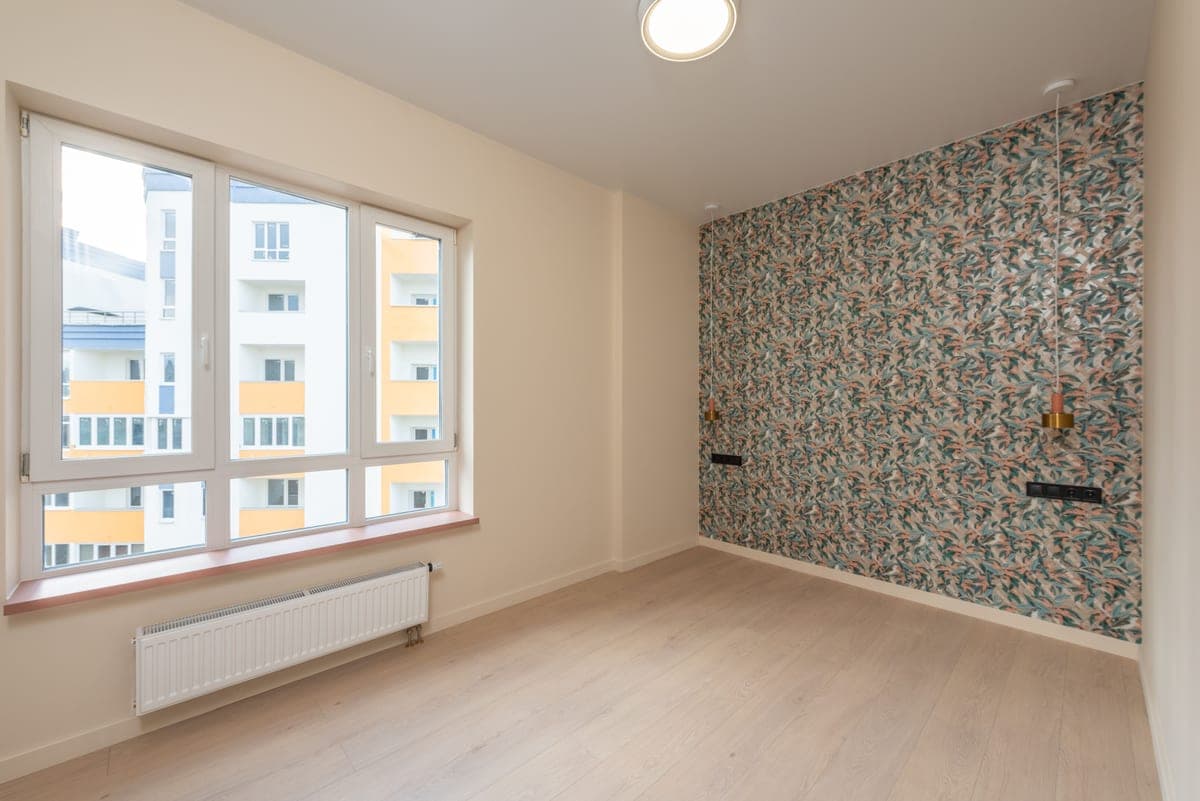
The common rule of thumb for supplemental heating in a reasonably insulated US home is about 20 BTU per square foot. On that basis 5,118 BTU per hour is enough to be the sole heat source in roughly 256 square feet — a 16 by 16 room. Above that it is supplemental heat: it will make the seating area noticeably warmer and it will not hold the whole room at temperature.
Manufacturers routinely publish larger figures — 400 square feet is a common claim, 1,000 square feet appears on infrared models. Those are supplemental-heat ratings, not a claim that the unit can hold that space at temperature by itself, and reading them as the latter is how people end up disappointed. Put your own room in the room size calculator and it will tell you the shortfall as well as the fit.
The running cost, and the number the category keeps getting wrong
The formula is trivial: cost per hour = (watts ÷ 1000) × your rate in dollars per kWh. At 1,500 W and the June 2026 US residential average of 18.34 cents per kWh, that is 27.5 cents an hour. Four hours a night for a 90-day winter comes to about $99.
Widely quoted guidance in this category still says "about 18 cents an hour" for a 1,500 W unit. Work backward and that implies roughly 12 cents per kWh — a rate that is years out of date. The gap is about 53%, which is not a rounding difference, it is a materially wrong answer to the question buyers are actually asking. The full working, with the source, is on what these cost to run.
The flame-only figure that changes the purchase
Flame and heater are independent controls on essentially every unit in this category. Run the flame with the heater off and the draw collapses to the LED assembly — conservatively under 100 watts, and often far less. At the same 18.34 cents per kWh that is under two cents an hour, or roughly seven cents for a whole evening.
If what you actually want is the look of a fire on a winter evening, that is the number that matters, and almost nobody publishes it. It reframes the entire purchase: the expensive part of owning an electric fireplace is the heating, and the heating is optional.
Infrared, fan-forced, and the marketing around both
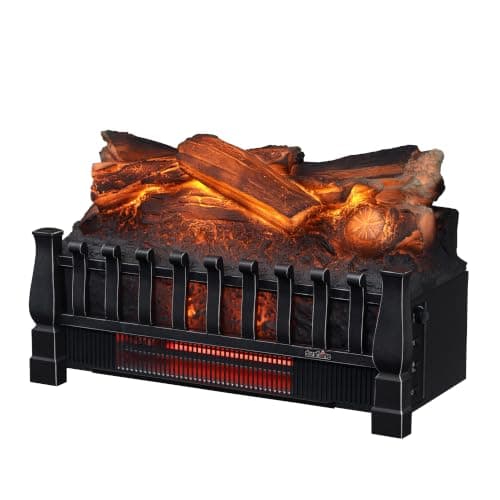
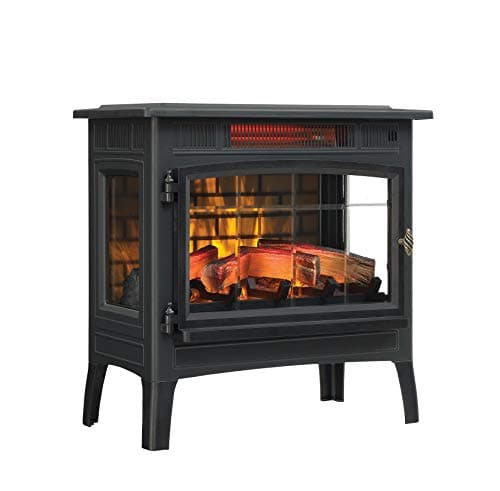
Two heater types dominate. Fan-forced units blow air across a heating element — fast, audible, and the warmth vanishes when the fan stops. Infrared quartz units radiate heat onto objects and people rather than heating air, which feels gentler and holds room humidity better. Both draw the same 1,500 W and both produce the same 5,118 BTU per hour. The difference is real and worth understanding; it is a difference in how the heat feels, not how much of it there is. Details on infrared vs fan-forced.
Questions people actually ask
+Do electric fireplaces actually heat a room?
Yes, within a limit that is easy to state. A 1,500 W unit produces about 5,118 BTU per hour, which on the 20-BTU-per-square-foot rule of thumb is enough to be the sole heat source in around 256 square feet. In a larger room it is supplemental heat — genuinely warmer where you sit, not a replacement for the furnace. Full working on do they actually heat a room.
+Are electric fireplaces expensive to run?
On full heat, about 27.5 cents an hour at the June 2026 US average of 18.34 cents per kWh — roughly $99 across a 90-day winter at four hours a night. With the heater off and just the flame running, under two cents an hour. Both figures come from (watts ÷ 1000) × rate; put your own rate in the running cost calculator.
+How much does an electric fireplace cost per month?
At four hours a night on full heat, about $33 a month for a 1,500 W unit at 18.34 cents per kWh. Flame-only for the same hours is about $2.20 a month. Your rate is the variable that moves the answer most — state rates range widely around the national average.
+Do electric fireplaces use a lot of electricity?
A 1,500 W fireplace draws about as much as a hair dryer or a space heater, and roughly 12.5 amps — most of a 15-amp circuit on its own. That is why manufacturers commonly specify a dedicated circuit. Running the flame effect without the heater draws a small fraction of that.
+Why is my electric fireplace not heating the room?
Most often because the room is larger than 5,118 BTU per hour can hold, which is a limit of the category rather than a fault. Before assuming a defect, check the wattage setting (many units default to the 750 W low setting), confirm the heater is on rather than just the flame, and put the room's dimensions into the room size calculator.
Sources
Every figure on this page is either taken from one of these documents or computed from a formula shown on the page. Nothing here is recalled from memory.