Comparison · the one we lose outright
Electric fireplace vs heat pump
There is no version of this comparison where the fireplace wins on heat, and the reason is physics rather than engineering. What is worth your time is understanding why, and what the fireplace is still for once you know.
By Scooter M.Published October 15, 2026Last reviewed October 15, 2026
Disclosure: the buy links below are affiliate links. We earn a commission on Amazon purchases at no extra cost to you. It has never changed a ranking on this site, and every roundup here names a unit we think you should skip. How this site is funded.
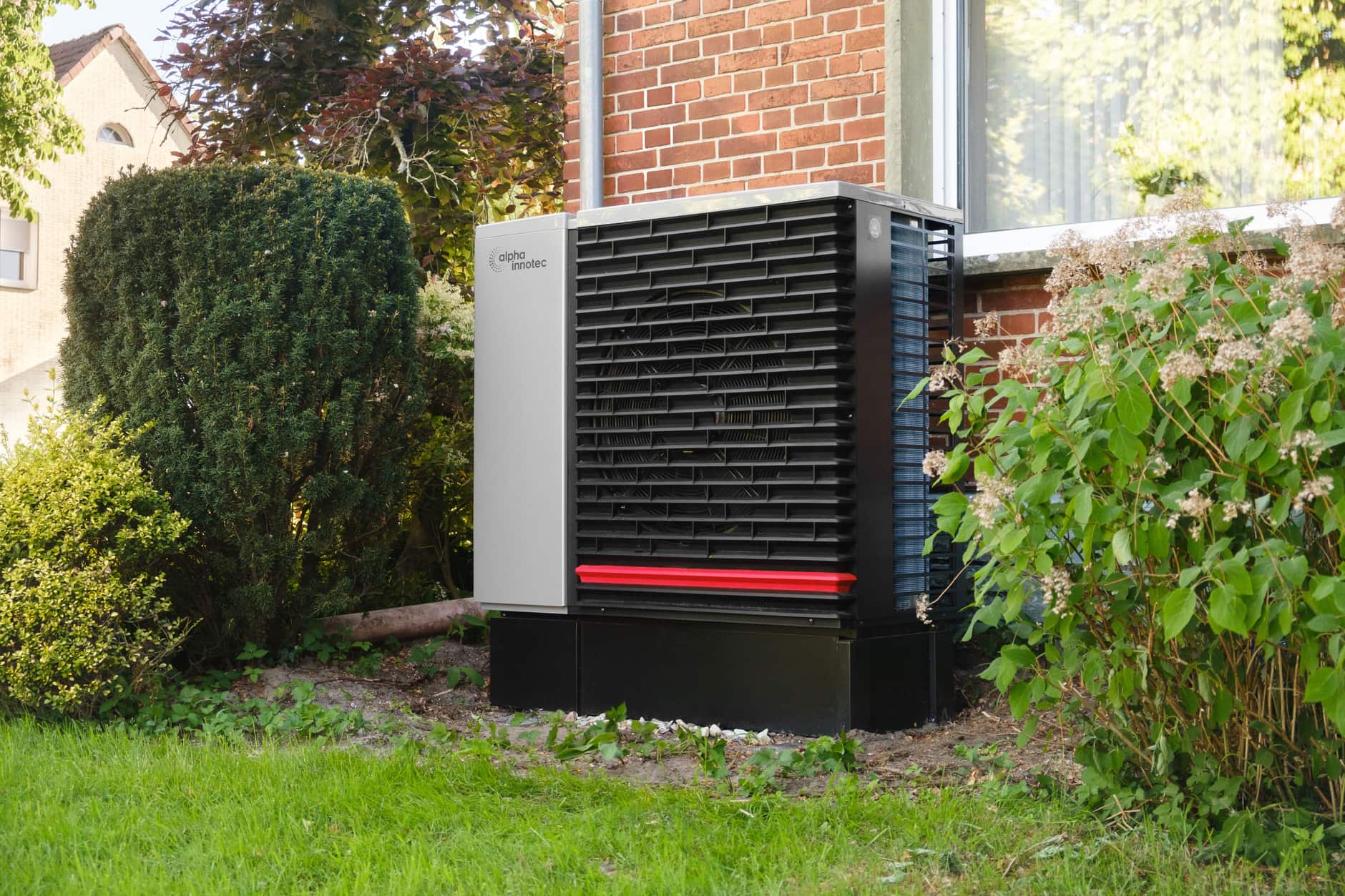
A heat pump wins this on heat and it is not close. An electric fireplace is a resistance heater: every watt of electricity becomes one watt of heat, which is a hard ceiling of 1-to-1 that no design can beat. A heat pump does not make heat, it moves it, so ENERGY STAR says a certified air-source unit "can deliver up to three times more heat energy to a home than the electrical energy it consumes". The Department of Energy puts the same point in bill terms: roughly 65% less electricity for the same heating job. An electric fireplace is also capped at about 5,118 BTU per hour, where a residential heat pump is sized in the tens of thousands. Buy the heat pump for heat. Buy the fireplace for the fire.
Why this is physics, not engineering
Every comparison on this site so far has had a real argument on both sides. This one does not, and the reason is worth understanding because it also explains why no electric fireplace at any price will ever do better.
An electric fireplace heats by resistance: current through a coil or a quartz element, and essentially all of that electrical energy ends up as heat in the room. That sounds like perfect efficiency, and in a sense it is — but 100% is the ceiling. One unit of electricity in, one unit of heat out. Nothing you can do to a resistance heater beats 1-to-1.
A heat pump is not making heat at all. It is moving heat that already exists outside into your house, using electricity to run the pump rather than to become the warmth. That is why it is not bound by the same ceiling. The Department of Energy's phrasing is exact: heat pumps "transfer — rather than generate — heat". ENERGY STAR quantifies it — a certified air-source heat pump "can deliver up to three times more heat energy to a home than the electrical energy it consumes".
What that costs, in both directions
Here is what any 1,500 watt electric fireplace costs to run, at the June 2026 US residential average. This table is the same for every unit on this site, at every price.
| Usage | Hours | Heat on (1,500 W) | Flame only (~100 W) |
|---|---|---|---|
| One evening | 4 | $1.10 | $0.07 |
| A week of evenings | 28 | $7.70 | $0.51 |
| A month, 4 hrs a night | 120 | $33.01 | $2.20 |
| A 90-day winter, 4 hrs a night | 360 | $99.04 | $6.60 |
| Per hour | 1 | 27.5¢ | 1.8¢ |
Now apply the ENERGY STAR figure. To put the same roughly 5,118 BTU into a room, a heat pump running at three times the output per unit of electricity draws about a third of the power — roughly half a kilowatt rather than one and a half. At the same tariff that is around nine cents an hour against 27.5. It is the same arithmetic the Department of Energy compresses into its own figure: approximately 65% less electricity for the same heating, compared with electric resistance.
We have derived that nine cents from the cited coefficient rather than taking it from a manufacturer, and "up to three times" is a ceiling rather than a typical winter day. Treat it as the shape of the gap, not a quote. The running cost calculator will do the fireplace half of it at your own rate.
The comparison, line by line
| Electric fireplace | Air-source heat pump | |
|---|---|---|
| How it makes heat | Converts electricity to heat | Moves existing heat indoors |
| Best possible efficiency | 1 unit in, 1 unit out | Up to 3 units out per unit in (ENERGY STAR) |
| Typical output | About 5,118 BTU/hr, capped by a 120 V circuit | Tens of thousands of BTU/hr, sized to the house |
| What it heats | One room, partially, as supplemental heat | The whole house, as the heating system |
| Install | Plug it in, or a wall cavity and an afternoon | Contractor, outdoor unit, refrigerant lines, often electrical work |
| Cost to install | Essentially nothing beyond the unit | Thousands, before any rebate or tax credit |
| Takes it with you when you move | Yes | No |
| Also cools in summer | No | Yes |
| Produces a flame | Yes — the entire point | No |
Where the heat pump's advantage narrows
Two honest caveats, because "up to three times" is not a promise about February. A heat pump's advantage falls as the outdoor temperature does, since there is less heat outside to move. ENERGY STAR certification requires third-party verified performance tested down to 5°F, and says a cold-climate unit "will continue working at temperatures below 5°F" — but it also recommends pairing it with a back-up source for temperatures lower than that, and that backup is very often electric resistance strips. In the coldest hours, some heat pumps are running the same 1-to-1 physics as the fireplace.
The second caveat is money rather than physics. The fireplace costs nothing to install and the heat pump costs thousands, so the efficiency gap has to run for years before it repays the difference. If you are renting, if you are moving inside two years, or if the heating already works and you simply want a fire, that calculation does not favor the project — and none of that changes the fact that the fireplace is not a heating system.
So what should you actually do
- If the room is genuinely cold, this is a heating question and the fireplace is not the answer. Price the heat pump, and read do electric fireplaces actually heat a room? before you spend anything on a fireplace expecting it to help.
- If the heating works and the room is dull, buy the fireplace and stop reading about heat pumps. Nothing on the efficiency argument is relevant to you. The picks below are chosen on flame and format, not output.
- If both are true, do both, in that order. A heat pump and an electric fireplace are not alternatives — plenty of houses have both, and it is the right answer rather than a compromise.
- If you are renting, the fireplace is the only one of the two you can actually buy. Electric fireplaces for apartments and rentals covers what works without touching the structure.
What to buy for the fire, once the heating is handled
Ranked. The running cost column is computed from each unit's rated wattage, not quoted from a manufacturer. Tap a row for the full write-up.
| # | Product | Best for | Cost per hour | Price |
|---|---|---|---|---|
| 1 | 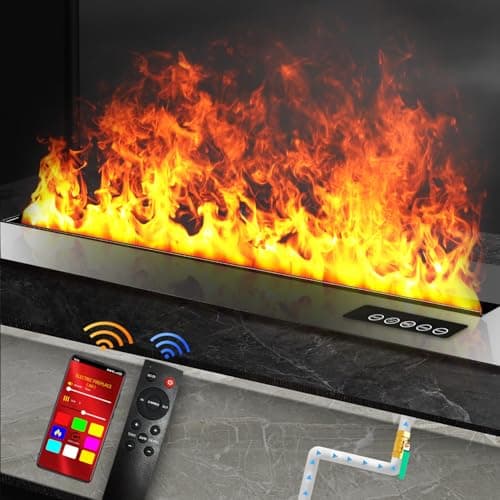 SUNLITUP 31.6" Water Vapor Fireplace (3D-100W)Water vapor and LED, with zero heat output by design — the honest product for a house whose heating is already solved. | The one that admits it is not a heater | No heaterflame effect only | |
| 2 | 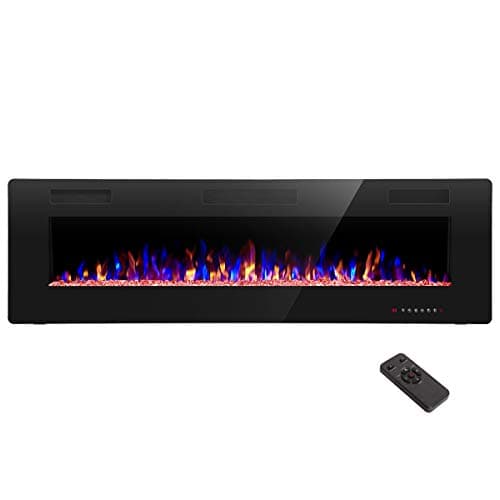 R.W.FLAME 60" Ultra-Thin Recessed & Wall-Mount FireplaceFive feet of flame at 3.85 inches deep, fully specified, for about what a single heat-pump service call costs. | Six feet of fire in a house that is already warm | 27.5¢1,500 W · 5,118 BTU | |
| 3 | 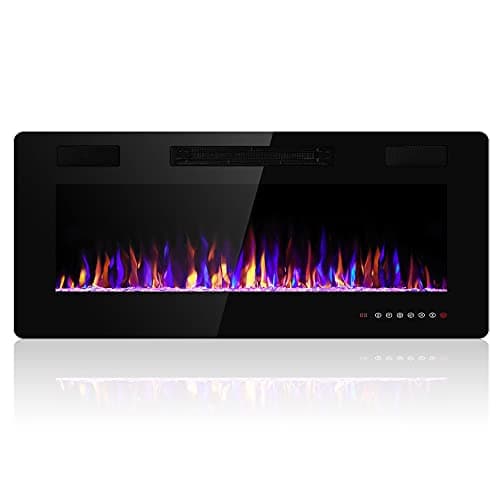 Electactic 42" Ultra-Thin Recessed InsertA fully specified 42-inch recessed unit at the bottom of the market — the right call when the budget is really going on a heat pump. | Spending the least here so the heating gets the money | 27.5¢1,500 W · 5,118 BTU | |
| — | 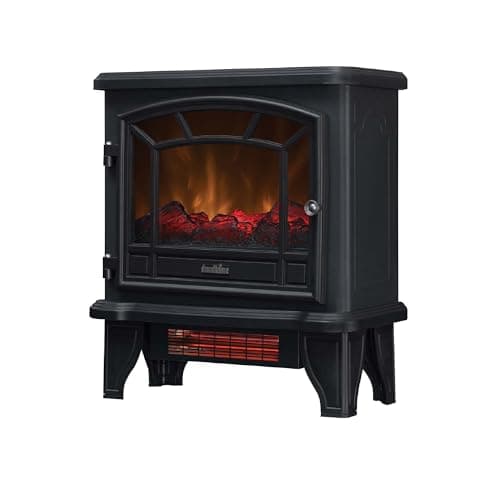 Duraflame Infrared Quartz Electric Fireplace Stove HeaterA good stove bought for the wrong reason — the 1,000 square foot supplemental rating is exactly the number that makes people think this competes with a heating system.Skip this one | Nothing, if you are shopping it against a heat pump | 27.5¢1,500 W · 5,118 BTU |
#ad Buy links are affiliate links — we earn a commission on Amazon purchases at no extra cost to you, and it never changes the ranking. How this site is funded. Running cost is computed at 18.34¢/kWh; see what these actually cost to run.
Why we are telling you to buy the other thing
This site earns a commission when someone buys a fireplace through it, and it earns nothing at all when someone installs a heat pump. We would still rather say it plainly: if what you want is a warm house, the appliance that does that is not the one we sell. Pretending otherwise would get us a sale and get you a disappointment in January, and the whole premise of how we pick is that the second of those matters more.
The flip side is the part the efficiency argument cannot touch. A heat pump will never produce a flame, and that is not a shortcoming — it is a different product. Everything on this site exists for the thing the heat pump does not do.
#1 · The one that admits it is not a heater
SUNLITUP 31.6" Water Vapor Fireplace (3D-100W)
Water vapor and LED, with zero heat output by design — the honest product for a house whose heating is already solved.
If a heat pump is doing the heating, the fireplace has exactly one job, and this is the unit built for that job and nothing else. SUNLITUP states zero heat output: there is no element, no blower, no thermostat. What you get is a 3D mist flame with glowing embers, rising sparks and semi-transparent flame tips, which is the closest thing in this category to looking like a fire rather than a picture of one.
It is also the only format where you are not paying for a heater you have decided not to use. Everything else on this page carries a 1,500 watt element whose entire value, in a heat-pumped house, is as a backup you will rarely switch on.
The controls are unusually complete for the money: a remote, a panel and a smart app, eight LED colors that can be locked or set to cycle every two minutes, a child lock and a simulated wood-burning sound. The 3.5 liter tank runs eight to nine hours continuously on its lowest setting at 0.26 to 0.4 liters an hour, with automatic inlet, drainage, low-water protection and an auto-stop when full.
The costs are real and specific. It produces no heat at all, which is the point but also means it can never cover a cold snap. It is the only product on this site that needs plumbing — SUNLITUP's own installation note says to connect the hose to a water source, and to leave air-inlet space at the bottom or the flames sit low. Remote batteries are not included, and SUNLITUP publishes no atomizer wattage and no rough opening. We go further into the technology on water vapor fireplaces.
What it does not do: It produces no heat whatsoever, which is the point rather than a fault — but it means this can never double as a heater on a cold evening. It is also the only product on this site that needs plumbing: SUNLITUP's installation note says to connect the hose to a water source, and to reserve air-inlet space at the bottom for convection or the flames sit low. Remote batteries are not included. SUNLITUP publishes no wattage for the atomizer and no rough opening, and the Amazon dimension fields do not make clear which figure is the depth.
Published specs
- Width:
- 31.6 in
- Heat:
- None — the manufacturer states zero heat output
- Effect:
- 3D mist flame with glowing embers, rising sparks and semi-transparent flame tips
- Lighting:
- 8 LED colors, switchable or lockable, auto-changing every 2 minutes
- Water system:
- 3.5 L tank, automatic inlet and drainage, 0.26 to 0.4 L per hour depending on setting
- Runtime:
- 8 to 9 hours continuous on the lowest setting
- Control:
- Remote, control panel and smart app, with child lock and a simulated wood-burning sound
- Safety:
- Low-water automatic protection and auto-stop when full
- Body:
- 304 stainless steel exterior panel and internal tank
What it costs to run
No heater. The flame effect alone draws far less than a heating unit — see what these cost to run.
Computed at 18.34¢/kWh (EIA, June 2026). Your rate will differ — work out your own.
#ad We earn a commission on this link at no cost to you. How this is funded. Price as of October 17, 2026.
#2 · Six feet of fire in a house that is already warm
R.W.FLAME 60" Ultra-Thin Recessed & Wall-Mount Fireplace
Five feet of flame at 3.85 inches deep, fully specified, for about what a single heat-pump service call costs.
This is the pick for the common case: the heating question is settled, the room is comfortable, and what is missing is the fire. At 60 inches wide and 18.1 high it is a piece of architecture rather than an appliance, and the published depth of 3.85 inches is the shallowest of anything this wide.
R.W.FLAME publishes a real specification, which at this price is not guaranteed — 60 by 18.1 by 3.85 inches, 750 watts low and 1,500 high, 120 volts at 60 Hz, a manufacturer rating of up to 400 square feet, a touchscreen panel with a remote and an adjustable thermostat, and a one-year warranty. The presentation runs to twelve flame colors, twelve ember-bed colors, five speeds and five brightness levels.
The 750 watt low setting matters more in a heat-pumped house than it does anywhere else. It is the setting that takes the chill off one room on a shoulder evening without asking the heat pump to bring the whole house up, and at half the wattage it is half the running cost of the figure in the table above.
The honest costs: no mantel and no surround, so it is a fireplace for a wall rather than a room with a hearth. And although the published depth is 3.85 inches, R.W.FLAME's own listing also references 2x6 framing — confirm the rough opening with them before cutting a 60-inch hole in anything. We size the format on linear electric fireplaces.
What it does not do: No mantel and no surround. The published depth is 3.85 in, but the manufacturer's own listing also references 2x6 framing — confirm the rough-opening requirement with R.W.FLAME before you cut a 60-inch hole in anything.
Published specs
- Dimensions:
- 60 in L x 18.1 in H x 3.85 in D
- Heater:
- 750 W low / 1,500 W high
- Electrical:
- 120 V AC, 60 Hz
- Coverage:
- Rated by the manufacturer for up to 400 sq ft
- Flame:
- 12 flame colors, 12 ember-bed colors, 5 speeds, 5 brightness levels
- Control:
- Touchscreen panel and remote, adjustable thermostat
- Warranty:
- 1 year
What it costs to run
- 27.5¢/hr on full heat
- $99.04 across a 90-day winter at 4 hrs a night
- 5,118 BTU/hr · 12.5 A on a 120 V circuit
Computed at 18.34¢/kWh (EIA, June 2026). Your rate will differ — work out your own.
#ad We earn a commission on this link at no cost to you. How this is funded. Price as of October 17, 2026.
Specs from: R.W.FLAME 60 in listing — 60 x 18.1 x 3.85 in, 750/1500 W, 120 V, 400 sq ft; R.W.FLAME recessed / wall-mount range page.
#3 · Spending the least here so the heating gets the money
Electactic 42" Ultra-Thin Recessed Insert
A fully specified 42-inch recessed unit at the bottom of the market — the right call when the budget is really going on a heat pump.
If you are reading this page because you are pricing a heating project, the fireplace is not where the money should go, and this is the unit that makes that easy. Forty-two inches of fire, fully specified, for a small fraction of what the heat pump quote will come to.
Fully specified is the operative phrase. Electactic publishes 42 by 18.11 by 3.86 inches, 36 pounds, 750 and 1,500 watt settings, 120 volts at 12.5 amps, a manufacturer figure of 5,100 BTU per hour, twelve flame colors, twelve ember-bed colors, five brightness settings, a touch screen with an LED display plus remote, a one-to-eight-hour timer, an overheat cutoff and an ETL certification. Plenty of pricier units publish less than that.
At 3.86 inches it is shallower than a 2x4 cavity, which in principle makes it one of the few units in the category that could go into an ordinary stud wall rather than a built-out chase.
The costs are the ones that come with the price. Electactic publishes no rough-opening figure, so the stud-bay possibility needs confirming before you cut. It is an Amazon-native brand with no service history to speak of and no published warranty we could find, which is the trade being made. And its 12.5 amps is most of a 15-amp circuit — see watts, amps and your circuit before deciding what else shares it.
What it does not do: At 3.86 in it is shallower than a 2x4 cavity, but the brand publishes no rough-opening figure — confirm it before cutting. Electactic is an Amazon-native brand with no service history to speak of and no published warranty we could find, which is the trade for the price.
Published specs
- Dimensions:
- 42 in W x 18.11 in H x 3.86 in D
- Weight:
- 36 lb
- Heater:
- 750 W low / 1,500 W high
- Heat output:
- 5,100 BTU/hr (manufacturer figure)
- Electrical:
- 120 V AC, 12.5 A
- Flame:
- 12 flame colors, 12 ember-bed colors, 5 brightness settings
- Control:
- Touch screen with LED display, plus remote
- Timer:
- 1 to 8 hours
- Safety:
- Overheat cutoff, ETL certified
What it costs to run
- 27.5¢/hr on full heat
- $99.04 across a 90-day winter at 4 hrs a night
- 5,118 BTU/hr · 12.5 A on a 120 V circuit
Computed at 18.34¢/kWh (EIA, June 2026). Your rate will differ — work out your own.
#ad We earn a commission on this link at no cost to you. How this is funded. Price as of October 17, 2026.
Skip this one
Duraflame Infrared Quartz Electric Fireplace Stove Heater
A good stove bought for the wrong reason — the 1,000 square foot supplemental rating is exactly the number that makes people think this competes with a heating system.
Nothing is wrong with this product. It is a well-made infrared quartz stove with an operable door, mullions, arched frame detailing, a thermostat and a flame that runs with or without heat, and on our freestanding electric stoves page it earns its place. It is here as a skip because of what people buy it to do.
The listing prints 5,200 BTU per hour and a rating for supplemental heat up to 1,000 square feet. Both figures are the manufacturer's and we have no reason to dispute either — but read together, next to a heat pump quote, they invite a conclusion that is not true. A thousand square feet is a floor area the unit can contribute warmth to, not a space it will hold at temperature. A modest residential heat pump delivers several times this unit's entire output.
The stove shape makes it worse, not better. A cast-iron-looking stove with a door reads as a heating appliance in a way a wall panel does not, and it is the single most common form in which an electric fireplace gets bought as a furnace substitute and then disappoints in January.
Buy it because you want a stove in the corner of a room that is already heated. Do not buy it instead of solving a heating problem — that is what this page is about, and Twin-Star does not publish dimensions or weight for this model anyway, so measure against the listing before ordering.
What it does not do: Twin-Star does not publish dimensions or weight for this model on its product page, so we do not quote them — measure your space against the listing before ordering. It is freestanding and needs clearance in front of the door.
Published specs
- Heater:
- Infrared quartz
- Heat output:
- 5,200 BTU/hr
- Coverage:
- Rated by the manufacturer for supplemental heat up to 1,000 sq ft
- Body:
- Black metal, operable door with mullions and arched frame detailing
- Control:
- Adjustable thermostat
- Flame:
- Glowing log and ember bed, operable with or without heat
What it costs to run
- 27.5¢/hr on full heat
- $99.04 across a 90-day winter at 4 hrs a night
- 5,118 BTU/hr · 12.5 A on a 120 V circuit
Computed at 18.34¢/kWh (EIA, June 2026). Your rate will differ — work out your own.
#ad We earn a commission on this link at no cost to you. How this is funded. Price as of October 17, 2026.
Specs from: Twin-Star Home — Duraflame Infrared Quartz Electric Fireplace Stove Heater, 5,200 BTU, 1,000 sq ft; Amazon listing — duraflame Infrared Quartz Electric Fireplace Stove Heater, Black.
Questions people actually ask
Is an electric fireplace cheaper to run than a heat pump?
No — it is substantially more expensive per unit of heat. A fireplace converts electricity to heat at best one-for-one, while ENERGY STAR says a certified air-source heat pump can deliver up to three times more heat energy than the electricity it consumes. The Department of Energy puts the same comparison at roughly 65% less electricity for the same heating job. The fireplace is only cheaper in the sense that it costs almost nothing to install.
Can an electric fireplace replace a heat pump?
No, and not because of efficiency — because of scale. Every plug-in electric fireplace in the United States is capped at 1,500 watts by a 120-volt circuit, which is about 5,118 BTU per hour. A residential heat pump is sized in the tens of thousands of BTU per hour for the whole house. They are not the same class of appliance, whatever the square-footage rating on the box suggests.
Why is a heat pump more than 100% efficient?
It is not creating energy. A resistance heater converts electricity into heat, which caps it at one unit out per unit in. A heat pump uses electricity to move heat that already exists outdoors into the house, so the heat delivered is larger than the electricity consumed. The Department of Energy describes heat pumps as transferring rather than generating heat, which is the whole of the difference.
Do heat pumps still work when it is very cold?
Yes, with a caveat worth knowing. ENERGY STAR certification requires third-party verified performance tested down to 5°F, and says a cold climate unit will keep working below that — but it recommends a back-up heat source for lower temperatures, and that backup is often electric resistance. In the coldest hours the efficiency advantage narrows, because the backup is running the same physics an electric fireplace runs all the time.
Should I buy an electric fireplace if I already have a heat pump?
That is the best case for one. With the heating handled, the fireplace is bought purely for the fire, which means you can choose on flame quality and format instead of output — and it makes a zero-heat water vapor unit a sensible purchase rather than an odd one. Our picks above are ordered on exactly that basis.
Sources
Every figure on this page is either taken from one of these documents or computed from a formula shown on the page. Nothing here is recalled from memory.
- ENERGY STAR — Air-Source Heat Pumps: a certified ASHP "can deliver up to three times more heat energy to a home than the electrical energy it consumes"; certification requires third-party verified low-temperature performance tested down to 5 °F, and a cold climate unit continues working below 5 °F with a back-up source
- US Department of Energy — Home Upgrades: "Today's heat pump can reduce your electricity use for heating by approximately 65% compared to electric resistance heating such as furnaces and baseboard heaters"
- US Department of Energy (2023-05-30) — Pump Up Your Savings with Heat Pumps: heat pumps "transfer - rather than generate - heat"; modern air-source units can reduce electricity use by 50% compared to furnaces and baseboard heaters; geothermal units reduce energy use by 30-60%
- EIA Electric Power Monthly, Table 5.3 — US residential average, June 2026
Read next
- Electric fireplace vs baseboard heater
Same cost per BTU, because both are resistance heat. Baseboard can be built past 1,500 W; a plug-in fireplace cannot. Which one that favors depends on the room.
- Do electric fireplaces actually heat a room?
Yes, up to about 256 square feet. Above that it is supplemental heat, and no plug-in unit does better.
- What an electric fireplace costs to run
27.5 cents an hour on heat, under two cents on flame alone — computed at the real 2026 rate, with the source.
- Electric fireplace vs pellet stove
A pellet stove outputs 8,000 to 90,000 BTU/hr; the whole electric category caps at 5,118. Why the real decision is fuel, venting and ash rather than heat.
- Electric fireplaces without heat
Why nearly every electric fireplace already runs without heat, what flame-only actually costs to run, and the three situations that genuinely need a heaterless unit.